
Related Articles



A resume is often the first impression a potential employer gets from you. Before an interview happens, your resume may be the only thing that represents your skills, education, experience, and professional background. From my point of view, a good resume does not need to be complicated. It needs to be clear, relevant, professional, and easy to understand.
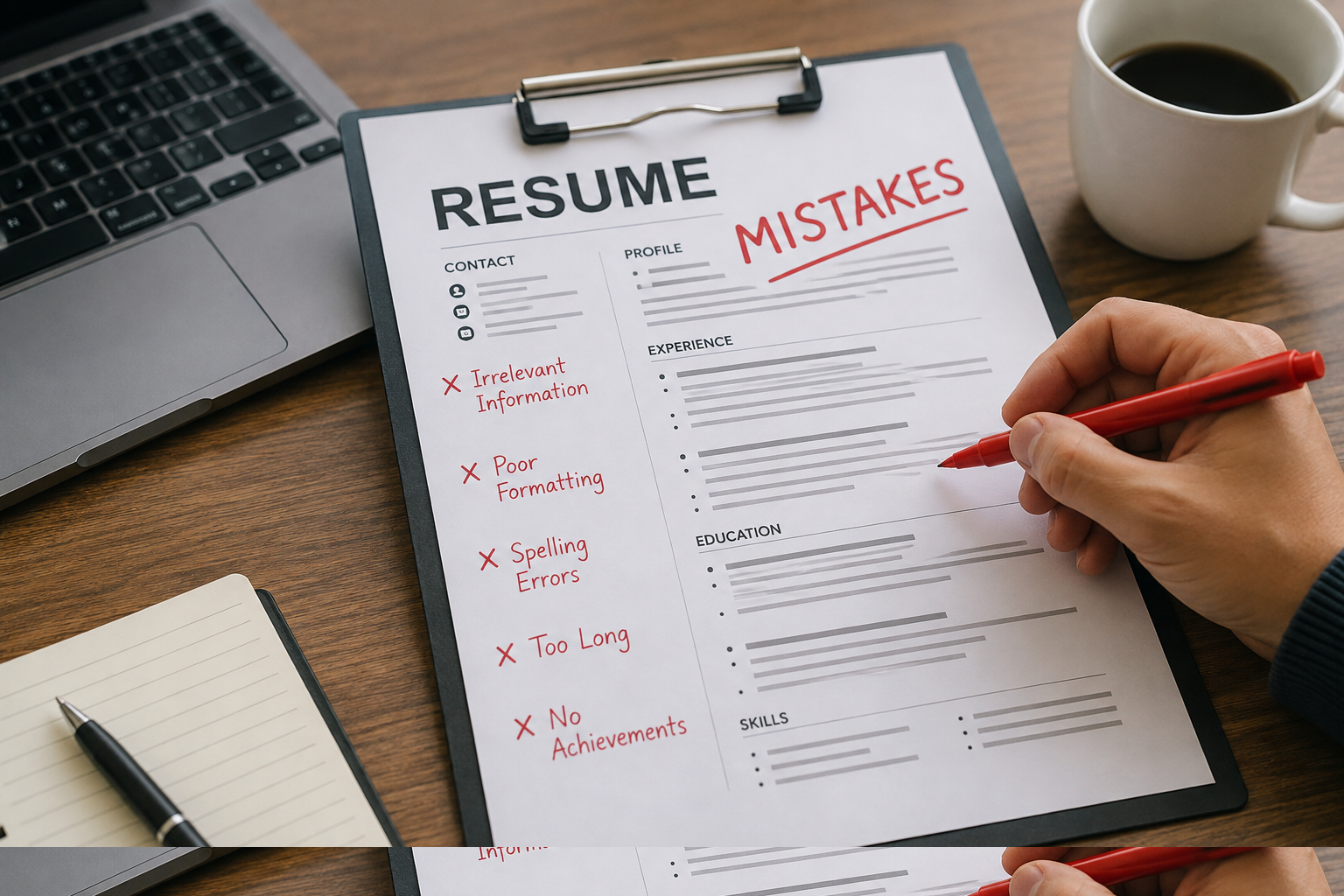
Many job seekers spend a lot of time adding information to their resumes but forget to check whether that information actually helps them get the job. Even a qualified person can lose an opportunity because of simple resume mistakes. Poor formatting, spelling errors, unnecessary information, and a lack of relevant skills can make a resume less effective.
In this guide, I will discuss the most common resume mistakes to avoid and explain how you can create a stronger resume that gives employers a better reason to consider you.
1. Using the Same Resume for Every Job
One of the biggest resume mistakes is sending exactly the same resume to every company. Different jobs have different requirements, so your resume should reflect the position you are applying for.
For example, if you are applying for a marketing position, your resume should highlight marketing skills, communication experience, content creation, research, social media knowledge, or other relevant abilities.
This does not mean you need to create an entirely new resume every time. Instead, review the job description and adjust your professional summary, skills, and relevant experience accordingly.
A targeted resume can show the employer that you understand what the position requires.
2. Making Your Resume Too Long
Another common mistake is creating a resume that contains too much information. Some people believe that a longer resume looks more professional because it contains more details. In reality, unnecessary information can make it difficult for a recruiter to identify your most important qualifications.
Your resume should focus on information that supports your application.
If you have many years of experience, you may need more space to explain your career history. However, you should still avoid including every minor responsibility from every job you have ever had.
I recommend reviewing each section and asking yourself whether the information helps explain why you are suitable for the position. If it does not, consider removing or shortening it.
3. Including Spelling and Grammar Errors
Spelling and grammar mistakes can make a resume look careless. Employers may see these errors as a sign that the applicant does not pay enough attention to detail.
Even a small typing mistake can affect the professional appearance of your resume.
Before submitting your application, read your resume several times. It is also helpful to read it slowly rather than quickly scanning the page. Sometimes reading the content aloud makes mistakes easier to notice.
You can also ask a trusted person to review your resume. A fresh pair of eyes may identify errors that you missed.
4. Using an Unprofessional Email Address
Your email address may seem like a small detail, but it is part of your professional contact information.
An email address that contains inappropriate words, jokes, random numbers, or nicknames can create a poor first impression.
For job applications, I recommend using a simple email address based on your name. A professional email address looks cleaner and makes it easier for employers to recognize your contact information.
5. Adding Too Much Personal Information
A resume should contain relevant professional information, not every personal detail about your life.
You generally do not need to include unnecessary information such as your favorite activities, personal opinions, unrelated hobbies, or excessive family details.
The purpose of a resume is to demonstrate your qualifications for a particular job.
Include information that helps the employer understand your professional background, skills, education, experience, and achievements.
6. Writing a Weak Resume Summary
The resume summary is often one of the first sections an employer reads. A weak or generic summary can waste this valuable space.
Statements such as “I am hardworking and motivated” are common and do not tell the employer much about what you can actually do.
A stronger professional summary should briefly explain your experience, key skills, and career focus.
For example, instead of simply saying that you are a hardworking professional, explain the type of work you have experience in and the value you can bring to the employer.
Your resume summary should be short, specific, and connected to the job you want.
7. Listing Duties Instead of Achievements
One mistake I frequently see is writing only job responsibilities.
For example, someone might write:
“Responsible for managing customers.”
This explains a duty, but it does not show the result of the work.
Whenever possible, focus on achievements and measurable results. You could explain how you improved customer satisfaction, increased sales, reduced processing time, or helped complete an important project.
Achievements help employers understand the impact you made in previous roles.
8. Using Poor Resume Formatting
Good resume formatting makes your information easier to read. A resume can contain excellent experience but still look unprofessional if the layout is confusing.
Avoid using too many fonts, unnecessary colors, complicated graphics, or inconsistent spacing.
Keep your headings clear and use a consistent structure throughout the document. Make sure dates, job titles, company names, and responsibilities are presented in an organized way.
I believe simple formatting is usually better than an overly decorative resume because it allows the reader to focus on your qualifications.
9. Choosing an Unreadable Font
Your resume should be easy to read on a computer screen and on paper.
Using unusual decorative fonts can make your resume difficult to understand. Very small text can also make the document uncomfortable to read.
Choose a professional and readable font and maintain a reasonable font size. The exact font is less important than consistency and readability.
Your goal should be to make it easy for a recruiter to quickly find your most important information.
10. Adding Irrelevant Work Experience
Not every job you have ever held needs to receive the same amount of attention on your resume.
If you are applying for an office position and have an older job that has no connection to the role, you may not need to describe every responsibility from that position.
Relevant experience should receive more attention.
However, older experience can still be useful if it demonstrates transferable skills such as communication, teamwork, customer service, leadership, organization, or problem solving.
11. Using Too Many Keywords
Keywords are important for a resume, especially when employers use applicant tracking systems to organize applications. However, adding keywords everywhere can make your resume sound unnatural.
The best approach is to use relevant keywords naturally throughout your professional summary, skills, and experience sections.
Read the job description carefully and identify the skills and qualifications that genuinely match your background.
Never claim that you have a skill simply because it appears in the job advertisement.
12. Failing to Mention Important Skills
Another common resume mistake is leaving out skills that are relevant to the position.
Your skills section should be specific and useful. Instead of listing vague words such as “good communication” or “hardworking,” consider including practical skills that relate directly to the job.
For example, depending on your career, these could include project management, Microsoft Office, customer service, data analysis, social media management, bookkeeping, graphic design, or technical skills.
Only include skills that you actually possess.
13. Using Unnecessary Jargon
Professional language can be useful, but too much industry jargon can make your resume difficult to understand.
A recruiter may not have the same technical background as you. If your resume is filled with complicated terminology, the main message may become unclear.
Use clear language and explain your experience in a straightforward way.
A professional resume should demonstrate knowledge without making the reader work too hard to understand it.
14. Not Checking Contact Information
Imagine an employer likes your resume and wants to contact you, but your phone number contains a mistake or your email address is incorrect.
This simple error could cost you an opportunity.
Always check your contact information before sending your resume. Make sure your phone number and email address are correct and easy to find.
If you have a professional LinkedIn profile or relevant portfolio, you can also include it when appropriate.
15. Using an Unprofessional File Name
The name of your resume file should also look professional.
Instead of using a file name such as “resume final final 2” or “mynewresume,” use a simple format that includes your name and the word resume.
For example:
YourName Resume.pdf
This makes your application look more organized and helps employers identify the document easily.
16. Including False Information
Never add false experience, fake qualifications, or skills you do not actually have.
It may seem tempting to make your resume look stronger, but false information can create serious problems if an employer asks questions during an interview or checks your background.
A better approach is to present your real experience in the strongest and clearest way possible.
If you do not have much professional experience, focus on education, projects, internships, volunteer work, freelance work, training, and transferable skills.
17. Forgetting to Update Your Resume
Your resume should not remain unchanged for years.
Whenever you gain new experience, complete a useful project, learn an important skill, or receive a professional achievement, consider updating your resume.
Keeping your resume updated also makes applying for new opportunities easier because you will not have to remember everything at the last minute.
I personally believe that maintaining a current resume is much easier than trying to rebuild one when you urgently need a job.
18. Using the Wrong Resume Format
Different career situations may require different approaches.
Someone with several years of experience may want to emphasize career history, while a recent graduate may need to focus more on education, projects, internships, and skills.
The format should help present your strongest qualifications.
Do not choose a complicated resume design simply because it looks attractive. Choose a structure that makes your experience easy to understand.
19. Not Proofreading Before Submission
One of the easiest resume mistakes to avoid is failing to proofread.
Before submitting your resume, check spelling, grammar, punctuation, dates, job titles, company names, phone numbers, email addresses, and formatting.
I recommend taking a short break after writing your resume and then reviewing it again later. When you stare at the same document for too long, it becomes easier to overlook small mistakes.
20. Sending the Wrong Resume
Finally, always make sure you are sending the correct version of your resume.
If you apply for several jobs, it is easy to accidentally attach an older version that does not contain your latest experience or relevant skills.
Before clicking the submit button, open the file and quickly review it.
Check the job title, company specific information, contact details, and the most relevant skills. A few minutes of checking can prevent an avoidable mistake.
How to Make Your Resume Stronger
Avoiding resume mistakes is only one part of creating a strong application. Your resume should also make it easy for an employer to understand your professional value.
Start with clear contact information and a focused professional summary. Follow this with relevant experience, education, skills, certifications, projects, or other sections that support your application.
Use action focused language when describing your experience. Instead of repeatedly writing “responsible for,” explain what you did and what result you achieved.
Keep the layout simple and consistent. Make sure important information is easy to find and avoid filling the page with unnecessary details.
Most importantly, customize your resume for the job. A targeted resume can communicate your suitability more effectively than a generic document sent to every employer.
Final Thoughts
A resume does not need to be perfect to be effective, but it should be carefully prepared. Common resume mistakes such as spelling errors, poor formatting, irrelevant information, weak descriptions, and incorrect contact details can reduce your chances of getting noticed.
From my point of view, the best resume is one that communicates your value quickly and honestly. It should show what you can do, what experience you have, and why your background is relevant to the position.
Before submitting your next job application, take a few minutes to review your resume from the employer’s perspective. Ask yourself whether the document is easy to read, relevant to the position, and free from unnecessary information.
By avoiding these common resume mistakes and focusing on clear, relevant, and professional content, you can create a resume that gives your job application a much stronger first impression.