Related Articles

When I started learning SEO, one of the first things I realized was that getting a website to rank on Google is not only about choosing the right keywords. There are many small details on a webpage that can influence how search engines understand and rank the content. This is where on page SEO becomes important.
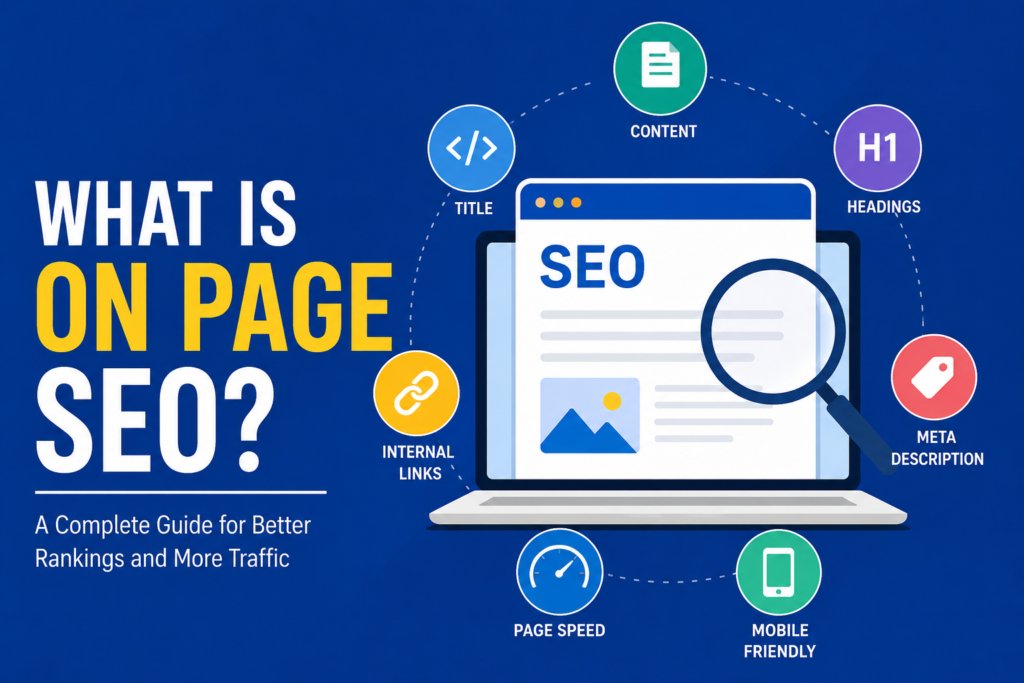
On page SEO means optimizing the elements of a webpage so that search engines can better understand its topic and users can easily find useful information. It includes things such as keywords, titles, headings, content, meta descriptions, images, internal links, URLs, and user experience.
In my experience, on page SEO is one of the most practical parts of search engine optimization because most of the changes can be made directly on your own website. You do not have to wait for another website to give you a backlink or depend completely on external factors.
What Is On Page SEO?
On page SEO is the process of improving individual webpages to make them more useful for visitors and easier for search engines to understand.
The main goal is not simply to add keywords everywhere. Instead, I believe good on page SEO should focus on answering the searcher’s question as clearly and completely as possible.
For example, if you write an article about “how to choose keywords for a blog,” your page should explain keyword selection in detail. The main keyword can appear naturally in the title, introduction, headings, and body content. Related terms can also help search engines understand the subject.
A well optimized page should serve two audiences at the same time. It should be understandable to search engines and genuinely helpful to people.
Why Is On Page SEO Important?
On page SEO is important because search engines need to understand what your webpage is about before they can decide where it should appear in search results.
Think about a search engine as a huge library. If a book does not have a clear title, description, chapters, or useful information, it becomes difficult for the librarian to place it in the correct section.
The same basic idea applies to websites.
When your page has a clear title, useful headings, relevant keywords, descriptive content, optimized images, and a logical structure, search engines have more information to understand the page.
On page SEO can also improve the experience of visitors. A well structured article is easier to read, easier to navigate, and more likely to keep people engaged.
Keyword Optimization
Keywords are an important part of on page SEO, but keyword optimization has changed significantly over time.
In the past, some website owners would repeat the same keyword dozens of times because they believed this would improve rankings. I do not recommend this approach. Keyword stuffing can make an article difficult to read and can make the content look unnatural.
Instead, I prefer using the primary keyword naturally while also covering related topics.
For example, if the main keyword is “on page SEO,” related phrases could include SEO optimization, webpage optimization, SEO content, title tags, meta descriptions, internal linking, and search engine rankings.
The primary keyword should usually appear in important areas such as the page title, introduction, relevant headings, URL, and naturally throughout the content.
The most important thing is that the keyword fits the sentence naturally.
Creating a Strong SEO Title
The title is one of the first things users see in search results. It also gives search engines an important signal about the subject of the page.
A good SEO title should clearly explain what the page is about and encourage the user to click.
For example, instead of using a vague title such as “SEO Tips,” a more useful title could be “What Is On Page SEO? A Complete Guide for Beginners.”
The second title gives readers a much clearer idea of what they will learn.
I recommend keeping titles natural rather than trying to insert as many keywords as possible. The title should make sense to a real person first.
Using Proper Headings
Headings make content easier to understand for both readers and search engines.
I normally use one main H1 heading for the primary topic and then organize the article with H2 and H3 headings where appropriate.
For example, an article about on page SEO could include headings such as:
What Is On Page SEO?
Why Is On Page SEO Important?
How to Optimize Content
Why Meta Descriptions Matter
How Internal Linking Works
This structure helps readers quickly scan the article and find the information they need.
Headings should describe the content that follows them. They should not be used simply to insert keywords.
Writing Helpful and Original Content
Content is one of the most important parts of on page SEO.
In my opinion, the best SEO articles are written for people first. If an article is created only to satisfy search engines, it often becomes repetitive and difficult to read.
Good content should answer the main question, explain important details, provide useful examples, and avoid unnecessary information.
Originality also matters. You should not simply rewrite another website’s article sentence by sentence. Instead, develop your own explanation based on your knowledge and experience.
For example, if you are explaining on page SEO, you can discuss how you personally approach keyword placement, content structure, internal linking, and page optimization.
This makes the article more useful and gives it a natural human tone.
Optimizing Meta Descriptions
A meta description is a short summary that can appear below the page title in search results.
Although a meta description is not simply a place to stuff keywords, it can help users understand what they can expect from the page.
A good meta description should describe the page accurately and encourage the right audience to visit it.
For example, a page about on page SEO could have a description explaining that the article covers keyword optimization, titles, headings, content, internal links, images, and other important SEO elements.
I always recommend writing a unique meta description for important pages instead of using the same description across an entire website.
Optimizing URLs
A clean URL can make a webpage easier to understand.
For example:
example.com/on-page-seo/
is much clearer than a URL filled with unnecessary numbers and characters.
Whenever possible, I prefer short and descriptive URLs that reflect the main topic of the page.
If the main keyword is “on page SEO,” including it naturally in the URL can make the topic clear.
Using Internal Links
Internal linking is another important part of on page SEO.
An internal link connects one page on your website to another page on the same website.
For example, if you have an article about on page SEO and another article explaining keyword research, you can naturally link from one article to the other.
This can help visitors discover more useful content. It can also help search engines understand the relationship between different pages on your website.
I recommend using descriptive anchor text instead of generic phrases such as “click here.”
The anchor text should give the reader an idea of what they will find after clicking the link.
Image SEO
Images can improve an article when they are relevant and useful, but they should also be optimized.
One important practice is using descriptive file names. Instead of a file name such as IMG1234.jpg, a descriptive name such as on-page-seo-guide.jpg is more meaningful.
Alt text is also important because it helps describe an image for accessibility and gives search engines additional context.
Images should also be compressed so they do not unnecessarily slow down the webpage.
I believe images should support the content rather than simply fill empty space.
Page Speed and Mobile Experience
Users do not want to wait for a slow webpage to load. A page that takes too long to open can create a poor experience.
For this reason, page speed is an important part of overall website optimization.
Large images, unnecessary scripts, poor hosting, and excessive plugins can sometimes affect loading performance.
Mobile optimization is equally important because many people access websites through smartphones.
Your content should be easy to read on smaller screens, buttons should be easy to tap, and visitors should not have to constantly zoom in or scroll sideways.
User Experience Matters
SEO is not just about search engines. It is also about the people who visit your website.
A good webpage should be easy to navigate and comfortable to read.
I usually prefer short paragraphs, clear headings, useful lists, relevant images, and simple language. These small improvements can make a long article feel much easier to consume.
If visitors can quickly find answers to their questions, they are more likely to have a positive experience with the website.
Avoid Keyword Stuffing
One mistake I often see beginners make is using the same keyword repeatedly in every paragraph.
This is called keyword stuffing, and it can make content sound unnatural.
For example, if your keyword is “on page SEO,” you do not need to write it in every sentence.
Instead, use natural variations and related phrases when they fit the topic. Search engines have become much better at understanding context, so a well written article can cover a topic comprehensively without repeating one exact phrase constantly.
Write naturally first and optimize carefully afterward.
How to Improve On Page SEO
If you want to improve the on page SEO of an existing article, I recommend following a simple process.
First, identify the main search intent behind the keyword. Ask yourself what the person is actually trying to find.
Next, review the title and make sure it clearly represents the content.
Check your headings and make sure the article has a logical structure.
Review keyword usage and remove unnecessary repetition.
Improve weak sections by adding useful information, examples, or explanations.
Add relevant internal links where they genuinely help readers.
Optimize images and make sure they have meaningful file names and suitable alt text.
Finally, read the entire article as if you were a visitor. If something feels confusing, repetitive, or unnecessary, improve it.
Common On Page SEO Mistakes
There are several mistakes that can reduce the quality of a webpage.
One common mistake is writing content only for search engines. Another is using keywords unnaturally.
Poor headings, duplicate content, missing internal links, unclear URLs, oversized images, and difficult navigation can also hurt the overall quality of a page.
Another mistake is ignoring search intent. If someone searches for “what is on page SEO,” they probably want a clear explanation. Giving them a long sales pitch instead of answering the question does not provide a good experience.
Always understand what the searcher wants before creating the page.
Final Thoughts
On page SEO is one of the foundations of a successful website. It involves much more than adding a keyword to an article. It is about making every important part of a webpage clear, useful, accessible, and relevant.
From the title and headings to the content, keywords, URLs, images, meta descriptions, and internal links, each element contributes to the overall quality of a page.
From my point of view, the best approach is to stop thinking about SEO as a collection of tricks. Instead, think about it as a way to make your website easier for both people and search engines to understand.
When you create genuinely useful content, organize it properly, use keywords naturally, improve the user experience, and keep your pages technically healthy, you build a stronger foundation for long term search visibility.
On page SEO does not guarantee instant rankings, but it gives your content a much better chance of being understood, discovered, and appreciated by the right audience.