
Related Articles



Time is one of the most valuable resources we have at work. Once a working day is gone, we cannot get it back. I have noticed that many people work hard throughout the day but still feel that they did not accomplish enough. In my opinion, the problem is not always a lack of effort. Sometimes, the real problem is poor time management.
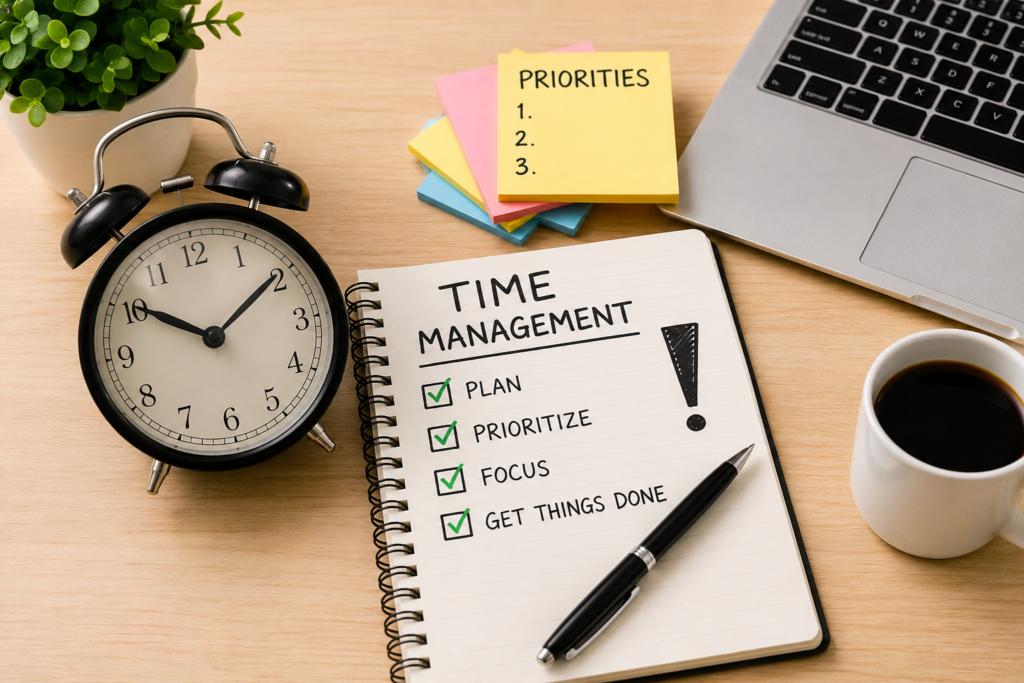
Learning how to improve time management at work can make a big difference in productivity, focus, and overall job performance. Good time management does not mean working every minute without taking a break. It means knowing what needs to be done, deciding what matters most, and using working hours wisely.
In this article, I will share practical time management tips that can help anyone organize their workday, reduce distractions, complete tasks on time, and create a better balance at work.
What Is Time Management at Work?
Time management at work means planning and organizing how you use your available working hours. It helps you decide which tasks should be completed first, how much time you should spend on each activity, and when you should move on to the next task.
For me, effective time management is about working smarter rather than simply working longer. A person can spend eight or nine hours at work and still achieve very little if the day is not organized properly.
Good time management helps employees stay focused, meet deadlines, manage responsibilities, and avoid unnecessary stress.
Start Your Day With a Clear Plan
One of the easiest ways to improve time management at work is to start the day with a plan. Before getting deeply involved in work, I prefer to understand what needs to be completed during the day.
You can write down your important tasks in a notebook, planner, or digital task manager. Try to keep the list realistic instead of adding too many tasks.
For example, you can divide your day into three categories:
Important tasks
Regular tasks
Tasks that can wait
This simple approach helps you understand where your attention should go. It also gives you a clear direction instead of spending the morning wondering what to do first.
Prioritize Your Tasks
Not every task has the same level of importance. One of the biggest mistakes people make is treating every task as equally urgent.
I believe prioritizing tasks is one of the most important time management skills at work. Before starting a task, ask yourself how important it is and whether it has a deadline.
A useful approach is to complete high priority work first. If an important project has a deadline tomorrow, it should receive more attention than a small task that can easily be completed later.
Prioritizing your work helps prevent last minute pressure and makes your working day more organized.
Avoid Multitasking
Multitasking may look productive, but it can make work more difficult. When we constantly switch between emails, messages, meetings, and different projects, our attention becomes divided.
From my experience, focusing on one important task at a time can produce better results. When you give your full attention to a task, you are more likely to complete it accurately and efficiently.
Try to finish one important activity before moving to another whenever possible. This can improve concentration and help you make better use of your working hours.
Set Realistic Deadlines
Deadlines are useful because they give us a clear target. However, setting unrealistic deadlines can create unnecessary pressure.
When planning your work, think about how much time each task actually requires. If something normally takes two hours, do not expect yourself to finish it perfectly in thirty minutes.
I also recommend leaving some extra time for unexpected problems. Work does not always go according to plan. A client may request changes, a colleague may need help, or a technical issue may appear.
Realistic deadlines make it easier to stay productive without creating unnecessary stress.
Break Large Tasks Into Smaller Steps
Large projects can sometimes feel overwhelming. When a task looks too big, it becomes easy to delay starting it.
A simple solution is to divide the project into smaller steps. Instead of writing “complete the project,” create smaller tasks such as research the topic, prepare the information, create the first draft, review the work, and complete the final version.
This approach makes difficult work feel more manageable. Every completed step also gives you a sense of progress, which can motivate you to continue.
Learn to Deal With Distractions
Workplace distractions can consume a surprising amount of time. Notifications, social media, unnecessary conversations, personal phone use, and frequent email checking can interrupt your concentration.
I believe it is important to control distractions instead of allowing them to control your schedule.
For example, you can silence unnecessary notifications while working on an important project. You can also check emails at specific times instead of opening your inbox every few minutes.
The goal is not to avoid communication completely. The goal is to protect your focused working time.
Use Time Blocking
Time blocking is another useful method for improving time management at work. It involves assigning specific periods of your day to specific activities.
For example, you might spend the first part of the morning on important project work, then check emails, attend meetings, and complete administrative tasks later.
Time blocking helps create structure in your day. It also reduces the amount of time you spend deciding what to work on next.
You do not need to plan every minute. Even a simple schedule with a few focused time blocks can make your workday easier to manage.
Learn to Say No When Necessary
Sometimes poor time management happens because we accept too many responsibilities. Helping coworkers is a positive thing, but accepting every request can leave you with little time for your own important work.
Learning to say no professionally does not mean being unhelpful. It means understanding your current workload and communicating honestly.
If you are already working on an urgent project, you can explain that you have limited time and suggest another suitable time to help.
Setting healthy boundaries can protect your productivity and help you manage your responsibilities more effectively.
Take Short Breaks
Good time management does not mean working continuously without rest. Short breaks can help refresh your mind and maintain concentration.
If I work on a demanding task for a long period, I may start losing focus or making simple mistakes. A short break can help me return with better attention.
You can stand up, walk for a few minutes, drink water, or simply step away from your screen. The important thing is to make your break intentional rather than allowing it to turn into a long distraction.
Manage Meetings Properly
Meetings can be useful, but unnecessary or poorly organized meetings can take away valuable working time.
Before attending a meeting, understand its purpose. If you are responsible for organizing one, prepare an agenda and keep the discussion focused.
After a meeting, make sure you understand what needs to happen next. Writing down action points can prevent confusion and save time later.
Efficient meetings are an important part of effective workplace time management.
Use Technology Wisely
Technology can either save time or waste it. There are many tools available for calendars, task management, reminders, communication, and project organization.
I think the best approach is to use technology only when it genuinely makes work easier. You do not need dozens of applications to manage your time.
A simple calendar, task list, reminder system, and organized email inbox may be enough for many people.
The important thing is consistency. A tool only helps if you actually use it regularly.
Avoid Procrastination
Procrastination is one of the biggest enemies of time management. Sometimes we delay a task because it looks difficult, boring, or uncomfortable.
One strategy that works well is to start with a small part of the task. Instead of thinking about completing the entire project, focus on working for the first ten or fifteen minutes.
Once you start, the task often feels easier. Taking action is usually better than waiting for the perfect moment or motivation to appear.
Review Your Day
At the end of the workday, take a few minutes to review what you accomplished. Ask yourself which tasks were completed, which tasks remain, and what caused any delays.
This habit can help you identify patterns in your work.
For example, you may discover that you spend too much time checking emails or that meetings regularly interrupt your most productive hours.
A short daily review can help you improve your time management habits over time.
Focus on Results, Not Just Activity
Being busy does not always mean being productive. Someone can answer hundreds of messages and attend several meetings but still fail to complete their most important project.
I believe real productivity should be measured by meaningful results.
At the beginning of each day, ask yourself what successful completion would look like. Focus your energy on activities that contribute to your main responsibilities and goals.
This mindset can help you avoid spending too much time on tasks that feel productive but do not have much value.
Final Thoughts
Learning how to improve time management at work is not about creating a perfect schedule. It is about developing practical habits that help you use your time more intentionally.
In my opinion, the most effective approach is to start with simple changes. Plan your day, prioritize important tasks, avoid unnecessary distractions, focus on one task at a time, set realistic deadlines, take useful breaks, and review your progress.
You do not have to change everything at once. Even one or two better habits can make your working day more organized.
With consistent practice, good time management can help you complete work more efficiently, reduce unnecessary stress, meet deadlines, and feel more confident about your responsibilities. Time will always be limited, but the way we manage it can make a meaningful difference in our professional life.
Primary Keyword: How to Improve Time Management at Work
SEO Keywords: time management at work, workplace time management, time management skills, improve productivity at work, effective time management, time management tips, workplace productivity