
Related Articles


When I started paying more attention to blogging and SEO, I quickly realized that writing a good article is only one part of the job. Before people read the article, they first see the title. A strong blog title can make someone curious enough to click, while a weak title can make even a useful article easy to ignore. This is one reason I believe that using the best title generator tools for blog posts can be helpful for bloggers, content writers, and website owners.
A blog title should clearly explain what the article is about while also giving readers a reason to continue. Creating this type of title manually is possible, but sometimes it can take a lot of time. Title generator tools can provide fresh ideas within seconds and help me look at the same topic from different angles.
In this article, I will discuss some of the best title generator tools for blog posts, how they work, what features I look for, and how bloggers can use them effectively.
Why Blog Titles Are So Important
In my experience, the title is one of the first things I focus on when preparing a blog post. A reader may see hundreds of articles online, so the title needs to communicate value quickly.
A good title can tell readers what they will learn, who the content is for, or what problem the article will solve. For example, instead of writing a simple title such as “Budget Travel Tips,” I could create a more specific title such as “Simple Budget Travel Tips for Your Next Trip.”
The second title gives readers more information. It also contains useful keywords that can help search engines understand the topic.
However, I do not believe that a title should be created only for search engines. The main purpose of a blog title should be to help real readers understand the content and decide whether it is useful to them.
What Is a Blog Title Generator?
A blog title generator is an online tool that creates title ideas based on a topic, keyword, or short description provided by the user.
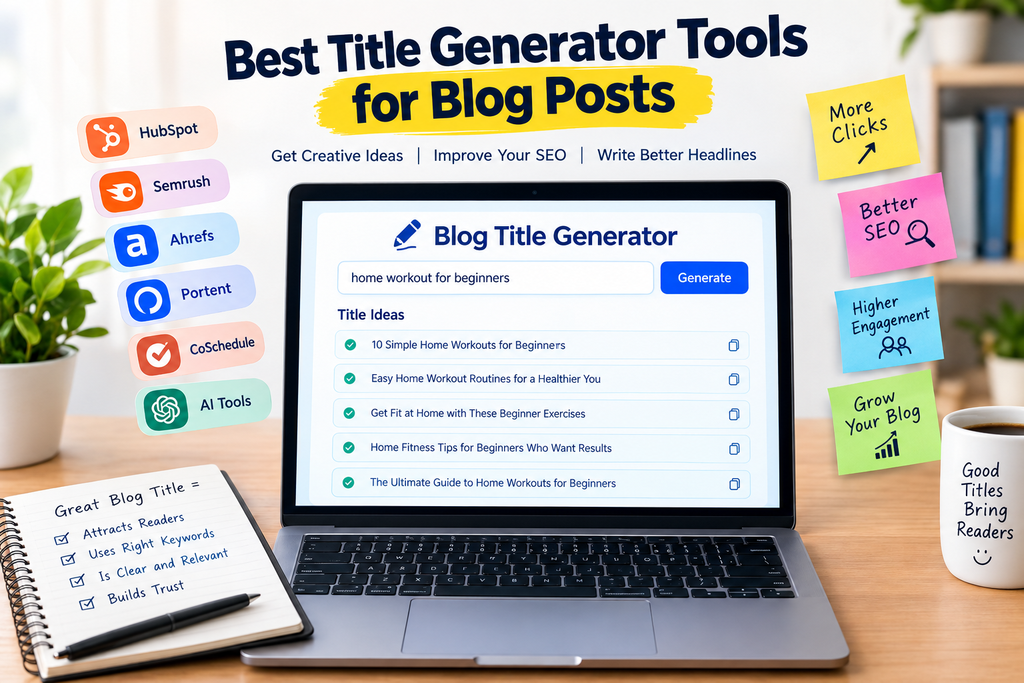
For example, if I enter “home workout for beginners,” a title generator may suggest ideas related to beginner exercises, simple routines, home fitness, and workout plans.
These tools can be useful when I know what I want to write about but cannot find the right headline. Instead of spending a long time thinking about different possibilities, I can generate several ideas and then improve the best ones myself.
Some tools use simple templates, while others use artificial intelligence to create more natural and creative suggestions.
Best Title Generator Tools for Blog Posts
There are many title generator tools available online. I would not say that one tool is perfect for every blogger because different websites have different needs. The following types of tools are worth considering when creating blog title ideas.
HubSpot Blog Ideas and Title Tools
HubSpot is well known for its marketing and content resources. Its blog idea tools can help writers generate topic and headline inspiration.
I find this type of tool useful when I have a broad subject but need more specific content ideas. It can help me move from a general keyword toward a more focused blog topic.
For new bloggers, tools from established marketing platforms can also be useful because they encourage thinking about the reader’s problem rather than simply adding keywords to a title.
Semrush Title and Content Tools
Semrush provides several SEO and content marketing tools that can support bloggers with keyword research and content planning.
For me, the biggest advantage of an SEO focused platform is that title ideas can be considered alongside the overall search strategy. A title generator can give me ideas, but keyword research helps me understand what people are actually searching for.
I prefer to use title ideas as a starting point and then check whether the chosen keyword matches the purpose of my article.
Ahrefs Content Tools
Ahrefs is another popular name in the SEO industry. Its content resources can help bloggers understand search demand, keywords, competitors, and content opportunities.
While creating a blog title, I believe SEO information should be considered together with readability. A title that contains keywords but sounds unnatural may not be attractive to readers.
Ahrefs style SEO research can therefore help me understand the topic before I finalize a headline.
Portent Title Maker
Portent’s title generation approach is useful for bloggers who want creative headline ideas.
Sometimes I already know the keyword and article subject but want something more interesting than a basic search friendly title. Creative title tools can help me explore different wording and angles.
I would still edit the generated title before publishing it because automatic suggestions are not always suitable for every audience.
CoSchedule Headline Tools
Headline analysis tools can be useful when I already have a title but want to improve it.
Instead of simply generating a headline, these tools can encourage me to think about factors such as clarity, emotional appeal, word choice, and readability.
This is useful because I believe the best title generator tool is not necessarily the one that gives me the most titles. The better tool is the one that helps me create a title that fits my article and audience.
AI Based Title Generators
Artificial intelligence has made content brainstorming much easier. AI based writing tools can generate multiple blog title ideas from a simple topic description.
For example, I can provide the topic, target audience, main keyword, and desired style. The tool can then create several options.
I find this especially useful when I want different title styles. I can ask for informative titles, beginner friendly titles, list style titles, question based titles, or SEO focused titles.
However, I never recommend publishing an AI generated title without checking it. A human review is important because the title should accurately represent the article.
How I Choose the Right Blog Title
Generating titles is only the first step. The next step is selecting the strongest one.
First, I check whether the title accurately describes the article. I do not want to promise something in the title that the article does not actually provide.
Second, I look at the main keyword. If my article is targeting “best title generator tools,” I try to include that phrase naturally when appropriate.
Third, I make sure the title is easy to understand. Complicated wording can confuse readers.
Fourth, I look for a clear benefit. Readers should have some idea about what they will gain by opening the article.
Finally, I avoid exaggerated claims. A title such as “The Only Blogging Tool You Will Ever Need” may sound attractive, but it can create unrealistic expectations.
Using Keywords in Blog Titles
Keywords are important for SEO, but I believe they should be used naturally.
If my target keyword is “title generator tools for blog posts,” I can create a title such as “Best Title Generator Tools for Blog Posts.”
The keyword fits naturally and tells readers exactly what the article covers.
I avoid repeating the same keyword several times in a single title. Keyword stuffing can make a headline look unnatural.
It is also important to remember that search engines consider the overall quality and relevance of a page. A keyword in the title alone does not guarantee good rankings.
Common Mistakes I Avoid
One common mistake is making titles too vague. A title such as “Blogging Tips” does not tell the reader much.
Another mistake is making titles unnecessarily long. I try to communicate the main idea without adding words that do not provide value.
I also avoid misleading clickbait. A title should create curiosity, but it should remain honest.
Another mistake is using the same title format for every article. If every blog post has exactly the same structure, the website can feel repetitive.
I also avoid blindly copying titles from competing websites. I use other headlines for inspiration but create original wording that matches my own content.
How to Use a Title Generator Effectively
In my opinion, the best way to use a title generator is to treat it as a brainstorming assistant rather than a replacement for human creativity.
I start with my main topic and keyword. Then I generate several title ideas.
After that, I remove suggestions that are irrelevant or too generic. I normally keep a few strong options and compare them.
I also consider the audience. A title for beginners should sound different from a title written for experienced professionals.
Finally, I make sure the selected title matches the actual article.
Can Title Generators Improve SEO?
Title generators can support SEO, but they do not automatically make an article rank well.
SEO involves many different factors, including useful content, search intent, website structure, internal links, technical performance, backlinks, and user experience.
A title generator can help me create a clearer headline and discover different keyword focused approaches. The real value comes from combining the tool with proper keyword research and high quality content.
Final Thoughts
I believe the best title generator tools for blog posts are useful when I need fresh ideas, especially when I am working on several articles or planning content for a new website.
Tools such as HubSpot, Semrush, Ahrefs, Portent, CoSchedule, and AI based writing platforms can provide useful inspiration. However, I do not depend completely on automatic suggestions.
For me, the ideal blog title is clear, useful, relevant, naturally keyword focused, and written for real people. A title generator can give me the starting point, but the final decision should always come from understanding the article and its audience.
If you are building a blog, I recommend experimenting with different title formats and testing which types of headlines work best for your readers. With practice, you will become better at creating strong titles even without a generator.
The goal should not simply be to create a title that gets a click. The goal should be to create a title that accurately sets expectations and leads readers to genuinely useful content. That approach can help build trust with your audience and create a stronger long term blog.