Related Articles


When I started learning SEO, I used to think that ranking a page was mainly about choosing the right keyword and using it several times in the content. With time, I realized that keywords are only one part of the process. The real question is what the person actually wants when they type a query into Google. This is where search intent becomes important.
Search intent in SEO means the reason behind a user’s search query. It tells us what the user is trying to find, learn, compare, or buy. Understanding search intent helps us create content that matches what people are actually looking for.
In my opinion, search intent is one of the most important concepts in modern SEO because even a well written article may struggle to rank if it does not satisfy the purpose behind the search.
What Is Search Intent in SEO?
Search intent is the main purpose or goal behind a search query. Every time someone searches on Google, they usually have something specific in mind.
For example, someone searching for “what is SEO” probably wants information. Someone searching for “Google Search Console” may want to visit a specific website or tool. A person searching for “best SEO tools” may be comparing different options, while someone searching for “buy SEO software” is likely ready to make a purchase.
These searches may contain related keywords, but their purposes are different.
This is why I believe that SEO should not focus only on keywords. We should also understand the people using those keywords.
Why Search Intent Matters for SEO
Search engines are designed to provide useful results to users. When someone searches for something, Google tries to understand what the person wants and then shows pages that are most likely to satisfy that need.
If your content matches the search intent, users are more likely to find it useful. They may spend more time reading your page, explore other pages on your website, and return to your website in the future.
Search intent also helps you choose the right content format. Sometimes users want a detailed guide. Sometimes they want a product page, comparison, tutorial, list, or simple answer.
For example, if someone searches for “how to create an XML sitemap,” a step by step tutorial would probably be more useful than a page simply defining an XML sitemap.
From my experience, creating content around the user’s actual question makes the article feel more natural and helpful.
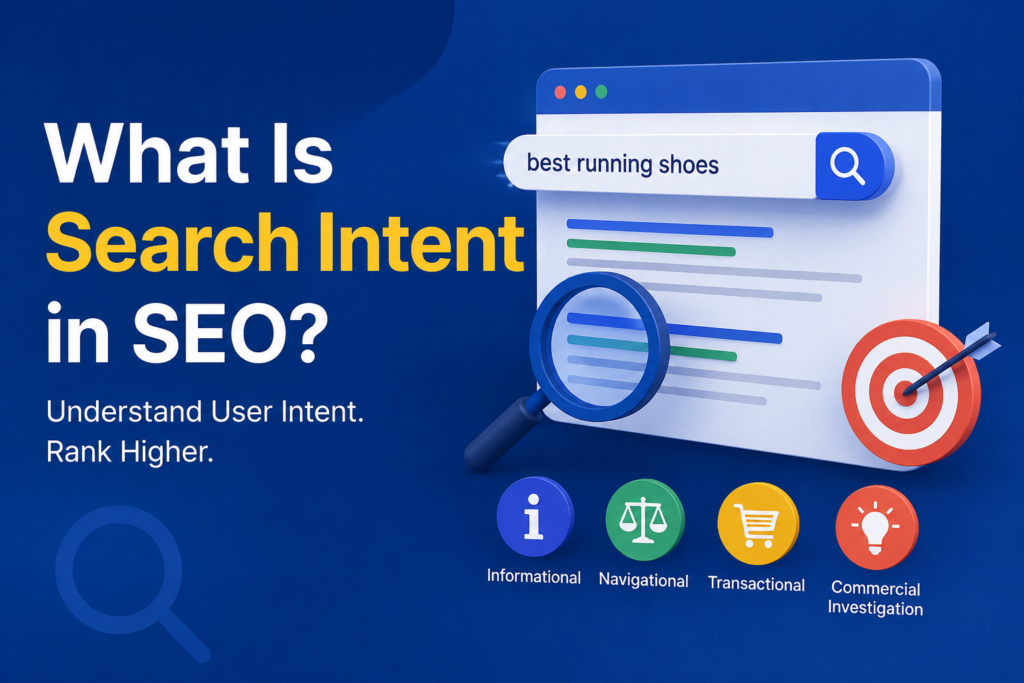
The Four Main Types of Search Intent
There are four common types of search intent that are useful to understand when doing SEO.
1. Informational Search Intent
Informational intent means the user wants to learn something or find information.
Examples include:
“What is technical SEO?”
“How does keyword research work?”
“Why is website speed important?”
“How to improve website loading speed?”
In these searches, the user usually does not want to buy anything immediately. They want an explanation or solution.
Blog posts, tutorials, guides, definitions, and educational articles are commonly suitable for informational intent.
If you are creating a website based on SEO education, informational keywords can be a great way to attract visitors who are looking for answers.
2. Navigational Search Intent
Navigational intent happens when a user wants to reach a particular website, page, brand, or online platform.
For example:
“Google Search Console”
“YouTube”
“Facebook login”
“Ahrefs”
The user already knows where they want to go. They are using the search engine as a way to reach that destination.
For website owners, branded searches can be especially valuable because they indicate that people already know about the brand or website.
3. Transactional Search Intent
Transactional intent means the user is ready to take an action, usually making a purchase or signing up for a service.
Examples include:
“buy SEO tools”
“best web hosting price”
“purchase WordPress theme”
“SEO software subscription”
These users are closer to making a decision. Product pages, service pages, pricing pages, and landing pages can be suitable for this type of search intent.
However, transactional content should still provide useful information. I believe that simply trying to push a product without answering the user’s questions can make the page less trustworthy.
4. Commercial Investigation Intent
Commercial investigation sits between informational and transactional intent.
Here, the user is interested in buying something but wants to research their options first.
Examples include:
“best SEO tools”
“best WordPress hosting”
“SEO tools comparison”
“best website builders”
The user may be comparing features, prices, advantages, disadvantages, and reviews before making a final decision.
Comparison articles and detailed buying guides can work well for this type of search.
How to Identify Search Intent
Finding search intent does not have to be complicated. One of the easiest methods I use is to search the keyword on Google and study the results.
Look at the pages appearing on the first page. Ask yourself what type of content Google is showing.
If most results are detailed guides, the keyword probably has informational intent. If product pages dominate the results, there may be transactional intent. If comparison articles appear frequently, the keyword may have commercial investigation intent.
The search results give you useful clues about what Google believes users want.
You should also examine the wording of the keyword.
Words such as “what,” “why,” and “how” often indicate informational intent.
Words such as “buy,” “price,” “discount,” and “order” can indicate transactional intent.
Words such as “best,” “top,” “review,” and “comparison” often indicate commercial investigation.
These are not strict rules, but they are useful starting points.
Search Intent and Keyword Research
Keyword research and search intent work together.
When researching keywords, I recommend creating groups based on the purpose behind each keyword instead of putting every keyword into one large list.
For example, suppose you have a website about SEO.
You might have keywords such as:
“What is on page SEO?”
“How to optimize a blog post?”
“Best SEO tools”
“Buy SEO software”
Each keyword can target a different stage of the user’s journey.
The first keyword is informational. The second is also informational. The third is commercial investigation. The fourth is transactional.
Understanding this difference helps you create the correct page for each keyword.
How to Create Content That Matches Search Intent
Once you understand the intent, the next step is creating content that satisfies it.
For informational keywords, answer the main question clearly and provide useful supporting information. Do not make the reader search through unnecessary paragraphs just to find a simple answer.
For commercial keywords, provide comparisons, features, advantages, disadvantages, pricing information when appropriate, and practical advice.
For transactional keywords, make it easy for users to take the desired action. A clear product or service page can work better than a long educational article.
The content format should match the user’s expectations.
If people are searching for a tutorial, give them a tutorial. If they are comparing products, give them a comparison. If they want a definition, explain the concept clearly.
This sounds simple, but it can make a major difference.
Search Intent and Content Quality
Search intent is closely connected with content quality.
A long article is not automatically a good article. In my opinion, useful content is content that answers the user’s question without wasting their time.
For example, if someone searches “what is search intent in SEO,” they probably want a clear explanation, examples, types of search intent, and practical advice.
Adding thousands of unrelated words would not necessarily improve the page.
Good SEO content should be focused, readable, accurate, and useful.
Use headings to organize the information and short paragraphs to make the content easier to read. Include examples where they help explain a concept.
Most importantly, write for people first.
Common Search Intent Mistakes
One common mistake is choosing a keyword without checking the search results.
A keyword may look attractive because it has a good search volume, but if your planned content does not match the intent, ranking can become difficult.
Another mistake is trying to target multiple unrelated intents on one page.
For example, a page that tries to define SEO, sell an SEO service, compare software, and provide a complete tutorial may become confusing.
Another problem is creating content that is too promotional. Users searching for information usually want an honest answer before they consider buying something.
I also think copying the general structure of existing pages without adding your own knowledge can make content feel generic. Your goal should be to provide something genuinely useful.
How Search Intent Can Improve Your SEO Strategy
Understanding search intent can improve your entire SEO strategy.
Instead of asking only, “What keyword should I target?” you can ask, “What does the person behind this keyword actually need?”
That small change can improve your approach to content planning.
You can create informational articles to attract people at the research stage. You can create comparison content for people evaluating options. You can create product and service pages for users who are ready to take action.
This creates a more organized website where different pages serve different purposes.
Internal linking can also become more effective because you can connect related content based on the user’s journey.
For example, an informational article about SEO tools could link to a detailed comparison article. That comparison article could then link to a relevant product or service page.
Search Intent Is About Understanding People
SEO can sometimes feel very technical because it involves keywords, links, page speed, crawling, indexing, and many other factors.
However, search intent reminds me that SEO is ultimately about people.
Behind every search query is a real person with a question, problem, goal, or need.
If we understand that need and create content that genuinely helps, we are already moving in the right direction.
This is also why I prefer writing naturally instead of forcing keywords into every paragraph. Keywords are important, but they should fit into the content naturally.
Final Thoughts
Search intent in SEO is the reason or purpose behind a user’s search query. The main types include informational, navigational, transactional, and commercial investigation intent.
Understanding these types can help you choose better keywords, create more relevant content, and build pages that match what users expect to find.
From my point of view, one of the best ways to understand search intent is to stop thinking only like an SEO and start thinking like the person searching.
Before creating a page, ask yourself what the user wants, what problem they are trying to solve, and what type of result would actually satisfy them.
When your content answers those questions clearly, you are not just optimizing for search engines. You are creating a better experience for real visitors.
And that is what I believe good SEO should ultimately be about.