
Related Articles



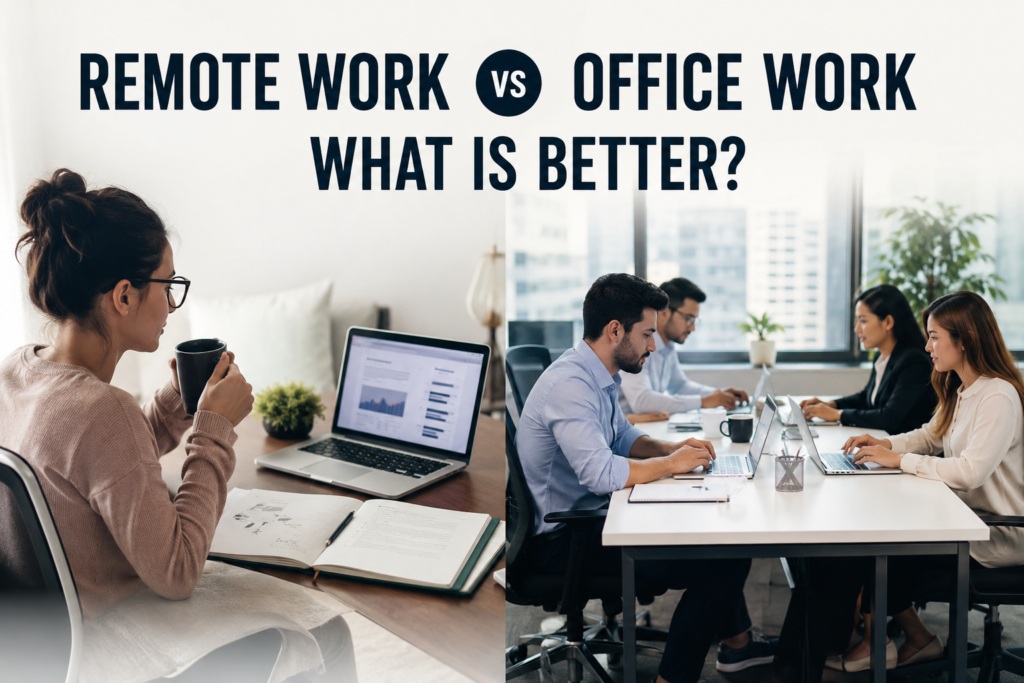
The way we work has changed significantly over the past few years. Remote work has become a popular option for employees and companies, while traditional office work is still an important part of professional life. This has created an interesting question: remote work vs office work, which one is actually better?
In my opinion, there is no single answer that works for everyone. Both remote work and office work have their own advantages and disadvantages. The better choice depends on your personality, career goals, job responsibilities, lifestyle, and ability to stay productive.
I have seen how working from home can provide freedom and comfort, while an office environment can offer structure, teamwork, and better opportunities to build professional relationships. Understanding the differences can help you decide which work style suits you best.
What Is Remote Work?
Remote work means performing your job outside a traditional office. Most remote employees work from home, although some may work from coworking spaces, cafes, or other suitable locations.
Remote jobs usually depend on digital communication tools such as email, video meetings, project management platforms, and instant messaging. Employees can communicate with their managers and colleagues without being physically present in the same building.
One of the biggest benefits of remote work is flexibility. You may have more control over your daily schedule and working environment. For people who can manage their time effectively, this can make a significant difference in their professional and personal lives.
What Is Office Work?
Office work means completing your responsibilities at a company workplace. Employees usually follow a fixed schedule and work alongside colleagues, managers, or clients.
Office work provides a structured environment. You know when your working day starts and ends, and you have a dedicated place for professional activities. For many people, this structure makes it easier to concentrate.
Another major advantage is face to face communication. Instead of sending a message or scheduling a video call, you can simply walk over to a colleague and discuss an issue. This can make collaboration faster and sometimes more natural.
Advantages of Remote Work
Better Work Life Balance
One of the biggest reasons people prefer remote work is better work life balance. Working from home can eliminate the daily commute, giving you more time for family, personal activities, exercise, or rest.
For someone who spends a significant amount of time traveling to and from work, remote employment can make the day feel much less stressful.
Flexible Working Environment
Remote work can give employees greater control over their surroundings. You can arrange your desk, lighting, chair, and working space according to your preferences.
Some companies also offer flexible schedules, allowing employees to organize their working hours around important personal responsibilities.
Less Commuting
Commuting can consume a surprising amount of time. Traffic, crowded public transportation, fuel costs, and delays can all make traditional office work tiring.
Remote work removes much of this problem. You can often begin your workday without spending an hour or more traveling.
Potential Cost Savings
Working from home can also reduce certain expenses. Employees may spend less on transportation, office clothing, meals outside the home, and other daily commuting costs.
Over time, these savings can become meaningful, especially for people who travel long distances to work.
Greater Access to Jobs
Remote work can allow people to apply for positions outside their local area. Instead of limiting yourself to companies within commuting distance, you may have access to opportunities in other cities or even other countries.
This can be particularly useful for professionals with specialized skills.
Disadvantages of Remote Work
Remote work is not perfect. It requires discipline and strong time management.
One common problem is distraction. Home responsibilities, family members, household tasks, television, and social media can interrupt your concentration.
Another challenge is isolation. Some employees enjoy being around colleagues, and working alone every day can sometimes feel disconnected.
Career development can also feel different in a remote environment. Although many companies provide excellent opportunities online, some employees may find it harder to build personal relationships with senior colleagues when most communication happens through screens.
Remote employees may also struggle to separate work from personal life. When your office is inside your home, it can be tempting to continue working after your official hours.
Advantages of Office Work
Stronger Face to Face Communication
Office work makes direct communication easier. You can have conversations with colleagues, attend meetings, ask questions, and solve problems in person.
For jobs that require frequent collaboration, this can be extremely useful.
Better Professional Networking
An office can provide more opportunities to build professional relationships. Daily interactions with coworkers can help you understand the company culture and develop connections that may support your career in the future.
In my view, this is one of the strongest advantages of office work for people at the beginning of their careers.
Clear Work Structure
Office environments usually provide a clear separation between professional and personal life. When you leave the office, your workday often feels more complete.
This physical separation can help some people maintain healthier boundaries.
Easier Team Collaboration
Certain projects benefit from having everyone in the same room. Brainstorming, training, problem solving, and group discussions can sometimes happen more naturally when people are physically together.
This does not mean remote teams cannot collaborate effectively. It simply means some people find face to face teamwork easier.
Learning From Colleagues
Office employees can learn by observing experienced coworkers. You might hear how someone handles a customer, solves a difficult problem, prepares for a meeting, or communicates with management.
These small daily experiences can contribute to professional development.
Disadvantages of Office Work
The biggest disadvantage for many people is commuting. Traveling to work every day can take time, money, and energy.
Office work may also provide less flexibility. Employees generally have to follow specific working hours and may have limited control over their daily schedule.
Another issue is workplace distraction. Conversations, meetings, noise, and interruptions can make it difficult to focus on important tasks.
For some employees, office environments can also create unnecessary stress. Long working hours, traffic, crowded spaces, and pressure from constant interaction may affect overall satisfaction.
Remote Work vs Office Work: Which Is More Productive?
Productivity depends heavily on the individual.
Some people are highly productive at home because they can work in a quiet environment without interruptions. Others struggle because they need the structure of an office to stay focused.
I believe the most important factor is not where you work but how effectively you manage your responsibilities.
A disciplined remote employee can be more productive than someone sitting in an office all day. At the same time, an office employee who enjoys collaboration and structure may perform better than they would at home.
Companies should also focus on results rather than simply measuring how many hours employees spend in a particular location.
Which Is Better for Career Growth?
This depends on your career stage and industry.
For beginners, office work can provide valuable exposure to experienced professionals. Being physically present may make it easier to ask questions, observe workplace behavior, and build relationships.
For experienced professionals, remote work can provide more flexibility without necessarily limiting career growth. Many skilled employees can perform their responsibilities effectively without being physically present.
The key is to remain visible, communicate clearly, take responsibility, and continue developing your skills regardless of where you work.
The Rise of Hybrid Work
There is also a third option that combines remote work and office work: hybrid work.
Hybrid work allows employees to work from home on some days and attend the office on others. In my opinion, this can be an excellent balance for many professionals.
You can enjoy the flexibility of working from home while still having opportunities for face to face meetings, teamwork, networking, and social interaction.
For example, an employee might work remotely three days a week and visit the office twice a week. The exact arrangement depends on the employer and job requirements.
Hybrid work can provide flexibility without completely removing the benefits of an office environment.
How to Choose Between Remote Work and Office Work
When deciding between remote work and office work, I recommend thinking about your own working style rather than simply following popular trends.
Ask yourself whether you can stay motivated without direct supervision. Consider whether you enjoy working independently or prefer regular interaction with colleagues.
You should also consider your home environment. If you have a quiet workspace and reliable internet, remote work may be easier. If your home is crowded or frequently distracting, an office may help you concentrate.
Your job responsibilities matter too. Some roles can easily be performed online, while others require physical presence.
Finally, consider your long term career goals. Think about which environment will help you develop the skills, relationships, and experience you need.
Remote Work vs Office Work: Final Thoughts
So, remote work vs office work, what is better?
My view is that neither option is automatically better. Remote work offers flexibility, comfort, reduced commuting, and access to a wider range of opportunities. Office work offers structure, personal interaction, networking, collaboration, and valuable workplace experience.
The right choice depends on your personality, profession, lifestyle, and career objectives.
If you are disciplined, organized, and comfortable working independently, remote work can be an excellent option. If you enjoy teamwork, direct communication, and a structured environment, office work may suit you better.
For many professionals, hybrid work may provide the best balance of both worlds.
Ultimately, successful work is not only about where you sit. It is about how you manage your time, communicate with others, solve problems, develop your skills, and deliver meaningful results. Whether you work from your home or from an office, building good professional habits is what can make the biggest difference in your career.