
Related Articles


Getting a job is not only about having the right degree, qualifications, or technical knowledge. In my view, employers also want people who can communicate clearly, work well with others, solve problems, manage their responsibilities, and continue learning when things change. These qualities are often called workplace skills, and they can make a major difference in your career.
I believe that developing essential workplace skills is one of the best investments anyone can make in their professional life. Technical knowledge may help you get noticed, but strong workplace skills can help you perform well, build trust, and grow within an organization.
Whether you are looking for your first job, changing careers, or trying to move into a better position, understanding what employers look for can help you prepare more effectively.
1. Communication Skills
Communication is one of the most important workplace skills employers look for. Almost every job requires you to communicate with coworkers, managers, clients, or customers.
Good communication is more than speaking confidently. It also includes listening carefully, writing professional emails, asking useful questions, and explaining your ideas in a simple way.
In my experience, people who communicate clearly are often easier to work with because they reduce confusion and help projects move forward. If you are given instructions, make sure you understand them before starting the task. If you face a problem, communicate it early instead of allowing it to become bigger.
Strong communication skills can also help you during job interviews because employers can quickly see how well you express yourself.
2. Teamwork and Collaboration
Most modern workplaces depend on teamwork. Even if you have individual responsibilities, you will probably need to cooperate with other people at some point.
Employers want workers who can share ideas, respect different opinions, support their coworkers, and contribute to group goals. Being a good team member does not mean agreeing with everyone all the time. It means knowing how to disagree respectfully and focus on finding the best solution.
I think teamwork becomes especially important when a project has tight deadlines. A person who helps others, communicates properly, and takes responsibility can become a valuable part of the team.
If you want to improve this skill, practice listening to other people and learn how to give and receive constructive feedback.
3. Problem Solving Skills
Every workplace has problems. Sometimes a customer is unhappy, a deadline changes, a system stops working, or a project does not go according to plan.
This is why problem solving skills are highly valuable. Employers want people who can think about a problem, identify possible causes, consider different solutions, and take sensible action.
A good employee does not always need to know the answer immediately. What matters is having the ability to approach the situation calmly and logically.
I believe you can develop problem solving skills by challenging yourself to find solutions instead of immediately asking someone else to solve every issue for you. Before asking for help, think about what you have already tried and what options might be available.
4. Time Management
Time management is another essential workplace skill. Employers need people who can complete their responsibilities without constantly missing deadlines.
Good time management means understanding priorities, organizing tasks, avoiding unnecessary distractions, and using your working hours effectively.
One simple approach I recommend is to identify the most important tasks at the beginning of the day. Complete urgent and high priority work first, then move toward less important activities.
Being busy is not always the same as being productive. Someone may spend an entire day working but accomplish very little because they have not organized their priorities.
When employees manage their time well, managers can trust them with greater responsibilities.
5. Adaptability
The workplace can change quickly. Companies introduce new software, change procedures, restructure teams, and respond to new customer expectations.
For this reason, adaptability is one of the most valuable workplace skills employers look for. Employees who can adjust to new situations are often better prepared for long term career growth.
In my opinion, adaptability means being willing to learn instead of becoming frustrated whenever something changes. You do not need to enjoy every change, but you should be able to understand it and adjust your approach.
Try to become comfortable with learning new tools and methods. A willingness to learn can make you more valuable in almost any industry.
6. Leadership Skills
Leadership is not only for managers. Employees at every level can demonstrate leadership.
Leadership skills include taking responsibility, helping others, making thoughtful decisions, staying calm under pressure, and motivating people toward a shared goal.
You can demonstrate leadership without having a management title. For example, if you notice a problem and take the initiative to help solve it, you are showing leadership.
I believe employers appreciate people who do not always wait for someone else to tell them what to do. Showing reasonable initiative can demonstrate confidence, responsibility, and commitment.
7. Emotional Intelligence
Emotional intelligence is becoming increasingly important in professional environments. It involves understanding your own emotions and recognizing how other people may be feeling.
A person with strong emotional intelligence can handle criticism without becoming overly defensive, remain professional during disagreements, and understand when a coworker may need support.
Workplaces include people with different personalities, backgrounds, communication styles, and expectations. Emotional intelligence can help you interact with these people more effectively.
In my view, one of the easiest ways to improve emotional intelligence is to pause before reacting. Think about the situation, consider another person’s perspective, and then respond professionally.
8. Digital Skills
Technology is now part of almost every industry. Even jobs that are not highly technical often require employees to use computers, communication platforms, online systems, or specialized software.
Basic digital skills can include using word processing programs, spreadsheets, email, online collaboration tools, and workplace software. Depending on your career, you may also need advanced technical skills.
You do not need to become an expert in every technology. However, I believe it is important to stay curious and continue improving your digital knowledge.
Learning a new software program or digital tool can increase your confidence and make you more competitive when applying for jobs.
9. Professionalism
Professionalism is sometimes overlooked because it may seem simple, but it can strongly influence how employers view you.
Professionalism includes being reliable, respectful, responsible, punctual, and prepared. It also means understanding appropriate workplace behavior.
For me, professionalism is about doing what you say you will do. If you agree to complete a task by a certain time, make a genuine effort to meet that commitment. If something prevents you from completing it, communicate the issue as soon as possible.
Small habits can build a strong professional reputation over time.
10. Critical Thinking
Critical thinking means examining information carefully before making a decision. Employers value workers who can distinguish useful information from assumptions and consider the possible consequences of their choices.
Instead of accepting every idea immediately, ask useful questions. What is the evidence? What are the risks? Are there alternative solutions?
Critical thinking can help employees make better decisions and avoid unnecessary mistakes.
I believe this skill is especially useful in today’s workplace because professionals often have access to a large amount of information. Knowing how to evaluate that information is just as important as finding it.
11. Creativity
Creativity is not limited to artists and designers. Many employers value creative thinking because businesses regularly need new ideas.
Creativity can help you find better ways to complete tasks, improve customer experiences, solve problems, or develop new products and services.
You can develop creativity by staying curious and being open to different approaches. When you face a challenge, do not always assume there is only one correct solution.
Sometimes a simple change in the way you approach a task can produce a much better result.
12. Accountability
Accountability means taking responsibility for your work and your decisions. Employers want people who can admit mistakes, learn from them, and take action to prevent similar problems in the future.
Nobody performs perfectly all the time. Mistakes are a normal part of professional life. What matters is how you respond to them.
In my opinion, blaming other people usually makes a difficult situation worse. Taking responsibility shows maturity and helps create trust between employees and managers.
How to Improve Your Workplace Skills
Developing workplace skills does not happen overnight. It requires regular practice.
Start by identifying the areas where you need improvement. If communication is difficult for you, practice speaking and writing more clearly. If time management is a problem, start organizing your daily priorities. If you lack confidence with technology, choose one useful digital tool and learn it properly.
You can also learn from your coworkers, managers, online courses, books, and practical experience. Ask for feedback when appropriate and pay attention to how successful professionals handle difficult situations.
Most importantly, do not wait until you need a skill before developing it. Preparing in advance can make you more confident when opportunities appear.
Why Workplace Skills Matter for Career Growth
Having strong workplace skills can help you in more ways than simply getting hired. These skills can improve your relationships with coworkers, increase your productivity, and make it easier for managers to trust you with important responsibilities.
When employers are choosing between candidates with similar qualifications, workplace skills can sometimes become an important deciding factor. A candidate who has technical knowledge and communicates well may have an advantage over someone who has knowledge but struggles to work with others.
Career growth also requires continuous development. Industries change, companies evolve, and job requirements develop over time. The people who remain willing to learn are often better prepared for these changes.
Final Thoughts
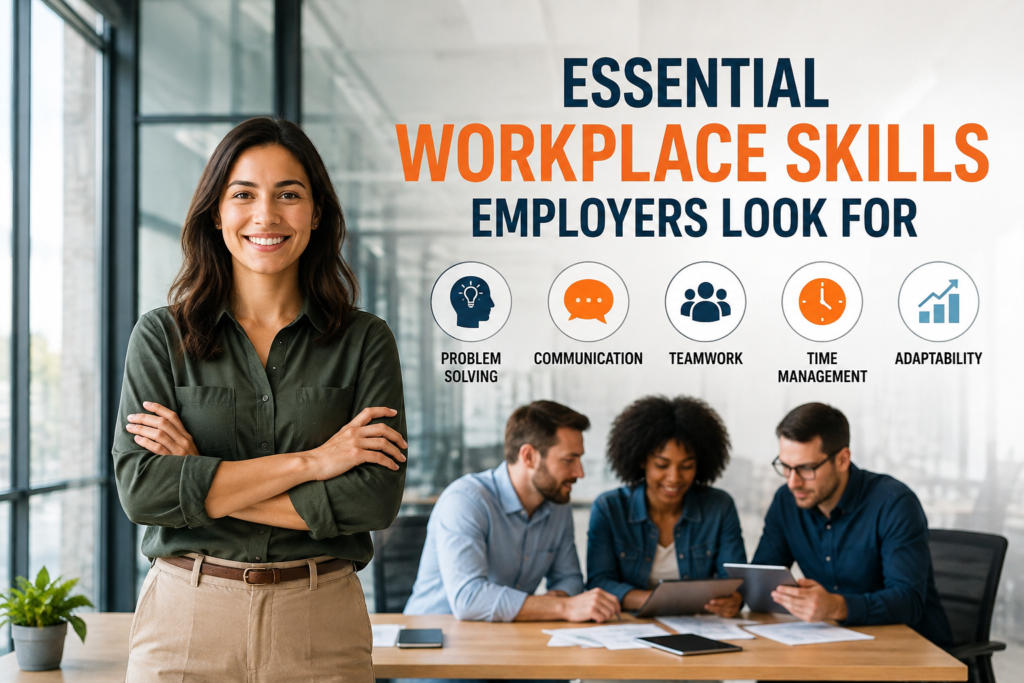
The essential workplace skills employers look for go far beyond academic qualifications. Communication, teamwork, problem solving, time management, adaptability, leadership, emotional intelligence, digital skills, professionalism, critical thinking, creativity, and accountability can all contribute to long term career success.
From my point of view, the best approach is to work on these skills gradually rather than trying to improve everything at once. Choose one area, practice it consistently, and then move to another.
Technical knowledge can help you qualify for a job, but strong workplace skills can help you become the kind of employee that organizations want to keep and develop. If you continue learning, take responsibility for your work, communicate respectfully, and remain adaptable, you can build a stronger professional reputation and create better opportunities for your future.