
Related Articles



When I work on SEO for a blog or website, I believe small details can make a big difference. One of those details is the meta description. It may look like a short piece of text, but a well written meta description can help attract attention in search results and encourage people to visit a page.
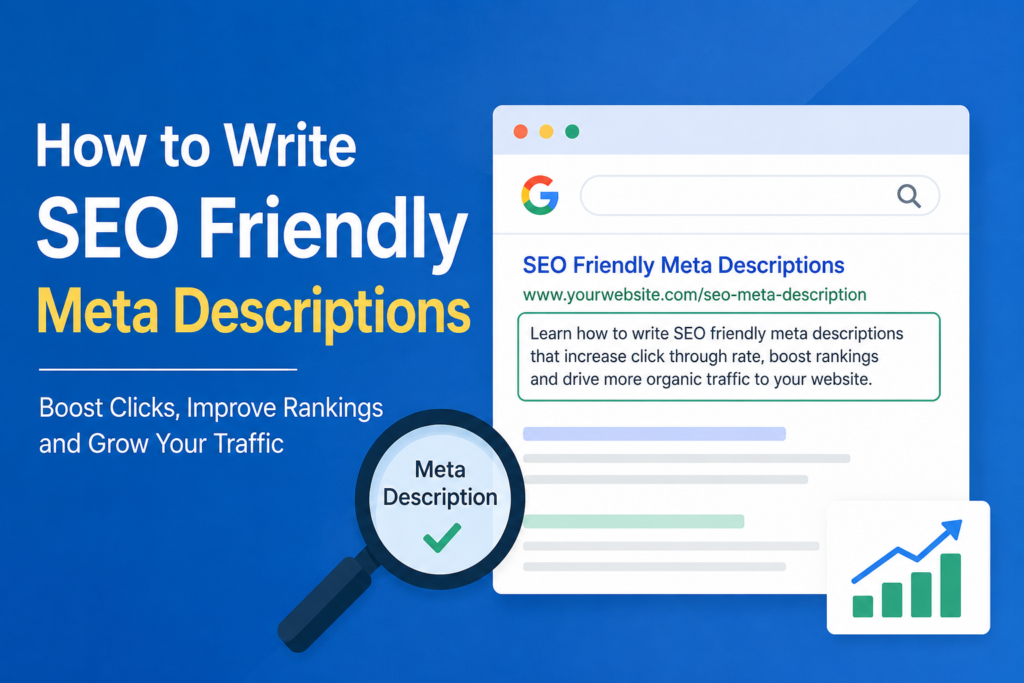
A meta description is a short summary of a web page that can appear below the page title in search engine results. Its main purpose is to explain what the page is about and give searchers a reason to click. While a meta description is not simply a place to add keywords, writing it carefully can support a better search experience and potentially improve clicks from organic search.
In this article, I will explain how I write SEO friendly meta descriptions, what makes them effective, common mistakes to avoid, and how you can create better descriptions for your own website.
What Is a Meta Description?
A meta description is an HTML element that provides a brief summary of a webpage. Search engines may use it as the description shown in search results, although they can also choose other text from the page when they believe it better matches the search query.
For me, the easiest way to understand a meta description is to think of it as a short introduction to a webpage. The title tells people what the page is about, while the meta description gives them more information about what they can expect after clicking.
For example, if your article is about keyword research, a simple meta description could be:
“Learn how to do keyword research for your website with simple techniques to find useful keywords, understand search intent, and attract more organic traffic.”
This tells the reader what they will learn and naturally includes the main topic.
Why Meta Descriptions Matter for SEO
Meta descriptions are important because they can influence how your page appears in search results. When people see a clear and useful description, they can quickly understand whether the page is relevant to their search.
I do not look at a meta description as a place to force keywords. Instead, I treat it as a small piece of marketing copy. Its job is to make the searcher interested enough to click.
A good meta description can communicate relevance, answer a user’s basic question, highlight the value of the page, and create curiosity.
It is also important to remember that search engines do not always display the exact meta description you provide. They may rewrite it based on the search query and the content of your page. This is why the actual page content should always match the description.
Keep Your Meta Description Concise
One of the first things I consider when writing a meta description is length. A meta description should provide enough information to be useful without becoming unnecessarily long.
There is no permanent character limit that guarantees your description will always display perfectly because search result snippets can vary depending on device, query, and search engine behavior.
Instead of trying to reach an exact character count, I focus on communicating the main benefit quickly.
For example, instead of writing:
“If you are interested in learning about SEO and want to understand all the different things that you need to do in order to make your website perform better in search engines, this guide can help you.”
I would make it more direct:
“Learn practical SEO techniques to improve your website visibility, attract organic traffic, and create better search focused content.”
The second version is easier to read and communicates the purpose much faster.
Use Your Main Keyword Naturally
Keyword placement is another important part of writing an SEO friendly meta description.
If my target keyword is “SEO friendly meta descriptions,” I try to include that phrase naturally when it makes sense.
For example:
“Learn how to write SEO friendly meta descriptions that attract attention, explain page value, and encourage more organic clicks.”
The keyword fits naturally into the sentence. There is no need to repeat it several times.
Keyword stuffing can make a description look unnatural and may reduce its appeal to real readers. Search engines are increasingly focused on understanding meaning and intent, so I prefer writing for people first.
Match Search Intent
One of the most useful things I have learned about SEO is that search intent matters.
Before writing a meta description, I ask myself what the person searching for the keyword actually wants.
Someone searching for “how to write meta descriptions” probably wants instructions. Someone searching for “best SEO tools” may want recommendations or comparisons. Someone searching for “meta description examples” probably wants examples.
The meta description should reflect that intent.
For an informational article, I might write:
“Discover how to write effective meta descriptions with practical tips, examples, keyword placement ideas, and common mistakes to avoid.”
This tells the searcher that the page contains useful information related to their question.
Give Readers a Reason to Click
A meta description should not simply repeat the page title. It should add value.
When I write one, I try to answer a simple question: why should someone click this result instead of another one?
You can mention what the reader will learn, what problem the page solves, or what useful information is included.
Words such as “learn,” “discover,” “find,” “understand,” and “explore” can work well when they accurately describe the content.
For example:
“Learn how to optimize blog posts for search engines with practical SEO tips, keyword strategies, content ideas, and optimization techniques.”
The reader immediately understands the benefit of visiting the page.
Make Every Meta Description Unique
I recommend creating a unique meta description for every important page on your website.
Using the same description across many pages does not help users understand the differences between those pages. Each page has its own purpose, so the description should reflect that purpose.
For example, a homepage might have a general description about the website. A blog post should describe the specific topic of that article. A product page should explain the product and its main benefits.
Unique descriptions make your website look more organized and can make search results more useful for visitors.
Avoid Keyword Stuffing
One of the biggest mistakes I see in SEO writing is trying to insert the same keyword repeatedly.
For example, this is not a good approach:
“SEO friendly meta descriptions are important for SEO. Learn SEO friendly meta descriptions and SEO meta description tips for SEO.”
It sounds artificial and provides very little value.
A better approach is to write naturally:
“Learn how to create clear meta descriptions that explain your content, match search intent, and encourage users to visit your page.”
The second version is more readable and focuses on the user instead of simply repeating keywords.
Use a Clear Call to Action
A call to action can make a meta description more engaging. It does not need to sound like an advertisement.
Simple phrases such as “Learn how,” “Discover practical tips,” or “Find useful examples” can encourage action when they accurately describe the page.
For example:
“Learn how to write SEO friendly meta descriptions with practical examples and simple optimization tips you can apply today.”
This gives the reader a clear reason to continue.
I would avoid exaggerated claims such as “guaranteed number one rankings” because they can make the description look unreliable and may not accurately represent the content.
Write for Humans First
SEO is important, but I believe the person reading the search result should always come first.
A meta description should sound like something a real person would write. It should be clear, useful, and easy to understand.
I avoid unnecessary technical language unless the audience actually needs it. I also avoid stuffing the description with multiple keywords just because they have search volume.
Good SEO content should connect search engines with real people. The meta description is one of the first opportunities to make that connection.
Include the Main Benefit
A strong meta description usually communicates a benefit.
If I am writing about website speed, I might say:
“Learn practical ways to improve website speed, reduce loading times, enhance user experience, and create a faster website.”
The description explains what the reader can gain from the page.
The benefit does not always have to be dramatic. It simply needs to be relevant and honest.
Avoid Misleading Descriptions
Your meta description should accurately represent your content.
If your description promises ten tips but the article only contains five, visitors may feel disappointed. If you promise a detailed guide but provide only a short introduction, the page may not meet expectations.
I believe honesty is especially important when creating SEO content. Getting a click is useful, but getting the right click is much more valuable.
A relevant visitor is more likely to read the article, explore other pages, and potentially return to your website.
Add Important Supporting Keywords
Your primary keyword should usually receive the most attention, but related terms can also make your description more natural.
For example, if your main keyword is “SEO friendly meta descriptions,” related concepts could include search results, organic traffic, click through rate, search intent, and website optimization.
You do not need to include every related keyword. Choose words that naturally explain the topic.
This approach helps the description sound informative instead of artificially optimized.
Common Meta Description Mistakes
There are several mistakes I try to avoid when creating meta descriptions.
The first is writing a description that is too vague. Saying “Visit our website to learn more” does not tell the reader anything useful.
The second mistake is keyword stuffing. Repeating the same phrase can make the text difficult to read.
Another mistake is copying the same description across multiple pages.
I also avoid misleading statements, unnecessary punctuation, excessive capitalization, and descriptions that do not match the actual content.
A meta description should be simple, accurate, and focused.
Meta Description Examples
Here are a few examples of how I would approach different topics.
For an SEO article:
“Learn practical SEO strategies to improve website visibility, attract organic traffic, and create content that matches search intent.”
For a keyword research article:
“Discover how to find useful keywords for your website using search intent, competition, relevance, and content focused research.”
For a blogging article:
“Learn how to write better blog posts with SEO friendly content structure, keyword placement, engaging headings, and useful writing tips.”
For a website speed article:
“Discover simple ways to improve website speed, reduce loading times, enhance user experience, and create a faster browsing experience.”
Notice that each description explains the topic and gives the reader a reason to visit the page.
How I Create an SEO Friendly Meta Description
My process is quite simple.
First, I identify the primary keyword and understand the search intent behind it.
Second, I look at the main benefit of the page.
Third, I write one natural sentence that explains what the reader will find.
Fourth, I add the main keyword where it fits naturally.
Fifth, I remove unnecessary words and make the description easy to scan.
Finally, I check whether the description accurately represents the article.
This process usually gives me a much better result than trying to write a description by focusing only on keyword density.
Final Thoughts
Writing SEO friendly meta descriptions is not about filling a small space with as many keywords as possible. For me, it is about creating a clear and useful introduction that helps people understand why a webpage is worth visiting.
A good meta description should be concise, relevant, natural, and focused on search intent. It should include the main keyword when appropriate, communicate the value of the page, and encourage the right audience to click.
I also believe that meta descriptions should be written for humans first. Search engines may change how they display snippets, but useful and honest content remains important.
If you consistently create unique meta descriptions that accurately describe your pages and give readers a clear reason to click, you can make your search results more attractive and create a better experience for your audience.
The best approach is simple: understand what your audience wants, explain how your page helps them, use your keyword naturally, and write every description with a real reader in mind.
That is how I approach SEO friendly meta descriptions, and it is a practical strategy that can fit almost any blog or website.