
Related Articles



Building a long term career plan is one of the best things you can do if you want more direction in your professional life. In my opinion, a career should not be treated as something that simply happens to us. We make choices every day that can influence where we work, what we earn, what skills we develop, and how satisfied we feel with our professional life.
A long term career plan does not mean that you have to know exactly where you will be ten or twenty years from now. The job market changes, personal priorities change, and new opportunities can appear unexpectedly. Instead, a good career plan gives you a general direction while leaving enough room to adjust when circumstances change.
If you are serious about career growth, the first step is to understand yourself, set realistic goals, develop valuable skills, and regularly review your progress.
Understand Where You Are Right Now
Before creating a long term career plan, take some time to understand your current position. It is difficult to decide where you want to go if you do not know where you are starting.
Look at your current education, experience, skills, interests, strengths, and weaknesses. Think about the type of work you enjoy and the responsibilities that make you feel motivated. At the same time, consider the parts of your current work that you do not enjoy.
I believe honest self assessment is extremely important at this stage. Sometimes people choose careers because their friends, family, or society expects them to follow a particular path. However, a career that looks impressive to someone else may not be the right choice for you.
Write down what you are good at and what you want to improve. This simple exercise can help you identify possible career directions.
Define Your Career Goals
Once you understand your current position, start defining your career goals. Your goals should give you something specific to work toward.
Instead of saying, “I want a successful career,” make the goal more meaningful. You might want to become a manager, start your own business, become an expert in a particular field, increase your income, or move into a different profession.
I recommend creating short term, medium term, and long term career goals.
Short term goals may cover the next six months to two years. These could include learning a new skill, improving your resume, completing a course, or finding a better position.
Medium term goals can cover two to five years. You might aim for a promotion, a leadership role, a professional certification, or a major career change.
Long term goals can look five years or more into the future. These goals might involve reaching a senior position, becoming a specialist, building a business, or achieving greater financial and professional independence.
Your goals do not need to be perfect. They simply need to give your career a clear direction.
Research Your Desired Career Path
One mistake I often see people make is choosing a career path without understanding what it actually requires. Before committing yourself to a particular direction, research the industry and roles you are considering.
Look at common job titles, required qualifications, important skills, salary expectations, career progression, and future opportunities. Read job descriptions from companies that interest you and notice which qualifications appear repeatedly.
This research can help you understand the gap between your current position and your desired career.
For example, if your goal is to become a project manager, you may discover that employers value communication, organization, leadership, budgeting, problem solving, and project management knowledge. Once you understand these requirements, you can build your career plan around developing them.
Good research makes your career goals more realistic and practical.
Identify the Skills You Need
Skills are one of the most important parts of a long term career plan. A degree or job title may help you enter a profession, but your skills often determine how far you can progress.
Start by identifying the skills that are important in your desired career. Separate them into technical skills and soft skills.
Technical skills may include software knowledge, data analysis, writing, programming, marketing, accounting, design, or industry specific knowledge.
Soft skills include communication, teamwork, leadership, time management, adaptability, problem solving, and emotional intelligence.
In my view, you should never stop learning. Even if you are comfortable in your current position, industries continue to change. Learning new skills can help you remain competitive and prepared for new opportunities.
Create a simple learning plan and focus on one or two important skills at a time rather than trying to learn everything at once.
Gain Practical Experience
Learning from books and courses is useful, but practical experience is equally important. Employers usually want to see evidence that you can apply what you know.
Look for opportunities to gain experience through your current job, freelance projects, internships, volunteering, personal projects, or professional organizations.
If you want to move into a new career but do not have direct experience, personal projects can be particularly useful. They allow you to demonstrate your abilities even before you get your first job in that field.
For example, someone interested in digital marketing could create a small website, develop a content strategy, manage a social media project, or analyze website performance. These experiences can become valuable examples when applying for jobs.
The goal is to turn knowledge into practical ability.
Build a Professional Network
A strong professional network can make a major difference in long term career growth. Networking is not simply about asking people for jobs. It is about developing genuine professional relationships.
Connect with people who work in your industry, attend professional events, participate in online communities, and communicate with experienced professionals.
You can also learn a lot by talking to people who are already working in the career you want. Ask them about their experience, challenges, skills, and career progression.
I believe networking becomes much easier when you focus on learning and building relationships instead of immediately asking for favors.
Over time, your professional network can introduce you to new ideas, opportunities, mentors, and potential employers.
Find Mentors and Learn From Others
A mentor can provide valuable guidance when you are trying to build a long term career. A good mentor does not make decisions for you. Instead, they can share their experience and help you think more clearly about your choices.
Look for someone whose career or professional qualities you respect. This person could be a manager, experienced coworker, teacher, business owner, or industry professional.
You do not necessarily need a formal mentoring program. Sometimes a simple professional relationship can develop into a valuable source of advice.
Learn from both successful people and people who have made mistakes. Their experiences can help you avoid unnecessary problems and make better decisions.
Create an Action Plan
A career goal without an action plan can remain only an idea. Once you know what you want, break your goals into smaller steps.
For example, if your long term goal is to become a senior marketing manager, your action plan might include improving communication skills, learning marketing analytics, gaining leadership experience, completing relevant training, taking responsibility for larger projects, and applying for management opportunities.
Give each step a reasonable deadline. This creates accountability and makes large goals feel more achievable.
I prefer focusing on progress rather than trying to accomplish everything quickly. Small improvements made consistently can have a significant effect over several years.
Review Your Career Plan Regularly
A long term career plan should never be treated as a permanent document. Your interests, responsibilities, industry conditions, and personal goals may change.
I recommend reviewing your career plan at least once or twice a year. Ask yourself what you have achieved, what has changed, which skills you have developed, and whether your original goals still make sense.
You may discover that you want something completely different from what you originally planned. That is not failure. It is part of career development.
A flexible career plan is often more useful than a rigid one because it allows you to respond to new opportunities.
Prepare for Career Changes
No career is completely predictable. Companies change, industries evolve, technology develops, and economic conditions can affect employment opportunities.
This is why I believe career planning should include preparation for change.
Keep your resume updated, maintain your professional network, continue learning, and stay aware of developments in your industry. These habits can make career transitions much easier.
If you are considering changing careers, do not feel that your previous experience has been wasted. Many skills are transferable. Communication, leadership, organization, customer service, research, and problem solving can be useful in many different professions.
Your past experience can become part of your next career rather than something you have to leave behind.
Think About Financial Goals
Career planning should not focus only on job titles. Financial goals are also important.
Think about the income you want in the future and what kind of lifestyle you want to maintain. Consider whether your desired career provides realistic opportunities for financial growth.
This does not mean choosing a career based only on money. Job satisfaction, work environment, personal interests, flexibility, and professional growth are also important.
However, understanding your financial priorities can help you make more informed career decisions.
Protect Your Work Life Balance
A successful career should support your overall life rather than completely consume it.
When creating a long term career plan, think about the lifestyle you want. Consider working hours, flexibility, location, family responsibilities, personal interests, and time for rest.
A high position may look attractive, but it may not be the right choice if the lifestyle does not suit you.
In my opinion, career success is more meaningful when it allows you to grow professionally while still having time for the people and activities that matter to you.
Stay Patient and Consistent
Career growth rarely happens overnight. There may be periods when you feel that you are not progressing quickly enough. It is important not to judge your entire career based on a short period.
Focus on building useful skills, gaining experience, improving your professional reputation, and learning from setbacks.
There will be mistakes and unexpected changes along the way. What matters is how you respond to them.
A long term career plan gives you a direction, but consistency is what helps you move forward.
Final Thoughts
Building a long term career plan is about creating a clear direction for your professional future. You do not need to know exactly where you will be many years from now. What you need is an understanding of your strengths, realistic career goals, valuable skills, practical experience, and a willingness to keep learning.
Start by assessing where you are today. Decide where you would like to go, research the path, identify the skills you need, and create small actionable steps. Build relationships with professionals, look for mentors, and review your progress regularly.
Most importantly, remain flexible. Your career may take a different direction than you originally expected, and that can be a positive thing.
From my perspective, the best career plan is not the one that predicts every detail of your future. It is the one that helps you make better decisions today while keeping you prepared for tomorrow. With patience, continuous learning, and consistent effort, you can build a career that supports both your professional goals and the life you want to live.
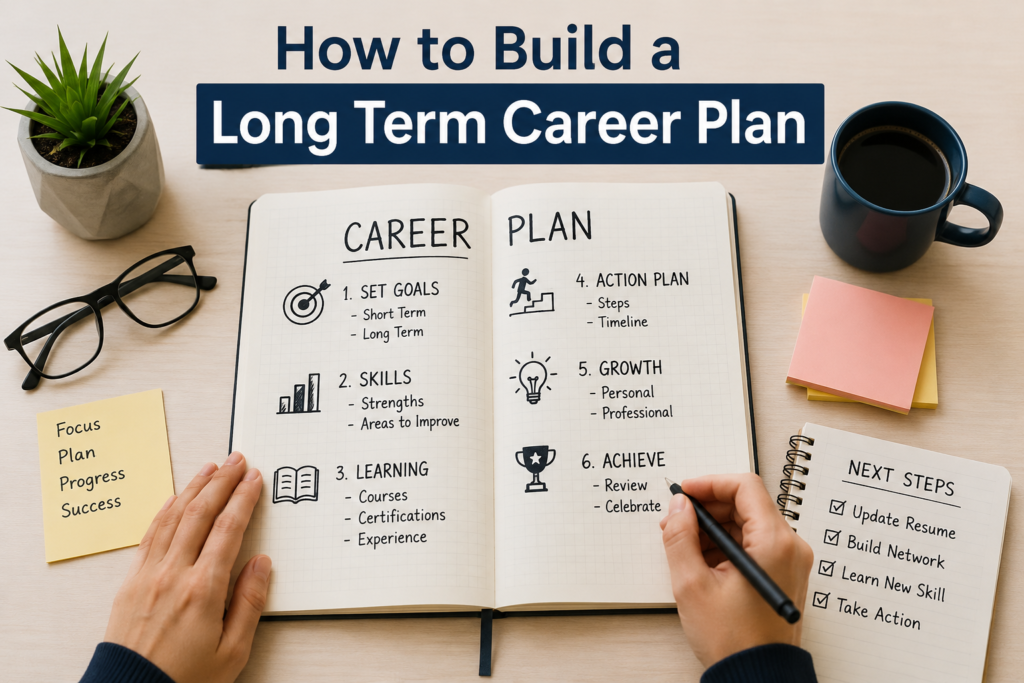
Featured Image: The generated career planning image is suitable as a separate WordPress featured image and does not contain article text or paragraphs.