
Related Articles


A job interview does not always end when you leave the interview room or close your laptop. In my opinion, what you do after the interview can be just as important as how you performed during the interview itself. A thoughtful follow up after a job interview can remind the employer about your interest, show your professionalism, and help you stay connected while the hiring decision is being made.
Many candidates make the mistake of waiting silently after an interview. They assume that contacting the interviewer will make them look desperate. I believe the opposite can be true when the follow up is polite, timely, and useful. The key is knowing what to say, when to say it, and how often to contact the employer.
In this article, I will explain how to follow up after a job interview in a professional and natural way.
Why Follow Up After a Job Interview?
Following up after a job interview gives you another opportunity to make a positive impression. During an interview, there is often a lot of information to discuss, and you may not get the chance to mention everything you wanted to say.
A follow up message allows you to thank the interviewer for their time and reinforce your interest in the position. It also shows that you understand professional communication and know how to maintain a business relationship.
From my point of view, a good follow up should never feel like pressure. Instead, it should feel like a professional continuation of the conversation you already had.
Send a Thank You Message
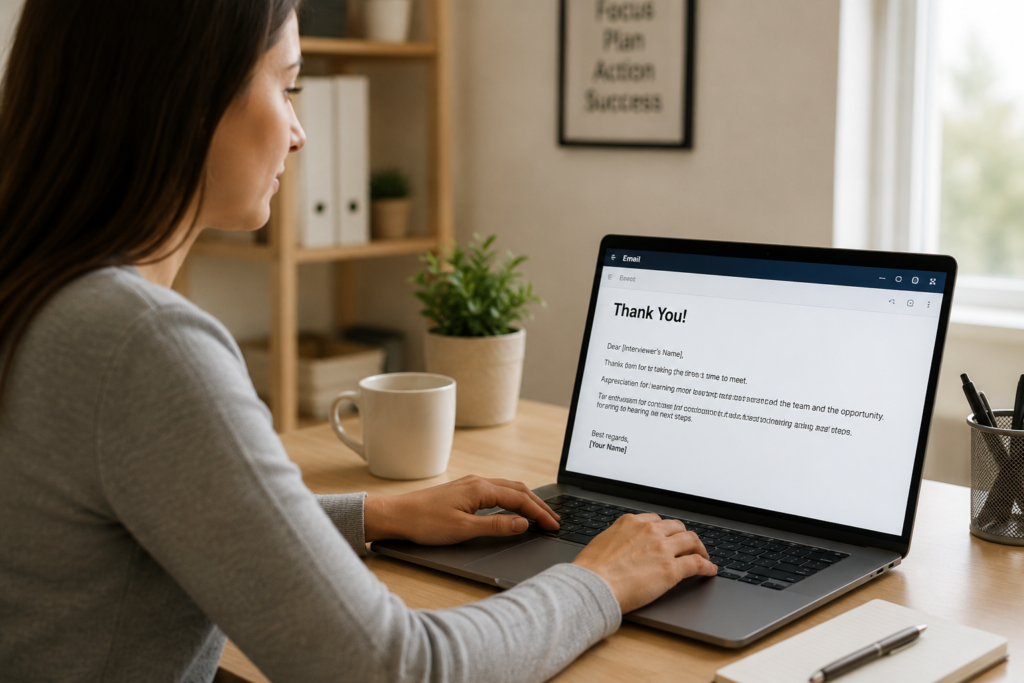
One of the first things I recommend after a job interview is sending a thank you email. Ideally, you should send it within twenty four hours of your interview.
Keep the message short, professional, and personal. Thank the interviewer for their time and mention something specific that you discussed during the interview. This makes your message feel genuine rather than copied from a template.
For example, you could mention an interesting project, company goal, or responsibility that was discussed during the interview. You can also briefly explain why that conversation made you more interested in the position.
A simple thank you can make a stronger impression when it feels personal and sincere.
Make Your Follow Up Personal
One of the biggest mistakes candidates make is sending a generic follow up email. A message that simply says, “Thank you for the interview. I am waiting for your response,” does not give the employer much reason to remember you.
Instead, think about the conversation you had.
Did the interviewer explain a challenge the company is facing? Did they talk about a particular project? Did you discuss a skill that is important for the role?
Mentioning one of these details can make your follow up more meaningful.
For example, you might say that you enjoyed learning about the company’s upcoming project and believe your experience could help support that work. This reminds the interviewer of your discussion while also reinforcing your qualifications.
Follow Up When You Have Not Heard Back
Sometimes an interviewer gives you a specific date for the hiring decision. If that date passes and you have not received an update, it is completely reasonable to send a polite follow up.
I suggest waiting a reasonable amount of time after the expected response date. Then send a short email asking whether there is an update regarding the position.
Your goal should not be to demand an answer. Your goal is simply to communicate that you remain interested.
A professional follow up might say that you are still very interested in the opportunity and would appreciate any update regarding the hiring process.
This approach keeps the conversation positive and respectful.
What Should You Say in a Follow Up Email?
A good job interview follow up email does not need to be complicated. I usually think of it as having four simple parts.
First, greet the interviewer professionally.
Second, thank them for taking the time to speak with you.
Third, mention something specific from the interview and briefly reinforce why you are interested in the position.
Finally, close the email politely and express your interest in hearing about the next steps.
The email should be easy to read. Avoid writing a long explanation about why you need the job. The employer already knows that you are interested because you attended the interview.
Your purpose is to remain professional and memorable.
Avoid Following Up Too Frequently
Following up is useful, but contacting an employer too often can have the opposite effect.
If you send several messages within a few days asking whether a decision has been made, the employer may feel pressured. Hiring managers often have many responsibilities, and recruitment decisions can take longer than expected.
I believe patience is an important part of professional communication.
If you have already sent a thank you email and one reasonable follow up, give the employer some space. If they told you that the process would take several weeks, respect that timeline.
Being patient does not mean you have lost interest. It shows that you understand how professional hiring processes work.
Connect on LinkedIn Professionally
LinkedIn can also be useful after a job interview. If you had a positive conversation with the interviewer, you may consider sending a connection request.
However, I recommend keeping the message short and professional. You do not need to immediately ask about the hiring decision.
You can simply mention that you enjoyed speaking with them and would be happy to stay connected.
Building professional relationships should not always be about getting an immediate result. Sometimes a connection can become valuable later, even if you do not receive the position you originally applied for.
If You Made a Mistake During the Interview
Almost everyone thinks about an interview afterward and remembers something they wish they had answered differently.
Maybe you forgot an important example. Maybe you misunderstood a question. Maybe you became nervous and did not explain your experience clearly.
Do not panic.
A follow up email can sometimes give you an opportunity to clarify an important point. However, I would not recommend sending a long explanation about every answer you think went wrong.
If there is a genuinely important detail that you forgot to mention, you can briefly include it in your thank you message.
For example, you could say that after reflecting on the discussion, you wanted to add a relevant example regarding a particular skill. Keep it concise and professional.
Ask About the Next Steps
If the interviewer did not explain what happens next, it is acceptable to ask.
Understanding the next steps can help you know when to expect a response. It also shows that you are interested in moving forward.
You can ask whether there will be another interview, a skills assessment, a reference check, or another stage in the recruitment process.
The important thing is to ask politely rather than sounding demanding.
Instead of asking, “When will you hire me?” you can say, “I would be grateful if you could share any information about the next steps in the process.”
The second approach sounds much more professional.
What If You Receive No Response?
Unfortunately, sometimes employers do not respond after an interview. This can be frustrating, especially when you believe the interview went well.
My advice is not to take silence personally.
Hiring processes can change because of budgets, internal decisions, restructuring, or other factors that have nothing to do with your performance.
If you have already sent a thank you message and a reasonable follow up, continue your job search rather than waiting indefinitely.
Keep applying for other opportunities and continue improving your interview skills.
A lack of response from one employer should never stop you from moving forward.
Keep Searching for Other Jobs
One of the most important things I have learned about job searching is that you should never depend entirely on one opportunity.
Even if an interview feels perfect, there is no guarantee that you will receive an offer.
Continue applying for jobs while you wait for a response. This keeps your options open and reduces the pressure you may feel about one particular position.
When you continue your job search, you also become more confident because you are not emotionally dependent on a single result.
Common Job Interview Follow Up Mistakes
There are several mistakes that candidates should avoid after an interview.
One mistake is sending a message immediately asking whether you got the job. Another is writing an extremely long email explaining every detail of the interview.
Some candidates also send multiple follow up messages without waiting for a response. Others use casual language that does not match a professional workplace.
Another common mistake is forgetting to check the email before sending it. A spelling or grammar mistake can make an otherwise good message look careless.
Before sending your follow up email, read it once or twice. Make sure the interviewer’s name is correct and that your message is clear.
A Simple Follow Up Strategy
In my view, the best approach is simple.
Send a thank you email within twenty four hours of the interview. Make it personal by mentioning something relevant from your conversation.
Then wait for the timeline provided by the employer. If they said they would contact you within a week, give them that time.
If the expected date passes without an update, send a short and polite follow up.
After that, use your judgment. If you receive a response, continue the conversation professionally. If you receive no response after reasonable attempts, focus your energy on other opportunities.
This strategy helps you stay interested without becoming overly persistent.
Final Thoughts
Learning how to follow up after a job interview is an important part of professional job searching. A good follow up can show appreciation, reinforce your interest, and keep communication open with the employer.
In my opinion, the most important thing is to be genuine. You do not need complicated words or a perfect template. A short, respectful, and personalized message can be much more effective than a long email filled with unnecessary information.
Remember that the interview is only one part of the hiring process. Your communication after the interview also contributes to the impression you leave behind.
Thank the interviewer, stay patient, follow up at the right time, and continue looking for other opportunities. Most importantly, do not let a delayed response discourage you.
A professional job search requires patience, consistency, and confidence. When you follow up correctly, you show employers that you are serious about the opportunity while also demonstrating the communication skills that many workplaces value.