
Related Articles
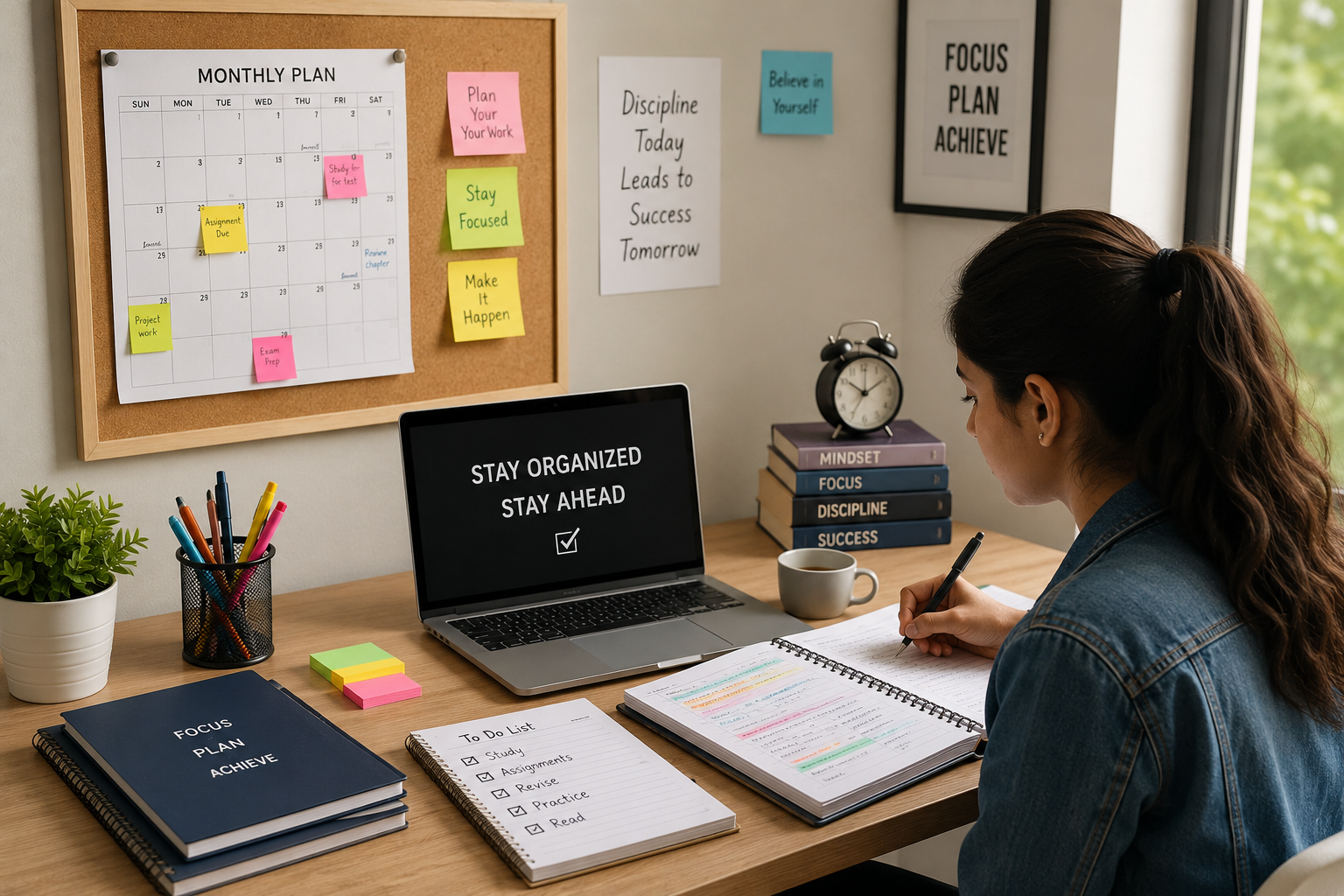


Preparing for exams can sometimes feel stressful, especially when there is a lot of information to cover in a limited amount of time. In my experience, effective studying is not about sitting with books for ten or twelve hours every day. It is about using your time wisely, understanding what you study, and reviewing the information regularly.
Many students spend hours reading the same chapters but still struggle to remember important points during the exam. The main reason is often the study method. If you have the right strategy, a few focused hours can be much more useful than an entire day of distracted studying.
In this article, I will explain how to study effectively for exams, how to create a practical study schedule, how to improve concentration, and how to remember information for longer.
Set Clear Study Goals
The first step toward effective exam preparation is setting clear goals. Instead of opening a book and deciding to study randomly, I prefer deciding exactly what I want to complete during a study session.
For example, instead of saying, “I will study biology today,” set a specific goal such as, “I will complete two chapters of biology and revise the important definitions.”
Clear goals make studying easier because you know what needs to be completed. They also give you a sense of progress when you finish each task.
Try to divide your syllabus into smaller sections. Large chapters can look difficult at first, but smaller topics are much easier to manage.
Create a Realistic Study Schedule
A good study schedule can make a major difference in exam preparation. I believe a realistic schedule is better than an extremely strict timetable that becomes difficult to follow after a few days.
Start by checking how many days are left before your exams. Then make a list of all subjects and important topics. Give more time to subjects or chapters that you find difficult.
You should also leave some time for revision. Many students make the mistake of using all their available time to learn new material and leave no time for reviewing it.
A simple study schedule can include focused study sessions, short breaks, meals, exercise, and enough sleep. Your schedule should support your learning rather than make you feel exhausted.
Study in Short Focused Sessions
Studying for several hours without a break may sound productive, but concentration naturally decreases over time. I find that studying in focused sessions can be much more effective.
You can study for around 40 to 50 minutes and then take a short break. During the study session, keep your attention on one subject or topic. During the break, step away from your books and give your mind a chance to relax.
Short breaks can help you return to your work with better concentration. However, avoid turning a five minute break into an hour of social media or entertainment.
Remove Distractions
One of the biggest problems students face today is distraction. Smartphones, social media, online videos, games, and unnecessary notifications can quickly interrupt a study session.
Before starting your study session, put your phone away or turn off unnecessary notifications. If you need your phone for educational purposes, use it only for the task you are studying.
I also recommend keeping your study area clean and organized. When your desk is full of unnecessary things, it can become harder to concentrate.
A quiet and comfortable place can help you develop a better study routine.
Understand Instead of Memorizing Everything
One of the most important study tips for exams is to understand the topic instead of simply memorizing sentences from a textbook.
When you understand an idea, it becomes easier to remember and explain it in your own words. This is especially important for subjects that require explanations, concepts, and problem solving.
After reading a topic, close the book and try to explain it without looking at your notes. If you can explain the concept clearly, it is a good sign that you understand it.
If you cannot explain it, go back to the material and study the difficult part again.
Make Useful Notes
Good notes can save a lot of time during exam revision. However, your notes do not need to contain every sentence from the textbook.
I prefer making short notes that contain important definitions, formulas, key ideas, examples, and difficult points.
Use headings and simple language so that you can understand your notes quickly later. Highlighting important information can also help, but avoid highlighting almost everything because then nothing looks important.
The purpose of notes is to make revision easier, not to create another large textbook.
Use Active Recall
Active recall is one of the most useful techniques for effective studying. Instead of repeatedly reading the same information, test yourself.
After studying a chapter, close your book and ask yourself questions about what you just learned. Try to answer without checking your notes.
For example, if you are studying the human digestive system, ask yourself what the main organs are, what each organ does, and how digestion takes place.
This method forces your brain to retrieve information instead of simply recognizing it on a page. Regular self testing can make your revision sessions much more productive.
Practice With Past Papers
Past papers are extremely useful when preparing for exams. They help you understand the type of questions that may appear and show you how much time you need for different sections.
After completing a topic, try solving relevant questions without looking at the answers. When you finish, check your mistakes carefully.
Do not feel discouraged when you get questions wrong. Mistakes can show you exactly where you need more practice.
If your exams involve mathematics, physics, chemistry, accounting, or other problem based subjects, regular practice is especially important. Reading solutions is not enough. You need to solve problems yourself.

Use Spaced Revision
Another effective study method is spaced revision. Instead of studying a topic once and forgetting about it until exam day, review it several times over a period of days.
For example, you can study a topic today, review it again after two days, and then revise it again the following week.
This approach helps strengthen your memory and reduces the pressure of trying to learn everything at the last minute.
Regular revision is one of the best ways to prepare for exams because it keeps important information fresh in your mind.
Teach Someone Else
One technique I personally find useful is explaining a topic as if I am teaching someone else.
You do not necessarily need another person. You can explain the topic aloud to yourself.
Try to describe the concept using simple words. If you become confused while explaining something, that usually means you need to study that part again.
Teaching a topic also forces you to organize your thoughts. This can improve both understanding and memory.
Take Care of Your Sleep
Sleep is often ignored during exam preparation, but it is an important part of effective studying. Staying awake all night may give you extra hours with your books, but it can also leave you tired and unable to concentrate properly.
I believe it is better to maintain a consistent sleep routine, especially during the days before an exam.
A rested mind can focus better, process information more effectively, and handle exam pressure more calmly.
Try not to make all night study sessions your regular strategy. Good preparation should include both study time and proper rest.
Eat Well and Stay Hydrated
Your body also needs energy while you study. Try to maintain regular meals and drink enough water throughout the day.
Heavy meals can sometimes make you feel sleepy, so choose foods that help you stay comfortable and energetic.
You do not need a complicated diet during exam preparation. Regular meals, water, and healthy food choices can support your daily routine.
Do Not Ignore Difficult Subjects
Students often spend more time studying subjects they enjoy because they feel comfortable with them. The problem is that difficult subjects can then remain unfinished.
I recommend giving difficult subjects attention early in your preparation. You do not have to study them for many hours at once. Even a focused session every day can gradually improve your understanding.
If you find a particular topic confusing, break it into smaller concepts and learn them one at a time.
You can also ask a teacher, classmate, or tutor for help when necessary. Asking for help is much better than spending days struggling with the same problem.
Review Your Progress
At the end of each day, take a few minutes to check your progress.
Ask yourself what you completed, what remains unfinished, and which topics need another revision.
This simple habit can help you adjust your study plan. If one topic takes longer than expected, you can change your schedule instead of becoming stressed.
Remember that a study plan is a guide. It does not need to be perfect.
Stay Consistent
Consistency is more important than studying extremely hard for one day and then doing nothing for several days.
Even if you can study for only a few focused hours, try to maintain the routine every day.
Small amounts of regular progress can eventually cover a large syllabus. The goal is to build a study habit that you can maintain until the exam.
Do not compare your study routine with someone else’s. Every student learns at a different speed.
Avoid Last Minute Cramming
Last minute studying can sometimes help you remember a few facts temporarily, but it is not a reliable long term strategy.
When you leave everything until the final night, you may become stressed and exhausted. You also have less time to practice questions and review your mistakes.
Starting early gives you more opportunities to understand difficult topics, revise important information, and improve your confidence.
If you have already delayed your preparation, do not waste more time worrying about it. Make a realistic plan and start with the most important topics.
Final Thoughts
Learning how to study effectively for exams is not about finding one magical technique. It is about combining several simple habits that work together.
Set clear goals, create a realistic study schedule, remove distractions, understand concepts, make useful notes, practice active recall, solve past papers, and revise your material regularly. At the same time, remember the importance of sleep, proper meals, breaks, and a positive mindset.
In my opinion, the best exam preparation is consistent and organized. You do not need to study every minute of the day. You need to make the hours you spend studying meaningful.
Most importantly, do not let exam pressure convince you that you cannot succeed. Start with one topic, complete one task, and continue moving forward. With proper planning, regular practice, and consistent effort, you can make your exam preparation much more effective and approach your exams with greater confidence.