
Related Articles
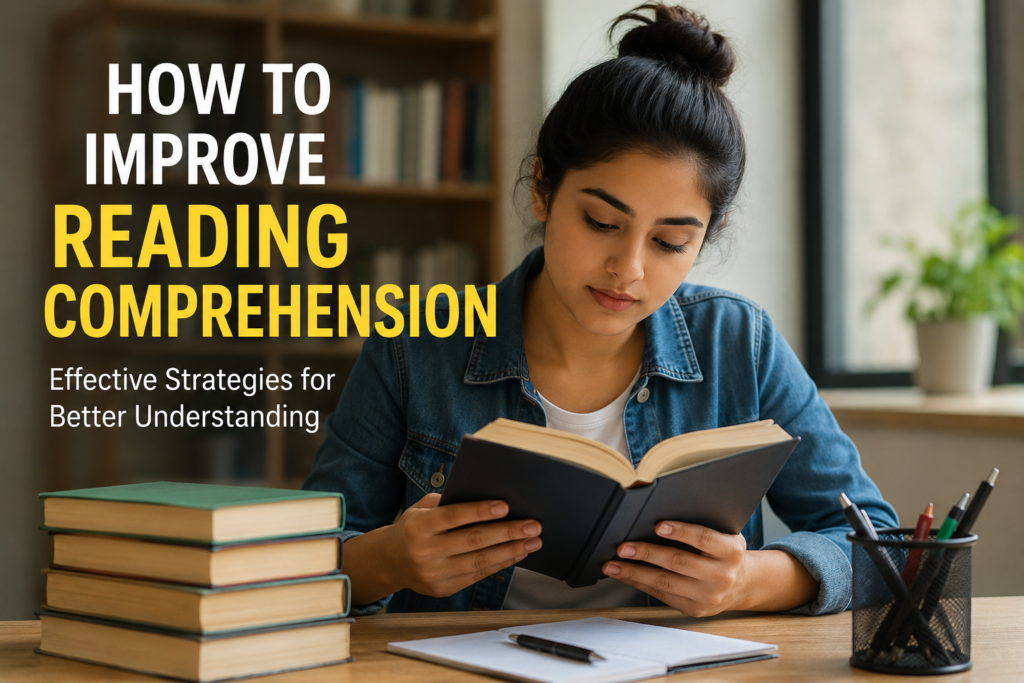
Reading is one of the most important skills a student can develop, but simply reading more books does not always mean that comprehension will improve. In my experience, good reading is not only about moving your eyes across the words. It is about understanding the meaning, connecting ideas, remembering important information, and thinking about what the writer is trying to communicate.
Many students struggle with reading comprehension because they read too quickly, lose focus, have limited vocabulary, or do not actively think about the material. The good news is that reading comprehension can be improved with regular practice and the right techniques.
In this article, I will share some practical ways to improve reading comprehension and make reading more effective, enjoyable, and useful for academic success.
What Is Reading Comprehension?
Reading comprehension is the ability to understand, interpret, and remember information from a written text. It involves more than knowing the meaning of individual words. A reader needs to understand the main idea, identify important details, recognize relationships between ideas, and sometimes make conclusions based on information that is not directly stated.
For students, strong reading comprehension is especially important because almost every subject requires reading. Whether you are studying science, history, literature, business, or technology, your ability to understand written information can directly affect your academic performance.
I believe that improving reading comprehension starts with changing the way we approach reading. Instead of reading passively, we should become active readers.
1. Read With a Clear Purpose
One of the easiest ways to improve reading comprehension is to know why you are reading something.
Before starting a chapter, article, or passage, ask yourself what you want to learn from it. If you are reading for an exam, focus on important concepts and facts. If you are reading a story, pay attention to characters, events, and themes. If you are reading an informative article, look for the main argument and supporting information.
Having a purpose keeps your mind focused and makes it easier to identify important information.
I personally find that asking a simple question before reading can make a big difference. For example, if the heading says “Causes of Climate Change,” I might ask, “What are the major causes, and how do they affect the environment?” This gives my brain something specific to look for.
2. Avoid Reading Too Quickly
Reading faster is not always better. When we rush through a passage, we may finish it quickly but remember very little.
Good reading requires an appropriate pace. Difficult material should be read slowly enough to understand the meaning. Easy material can be read faster.
If you notice that you have reached the end of a page without understanding what you read, stop and go back. There is nothing wrong with rereading. In fact, rereading an important paragraph can improve understanding significantly.
The goal should not be to finish a certain number of pages. The goal should be to understand what you are reading.
3. Build Your Vocabulary
Vocabulary plays a major role in reading comprehension. If you frequently come across unfamiliar words, understanding the overall meaning of a passage can become difficult.
One effective method is to keep a list of new words while reading. Write down the word, its meaning, and a simple sentence using it. Try to use new words in your everyday writing and conversations.
However, I do not recommend stopping for every unfamiliar word. Sometimes the meaning can be understood from the surrounding sentences. Try to guess the meaning from context first, then check a dictionary if necessary.
Reading different types of material is also a great way to develop vocabulary. Books, newspapers, educational websites, essays, and magazines can all introduce you to useful words and expressions.
4. Identify the Main Idea
Every good passage has one or more central ideas. Finding the main idea is one of the most important reading comprehension skills.
After reading a paragraph or section, ask yourself, “What is this mainly about?”
Try to explain the section in one simple sentence. If you cannot explain it, you may need to read it again.
The main idea is often found near the beginning or end of a paragraph, but this is not always the case. Sometimes the writer develops the idea through several sentences.
Learning to identify the main idea makes studying much easier because you can focus on the information that matters most.
5. Pay Attention to Supporting Details
The main idea is important, but supporting details explain, prove, or develop that idea.
These details may include examples, facts, explanations, statistics, descriptions, or reasons. When reading a textbook, try to understand how each detail connects to the main point.
For example, if a paragraph explains that exercise improves concentration, the writer may provide research findings or examples to support that statement.
Understanding this relationship between main ideas and supporting details helps you remember information for longer.
6. Ask Questions While Reading
Active readers ask questions. Instead of simply accepting every sentence, think about what you are reading.
You can ask questions such as:
What is the author trying to explain?
Why is this information important?
What evidence supports this idea?
How does this connect with something I already know?
What might happen next?
These questions force your brain to interact with the text. This makes reading more active and improves comprehension.
For students, questioning is especially useful when preparing for exams because it encourages deeper understanding rather than simple memorization.
7. Make Predictions
Prediction is another useful reading comprehension strategy. Before and during reading, try to predict what might happen next or what the writer might discuss.
For example, when reading a story, look at the title and introduction and think about what could happen. When reading an academic chapter, use the headings to predict what information you may find.
After reading, check whether your prediction was correct.
This simple activity keeps your mind engaged and encourages you to pay attention to details.
8. Take Short Notes
Taking notes while reading can improve both understanding and memory. However, you do not need to write down every sentence.
Focus on key points, important terms, definitions, examples, and conclusions.
I prefer writing short notes in my own words because rewriting information forces me to understand it. Copying entire sentences from a book may save time initially, but it does not always help with learning.
A good note should remind you of the idea without requiring you to read the entire passage again.
9. Summarize What You Read
One of the best ways to check reading comprehension is to summarize the material after reading.
Close the book or move away from the screen and explain what you remember. Try to describe the main idea and the most important supporting points in your own words.
If you can explain the material clearly, you probably understood it well. If you struggle to explain it, return to the text and review the confusing sections.
Summarization is particularly helpful for students because it combines reading, thinking, remembering, and writing.
10. Read Without Distractions
Concentration has a major effect on reading comprehension. If you are constantly checking your phone, watching videos, or responding to notifications, your attention is divided.
Try to create a quiet reading environment. Put your phone away or turn off unnecessary notifications. Choose a comfortable place where you can focus.
Even twenty or thirty minutes of focused reading can be more useful than an hour of distracted reading.
I believe consistency is more important than extremely long study sessions. A regular reading habit can gradually improve concentration and comprehension.
11. Read Different Types of Material
If you want to improve reading comprehension, do not limit yourself to one type of content.
Read fiction to develop understanding of characters, events, and themes. Read nonfiction to understand facts and explanations. Read news articles to follow arguments and current events. Read academic material to become comfortable with technical language.
Different types of reading require different skills. Exposure to different writing styles makes you a more flexible reader.
12. Practice Active Reading
Active reading means interacting with the text instead of simply looking at words.
Underline important ideas, highlight useful information, write questions in the margin, make short notes, and connect new information with what you already know.
Before reading, preview the material. During reading, ask questions and identify important points. After reading, summarize and review.
This three stage approach can make a noticeable difference in reading comprehension.
13. Improve Your Concentration Gradually
Some people believe they need to read for hours to become better readers. I disagree. If your concentration is weak, start with a manageable amount of time.
Read for fifteen minutes without checking your phone. Once that becomes comfortable, increase the time to twenty or thirty minutes.
Your ability to concentrate can improve through practice, just like other skills.
The important thing is to stay consistent rather than expecting immediate results.
14. Review What You Read
Forgetting information is normal. That is why reviewing is important.
After reading a chapter, review your notes later in the day. Then revisit the main points after a few days.
Try to recall the information before looking at your notes. This makes your brain work harder and can strengthen your memory.
For students preparing for exams, regular review is much more effective than trying to remember an entire textbook at the last minute.
15. Make Reading a Daily Habit
The most important advice I can give is to read regularly.
You do not have to read for several hours every day. Even twenty minutes of focused reading can be valuable if you do it consistently.
Choose subjects that interest you. When reading becomes enjoyable, it becomes easier to maintain the habit.
Over time, regular reading can improve vocabulary, concentration, critical thinking, writing ability, general knowledge, and reading comprehension.
Final Thoughts
Improving reading comprehension is not something that happens overnight. It is a skill that develops through regular practice and better reading habits.
From my point of view, the biggest change happens when we stop treating reading as a passive activity. We need to think about what we are reading, ask questions, identify main ideas, understand supporting details, and explain information in our own words.
Start with a few strategies instead of trying everything at once. Read with a purpose, slow down when necessary, build your vocabulary, take useful notes, summarize what you read, and remove distractions.
With consistent practice, reading can become easier and more meaningful. Strong reading comprehension can help students perform better in school and can also become a valuable skill for work, communication, and everyday life.
The more actively you read, the more you understand. And the more you understand, the more valuable every page becomes.