Related Articles


Freelancing has become one of the most practical ways to earn money online. You do not always need a large investment, an office, or years of professional experience to get started. What you really need is a useful skill, a willingness to learn, a reliable internet connection, and enough patience to build your reputation.
When I look at freelancing from a beginner’s point of view, I think the biggest challenge is not finding work. The real challenge is understanding where to start and how to present yourself professionally. Many beginners create an account on a freelancing platform and immediately expect clients to contact them. In reality, successful freelancing takes preparation, consistency, and continuous improvement.
In this guide, I will explain how to start freelancing as a beginner and share practical steps that can help you move from having no clients to building a reliable online career.
Understand What Freelancing Really Means
Before starting, it is important to understand what freelancing actually is. A freelancer is a person who provides services to clients without working as a permanent employee of one company.
You can work with different clients and complete different projects according to your skills. Some freelancers work part time while studying or working another job. Others eventually turn freelancing into their full time career.
The most common freelance services include content writing, graphic design, web development, video editing, social media management, virtual assistance, SEO, data entry, translation, and digital marketing.
The good thing about freelancing is that you can start with one skill and gradually add more skills as you gain experience.
Choose the Right Freelancing Skill
The first practical step is choosing a skill that you can actually learn and provide as a service. Do not choose a skill simply because someone says it is making a lot of money.
Think about what you enjoy, what you already know, and what you are willing to practice regularly.
For example, if you enjoy writing, content writing or copywriting could be a good starting point. If you like visual work, graphic design may suit you. If you understand websites and technology, web development or SEO could be a better choice.
As a beginner, I recommend focusing on one primary skill instead of trying to learn everything at once. When you focus on one area, it becomes easier to improve your ability, create a portfolio, and explain your service to potential clients.
Learn Your Skill Before Looking for Clients
One common mistake beginners make is searching for clients before they are ready to deliver quality work. Freelancing is not only about getting a project. It is also about completing that project properly.
You do not need to become an expert before starting, but you should understand the basics of your chosen skill.
There are many free and paid learning resources available online. You can learn through tutorials, courses, practice projects, blogs, videos, and online communities.
I believe practice is more valuable than simply watching tutorials. If you want to become a content writer, write sample articles. If you want to become a graphic designer, create sample designs. If you want to become a video editor, edit short sample videos.
Your goal should be to move from learning to doing as quickly as possible.
Create a Freelancing Portfolio
A portfolio is one of the most important things for a beginner freelancer. Clients want to see evidence of what you can do.
You may think that you cannot create a portfolio because you have never worked with a client. That is not a problem. You can create your own sample projects.
For example, a beginner content writer can create three or four high quality articles on different topics. A graphic designer can create sample social media posts, logos, or banners. A web developer can create sample websites.
Your portfolio should show your best work rather than every project you have created.
Keep it simple, professional, and easy to understand. A client should be able to look at your portfolio and quickly understand your skills.
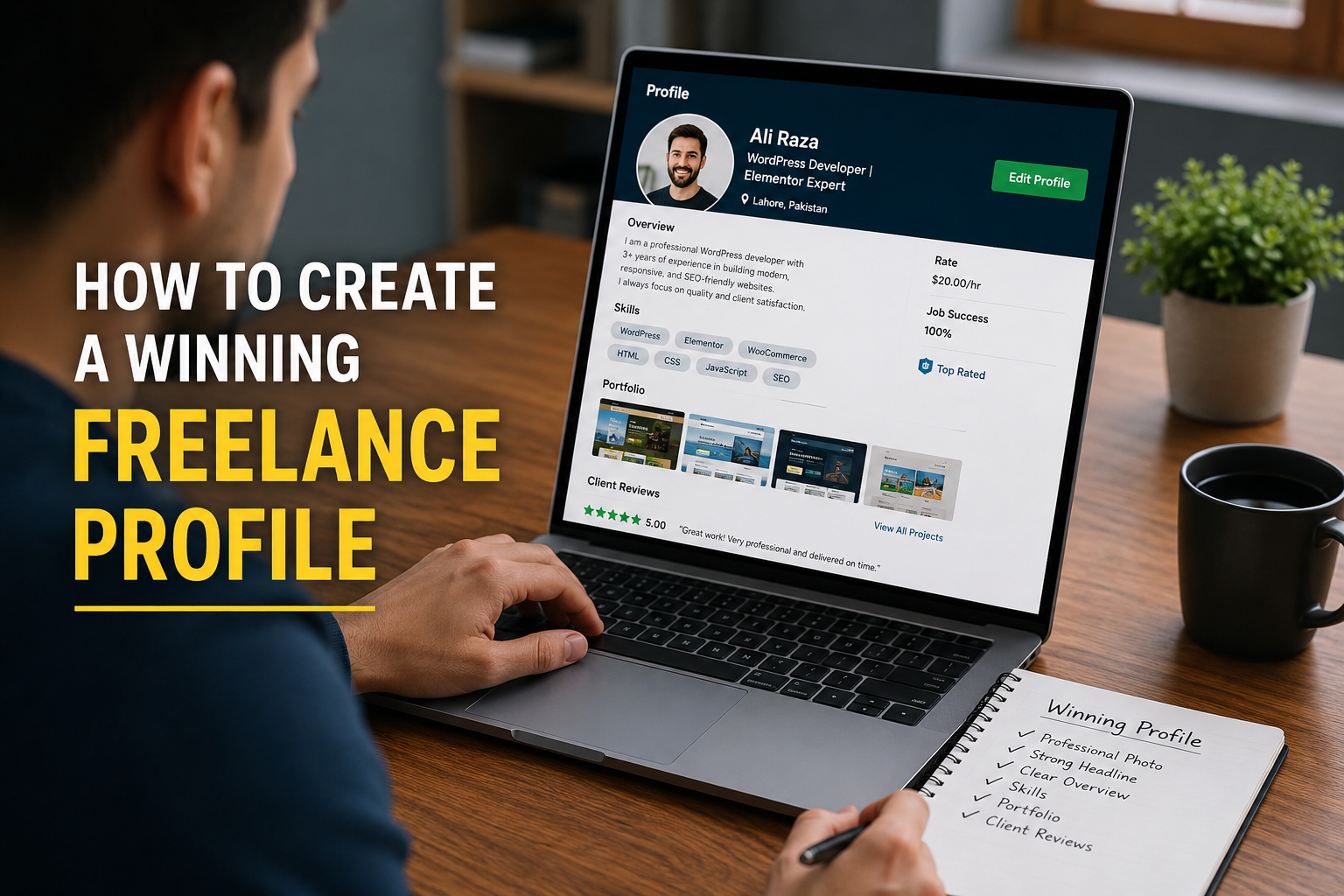
Create a Professional Freelancing Profile
After learning your skill and preparing some samples, create a professional profile on a freelancing platform.
Your profile should clearly explain who you are, what service you provide, and how you can help clients.
Avoid writing a profile that is only about yourself. Instead, think about the client’s problem.
For example, instead of saying that you are a beginner writer who loves writing, explain that you help businesses create clear and engaging website content and blog posts.
Use a professional profile picture if the platform allows one. Write a simple description and mention your main skills naturally.
Your profile should also be honest. Never claim that you have experience or skills that you do not actually have. Trust is extremely important in freelancing.
Write a Strong Freelance Service Description
Your service description can make a big difference when clients are deciding whether to contact you.
Start by explaining the service you provide. Then explain what the client will receive. Include important details about your process, communication, delivery, and revisions when appropriate.
Try to use relevant keywords naturally. If you offer content writing, terms such as content writing, blog writing, SEO writing, website content, and article writing may be relevant.
However, do not fill your description with keywords just for search engines. Your writing should sound natural because real people will read it.
Start With Realistic Pricing
Pricing can be confusing for new freelancers. You may see experienced freelancers charging high rates and wonder whether you should do the same.
When you are just starting, your main goal should be building experience and gaining genuine client feedback. This does not mean you should work for extremely low prices forever.
Research the market and understand what freelancers with similar skills and experience are charging.
Set a reasonable starting price that reflects the quality of your work. As your portfolio becomes stronger and you receive positive reviews, you can gradually increase your rates.
Remember that cheap pricing does not automatically attract good clients. Professional communication, quality work, reliability, and a clear service are also important.
Learn How to Find Freelance Jobs
Creating a profile does not guarantee that you will receive orders. You also need to learn how to find freelance jobs.
Depending on the platform, you may need to apply for projects, create service listings, contact potential clients, or promote your work.
When applying for a project, avoid sending the same generic message to every client.
Read the project description carefully and understand what the client actually needs. Then write a short proposal that directly addresses those needs.
For example, if a client wants a blog article about personal finance, mention your understanding of the topic and explain how you would create useful and readable content.
A personalized proposal usually feels more professional than a copied message.
Improve Your Communication Skills
Good communication is one of the most valuable freelancing skills.
You do not need perfect English to communicate professionally, but your messages should be clear, respectful, and easy to understand.
Respond to clients within a reasonable time. Ask questions when project requirements are unclear. Confirm important details before starting the work.
You should also learn how to communicate about deadlines. If you promise to deliver something on a specific date, make every reasonable effort to meet that deadline.
In my opinion, reliability can sometimes be just as important as technical skill. A client may prefer a dependable freelancer who communicates clearly over someone who is highly skilled but difficult to work with.
Be Careful With Freelance Scams
Beginners should also learn how to recognize suspicious freelance opportunities.
Be careful when someone promises extremely high income for very little work. Avoid sharing sensitive personal information with unknown people. Be cautious if a client asks you to make unusual payments or move a legitimate transaction outside the freelancing platform.
Always understand the platform’s rules and payment process.
If a project sounds too good to be true, take some time to investigate before accepting it.
Protecting yourself is an important part of building a long term freelancing career.
Build Your Reputation One Project at a Time
Your first few projects may not bring a huge amount of money, but they can be valuable for building your reputation.
Focus on delivering quality work and providing a good client experience.
After completing a project successfully, clients may leave positive feedback. Over time, these reviews can make your profile more attractive to future clients.
Do not become obsessed with getting hundreds of reviews immediately. Focus on doing each project well.
A strong reputation develops gradually.
Keep Improving Your Skills
Freelancing changes constantly. New tools, technologies, platforms, and client expectations continue to appear.
This means learning should not stop after you get your first client.
Spend some time each week improving your main skill. Learn about new tools and study successful work in your industry.
For example, a content writer can learn more about SEO, content strategy, research, and editing. A graphic designer can learn new design software and modern design principles.
The more valuable your skills become, the easier it can be to compete for better projects.
Manage Your Time Properly
Freelancing gives you flexibility, but flexibility can become a problem if you do not manage your time.
Create a simple work routine. Decide when you will search for jobs, when you will work on projects, and when you will learn new skills.
Avoid accepting more work than you can realistically complete.
One of the advantages of freelancing is being able to work from home, but you still need discipline. Treat your freelance work seriously even when you are working from your bedroom or home office.
Do Not Give Up Too Quickly
The beginning of freelancing can feel frustrating. You may send several proposals and receive no response. You may create a profile that does not immediately generate orders.
This is normal.
Instead of assuming that freelancing does not work, look at what you can improve. Maybe your profile needs better wording. Maybe your portfolio needs stronger examples. Perhaps your pricing is unclear or your proposals are too generic.
Use rejection as information rather than taking it personally.
Freelancing rewards people who continue learning and improving.
Final Thoughts
Learning how to start freelancing as a beginner is not complicated, but it does require patience and consistent effort. Start by choosing one useful skill, learn the basics, practice regularly, create a strong portfolio, and build a professional freelancing profile.
After that, focus on finding suitable freelance jobs, writing personalized proposals, communicating professionally, and delivering quality work.
You should not expect to become successful overnight. In my view, freelancing is more like building a small online business than simply finding a quick way to make money. Your skills are your product, your portfolio is your proof, and your reputation is one of your most valuable assets.
Start small, keep learning, and improve with every project. Even if your first month is slow, the experience you gain can help you become a more confident and capable freelancer.
The most important step is simply to begin. Once you take that first step and keep moving forward, freelancing can become a realistic way to build skills, earn online, and create more control over your professional life.
Frequently Asked Questions
Can I start freelancing without experience?
Yes. Beginners can start by learning a skill and creating sample projects for their portfolio. You do not need previous clients to demonstrate what you can do.
Which freelancing skill is best for beginners?
There is no single best skill for everyone. Content writing, graphic design, virtual assistance, social media management, video editing, SEO, and web development can all be useful options depending on your interests and abilities.
How long does it take to get a freelance client?
There is no fixed time. Some beginners find clients quickly, while others need weeks or months of learning, improving their profiles, and sending proposals. Consistency is important.
Do I need money to start freelancing?
You can start many freelancing skills with free learning resources and basic equipment. Some professional tools may require payment later, but you can often begin without a large investment.
Is freelancing a good career for beginners?
Freelancing can be a good career option if you are willing to learn, communicate professionally, manage your time, and consistently improve your skills. It should be approached as a long term career rather than a quick money making method.