
Related Articles
When I started paying more attention to website content, I noticed something that many website owners often overlook. Creating new blog posts is important, but updating old content can be just as valuable. A blog post that performed well a year ago may slowly lose traffic because the information becomes outdated, links stop working, search trends change, and readers expect more useful information.
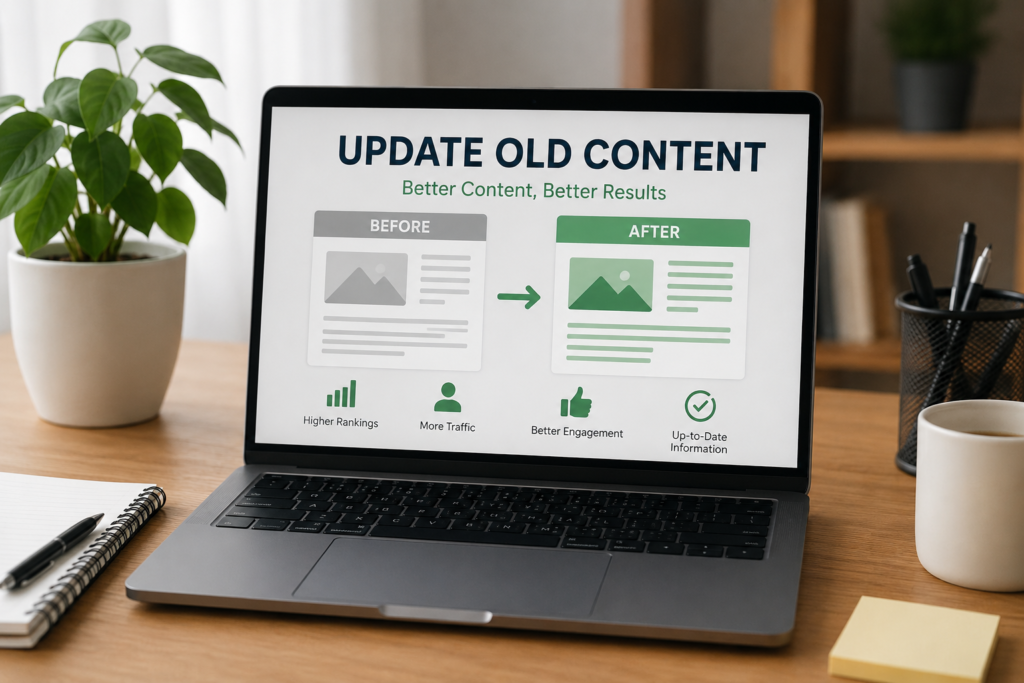
In my experience, old content should not always be treated as something that has already served its purpose. A good article can continue bringing traffic for years when it is regularly reviewed and improved. This is one of the reasons why updating old content is an important part of a successful SEO strategy.
Content updating does not mean completely rewriting every old article. Sometimes a few changes are enough to make an article more useful and relevant. You may need to add recent information, improve the introduction, replace outdated examples, update statistics, fix broken links, or make the article easier to read.
In this article, I will explain why updating old content is important, how it can improve SEO, and how I would approach the process to get better results.
Why Does Old Content Become Outdated?
The internet changes constantly. Information that was correct several years ago may not be accurate today. Search engine algorithms change, products receive new features, industry trends develop, and people search for information in different ways.
For example, an article about website design written several years ago may recommend techniques that are no longer useful. A post about SEO may mention old practices that are no longer recommended. If visitors find outdated information on a website, they may quickly leave and look for a more current source.
This is why I believe every website owner should occasionally review older articles. Even evergreen content needs some attention because the examples, links, statistics, and recommendations may need improvement.
Updating Old Content Can Improve SEO
One of the biggest reasons to update old content is search engine optimization. Search engines aim to provide users with useful and relevant results. When an old article is improved with accurate and helpful information, it can become more valuable to readers.
Updating content also gives you an opportunity to improve the overall SEO of an article. You can review the target keyword, related keywords, headings, internal links, images, title, meta description, and content structure.
For example, if an old article was targeting a keyword that has changed in meaning or search intent, you can adjust the article to better match what users are looking for today.
I would not update an article simply to change its publication date. The goal should always be to make the content genuinely better.
Old Content Can Bring Back Lost Traffic
Sometimes a website has articles that once received a lot of visitors but have gradually lost traffic. This can happen for several reasons.
New competitors may publish better articles. Search results may become more competitive. The original article may no longer answer the complete question. Information may become outdated, or the page may have poor internal linking.
Instead of immediately creating another article about the same topic, I prefer looking at the existing content first.
An old article that already has backlinks, search visibility, and some authority can be a strong foundation. Improving it may be more practical than starting from zero with a completely new page.
This does not guarantee that traffic will return, but updating valuable content can give the page a better chance of competing again.
You Can Add More Useful Information
One of the easiest ways to update old content is by adding information that was missing from the original article.
When I review an older article, I ask myself a simple question. Does this article completely answer the reader’s question?
If the answer is no, I look for areas where I can provide more useful information.
For example, an article about choosing web hosting could be improved by adding information about website speed, security, backups, customer support, storage, and scalability.
The purpose is not to make an article longer just for the sake of increasing the word count. Extra paragraphs should provide real value.
Quality is more important than simply adding words.
Update Old Statistics and Examples
Statistics can become outdated quickly. If an article includes old numbers, research, dates, prices, or industry information, those details should be reviewed.
Imagine reading an article in 2026 that presents statistics from many years ago without explaining that they are historical figures. The content may immediately feel outdated.
I recommend checking every statistic and time sensitive example during a content update.
If a statistic is still useful but cannot be updated, clearly explain when it was published. If a newer and reliable source is available, replacing the old information can make the article more useful.
Examples should also be reviewed. A technology example that was popular several years ago may no longer represent what people commonly use today.
Fix Broken Links
Broken links are another common problem with older blog posts.
Websites move pages, change URLs, remove products, and sometimes disappear completely. As a result, links that worked when an article was published may stop working later.
When updating old content, I recommend checking both internal and external links.
Internal links should point to relevant pages on your own website. External links should lead to reliable and useful sources.
Removing or replacing broken links can improve the user experience and make the article look more trustworthy.
Improve Internal Linking
Updating old content is also a great opportunity to improve your website’s internal linking structure.
As a website grows, you publish more articles. Some of those newer articles may be highly relevant to your older content.
For example, an old article about website creation could naturally link to newer articles about choosing a domain name, selecting web hosting, creating website navigation, and writing useful website content.
These links help readers discover more information and can also help search engines understand the relationship between different pages on your website.
I personally consider internal linking one of the simplest improvements that can make an older article more useful.
Improve the Article Structure
Sometimes an old article contains useful information but is difficult to read. Long paragraphs, weak headings, repetitive sentences, and poor formatting can make readers leave the page.
During an update, I would review the structure of the article from the reader’s perspective.
Use clear headings and short paragraphs. Break complicated sections into simple explanations. Add lists when they genuinely make information easier to understand.
The introduction should quickly explain what the reader will learn. Each section should have a clear purpose, and the conclusion should summarize the main points without unnecessary repetition.
Good formatting can make the same information feel much more useful.
Update the Title and Meta Description
Your title and meta description can have a major influence on whether someone decides to click your page in search results.
An old title may no longer match the current search intent. It may also be too general or fail to communicate the value of the article.
When updating old content, I like to review the title and ask whether it clearly explains what the reader will get from the article.
The meta description should also accurately summarize the content and encourage the right audience to visit the page.
However, I would avoid making exaggerated promises. The title should accurately represent what the article provides.
Refresh Images and Visual Content
Images can also become outdated.
An old screenshot may show an interface that no longer exists. A graphic may contain old information. A featured image may look low quality compared with the visual content used elsewhere on the website.
Updating images can make an old article feel much more current.
I also recommend using descriptive image file names and appropriate alternative text where relevant. Images should support the article instead of distracting from it.
A clean and relevant featured image can also make the article look more professional when it appears on your homepage or social media.
Check the Search Intent
Search intent is one of the most important things to consider when updating old content.
People may search for the same keyword but expect different information than they did several years ago.
For example, someone searching for a website hosting guide may now expect information about website speed, security, backups, performance, and mobile optimization in addition to basic hosting features.
Before updating an old article, I would search for the main keyword and examine the type of information users are currently looking for.
The goal is to make sure the article answers the actual question behind the search.
Updating Old Content Can Save Time
Another advantage of updating old content is that it can save time.
Creating a completely new article requires research, planning, writing, editing, formatting, optimization, images, internal links, and promotion.
An existing article already has a foundation.
If the topic is still relevant and the article has potential, improving it may be more efficient than starting from scratch.
This does not mean I would update every old article. Some pages may have very little value, may target outdated topics, or may overlap heavily with other pages.
The important thing is to identify which old articles are worth improving.
How Often Should You Update Old Content?
There is no single schedule that works for every website.
Some content needs frequent updates because the subject changes quickly. Technology, software, online marketing, finance, product information, and industry news can become outdated much faster than general educational content.
Evergreen topics may only need occasional reviews.
I recommend creating a simple content audit schedule. You can review your most important articles every few months and check other articles at longer intervals.
Pay special attention to pages that already receive traffic, have backlinks, rank for important keywords, or generate leads.
My Simple Process for Updating Old Content
When I update an old article, I prefer to follow a simple process.
First, I check whether the topic is still relevant.
Second, I look at the current search intent and identify what readers expect.
Third, I review the existing article for outdated information, weak sections, broken links, and missing topics.
Fourth, I improve the title, headings, introduction, internal links, and overall structure where necessary.
Fifth, I add useful information and remove unnecessary or repetitive sections.
Finally, I proofread the article and check the images, links, formatting, and SEO elements before publishing the updated version.
This process helps me focus on quality instead of making random changes.
Should You Update Every Old Article?
No. I do not think every old article needs to be updated.
Some articles may have little traffic, no useful backlinks, outdated topics, or information that is no longer relevant to your website.
Instead of spending hours updating every page, focus on content with potential.
Look for articles that already have search visibility but could perform better. These pages may provide the best opportunity for improvement.
You should also look for articles that are receiving visitors but have outdated information. Improving these pages can protect the quality of the experience you provide to existing readers.
Final Thoughts
Updating old content is one of the most practical ways to improve an existing website. In my opinion, content creation should not end when an article is published. Good content deserves regular attention because the internet, search behavior, and user expectations continue to change.
By updating old content, you can improve accuracy, refresh statistics, fix broken links, strengthen internal linking, improve readability, and make your articles more relevant to current search intent.
It can also help you get more value from content you have already invested time and effort into creating.
The most important thing is to update content for the reader first. Do not change an article simply because you want to make it look new. Add useful information, correct outdated details, improve the structure, and make the page genuinely more helpful.
When done properly, updating old content can become an important part of your SEO strategy and overall content marketing plan. Instead of constantly creating new pages, you can also improve the valuable content you already have.
For me, that is the real benefit of content updating. A website should not only keep publishing. It should keep improving.
SEO Keywords: updating old content, why updating old content is important, update old blog posts, old content SEO, content refresh, SEO content update, improve old blog posts, website content strategy, content optimization, update website content
Suggested Meta Description: Learn why updating old content is important for SEO, traffic, readability, and user experience, plus simple ways to refresh and improve old blog posts.