
Related Articles
When I started learning about websites, I used to think that having good content, a clean design, and useful information was enough. With time, I realized that a professional website also needs clear legal pages. One of the most useful pages for many websites is a disclaimer.
A disclaimer may look like a simple page, but it can play an important role in explaining how visitors should understand and use the information provided on a website. Whether you run a personal blog, business website, technology site, educational platform, affiliate website, or informational blog, having a proper disclaimer can make your website look more professional and transparent.
In my opinion, every website owner should understand what a disclaimer is, why it matters, and what information should be included in it. A well written disclaimer can help visitors understand the purpose of your content and the limits of your responsibility.
What Is a Website Disclaimer?
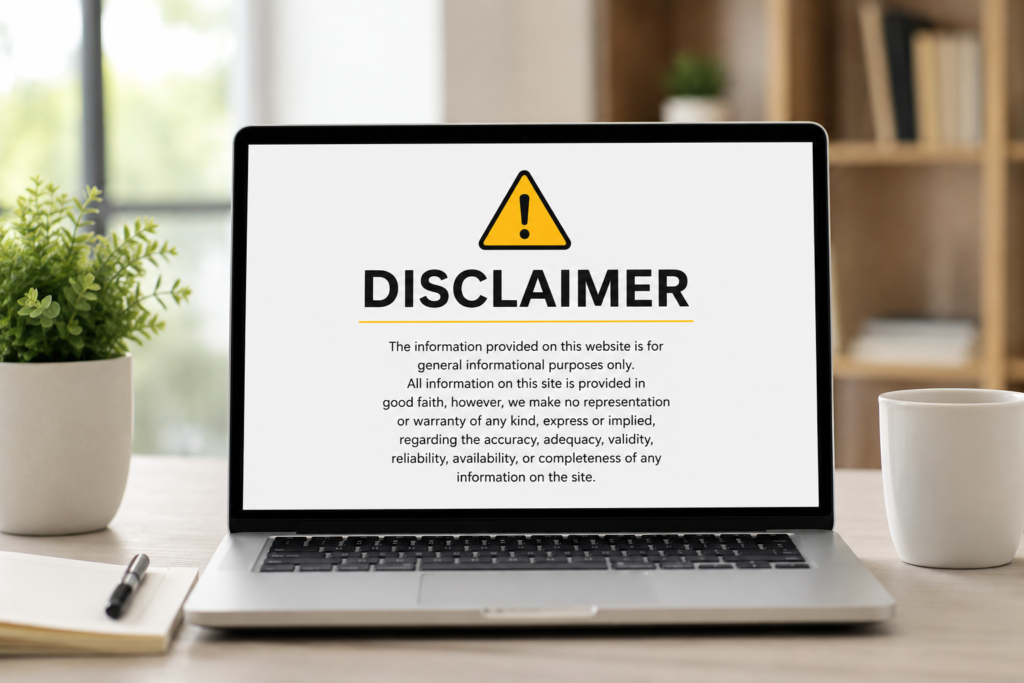
A website disclaimer is a statement that explains the limitations of the information, services, recommendations, or content available on a website. It tells visitors that the information is generally provided for informational or educational purposes and should not automatically be treated as professional advice.
For example, if I write an article about technology, I can explain that the information is based on my research and experience. However, I should not suggest that every reader will get exactly the same results.
The purpose of a disclaimer is not to confuse visitors. Instead, it provides clarity and sets reasonable expectations about the information published on a website.
Why Every Website Needs a Disclaimer
There are several reasons why a website should have a disclaimer. The first reason is transparency. Visitors should know how they are expected to use the information they find on your website.
A disclaimer can also explain that information may change over time. Websites are constantly updated, products change, prices change, and technology develops quickly. Something that is accurate today may need an update later.
Another important reason is responsibility. A disclaimer can help explain that readers should use their own judgment before making decisions based on website content. This is especially important for websites that discuss finance, health, legal topics, technology, business, education, or product recommendations.
However, I would not treat a disclaimer as a magic legal shield. A disclaimer does not automatically protect a website owner from every legal issue. Its effectiveness can depend on the wording, local laws, website activities, and other circumstances. For serious legal concerns, professional legal advice is always better.
A Disclaimer Builds Trust With Visitors
Many people think legal pages are only about protection. I see them differently. They can also help build trust.
When I visit a website and find clear information about how the content is created and how it should be used, I feel that the website owner is being transparent. A professional disclaimer can show that the owner has taken time to think about the visitor experience.
Trust is especially important for websites that publish recommendations or educational content. Readers want to know whether the information is personal opinion, general education, sponsored content, or professional advice.
A simple disclaimer can help make these differences clear.
Disclaimer for Informational Websites
Many blogs publish general information about topics such as technology, blogging, business, education, websites, and online tools.
For these websites, a disclaimer can explain that the content is provided for general informational purposes. It can also tell readers that they should verify important information before making decisions.
For example, if I publish an article explaining how to choose web hosting, I can share my knowledge and recommendations. At the same time, I can explain that hosting performance, pricing, features, and availability may change.
This creates a more honest relationship between the website and its readers.
Disclaimer for Affiliate Websites
Affiliate websites have another important reason to create a clear disclaimer.
If a website earns a commission when visitors purchase products or services through certain links, this relationship should be disclosed clearly. Readers deserve to know when a recommendation may result in a commission for the website owner.
An affiliate disclaimer does not have to be complicated. It should simply explain the relationship in clear language.
For example, a website may explain that some links are affiliate links and that the website may receive a commission if a visitor makes a purchase through them. The goal is transparency.
Affiliate disclosures should also follow the advertising and consumer protection rules that apply to the website and its audience.
Disclaimer for Product Reviews
Product review websites can also benefit from having a disclaimer.
When I review a product, I may share my personal experience, research, opinions, or observations. However, another person may have a completely different experience.
A disclaimer can explain that product information, specifications, prices, availability, and performance can change. It can also clarify that readers should check the official product information before making a purchase.
This is particularly useful for technology blogs, software websites, comparison websites, and shopping related content.
Disclaimer for Health and Fitness Websites
Health and fitness websites should be especially careful with disclaimers.
If a website publishes general information about exercise, nutrition, wellness, or healthy habits, the disclaimer should make it clear that the information is not a substitute for professional medical advice.
Readers should understand that health decisions can be personal and that professional guidance may be necessary.
A disclaimer cannot replace responsible content. Website owners should avoid making unsupported medical claims and should provide information carefully.
Disclaimer for Financial Websites
Financial content also requires careful wording.
A blog may discuss saving money, investing, budgeting, business ideas, or financial planning. However, readers may have different financial situations, goals, and levels of risk.
A financial disclaimer can explain that the content is provided for general educational purposes and should not automatically be considered personalized financial advice.
In my view, this is one of the most important areas where website owners should avoid promising guaranteed results.
What Should a Website Disclaimer Include?
A good disclaimer should be easy to understand. It does not need to contain complicated language just to sound professional.
Depending on the type of website, a disclaimer may include several important points.
First, explain the purpose of the website content. Tell visitors whether the information is intended for general, educational, or informational purposes.
Second, explain that information may not always be complete, current, or suitable for every situation.
Third, if the website publishes opinions, make it clear that opinions belong to the author or website owner.
Fourth, explain affiliate relationships or other forms of commercial disclosure when applicable.
Fifth, mention external links if your website links to third party websites. You can explain that you do not control the content, availability, or policies of those external websites.
Finally, encourage readers to verify important information and seek professional advice when appropriate.
Where Should You Put Your Disclaimer?
I recommend making the disclaimer easy to find.
A common place is the website footer. You can add a Disclaimer link alongside pages such as Privacy Policy, Terms and Conditions, and Contact Us.
You can also link to your disclaimer from relevant articles when the subject requires additional clarification.
For example, a finance article can include a short note directing readers to the full disclaimer page. This gives visitors access to important information without interrupting the main article.
The page should also be accessible from mobile devices because many visitors now browse websites using smartphones.
Keep Your Disclaimer Simple and Honest
One mistake I often see is using extremely complicated language. A disclaimer should be understandable to an ordinary visitor.
Instead of filling the page with confusing legal terminology, explain your website’s purpose in straightforward language.
A good disclaimer should answer simple questions.
What kind of information does the website provide?
How should visitors use that information?
Does the website provide professional advice?
Does the website earn money from affiliate links?
Can information change?
Are external websites controlled by the website owner?
Answering these questions can make the disclaimer much more useful.
Disclaimer and AdSense Friendly Websites
If you are building a website for Google AdSense, creating proper legal and informational pages is a good part of building a professional website.
A disclaimer alone does not guarantee AdSense approval. Website quality depends on many factors, including useful original content, navigation, user experience, compliance with applicable policies, and the overall quality of the website.
Still, having a clear disclaimer can make your website look more complete and transparent.
I would also recommend having other important pages such as About Us, Contact Us, Privacy Policy, and Terms and Conditions where appropriate.
Update Your Disclaimer When Your Website Changes
A disclaimer should not be treated as a page that you create once and never review again.
If your website changes its purpose, starts using affiliate links, introduces sponsored content, publishes new types of information, or begins offering services, your disclaimer may need to be updated.
I recommend reviewing important website policies from time to time. This helps ensure that the information still reflects how the website actually operates.
Final Thoughts
In my opinion, a disclaimer is an important part of a professional website because it improves transparency and helps visitors understand the nature and limitations of website content.
Whether you run a small personal blog or a large informational website, a clear disclaimer can explain how your content should be used. It can also disclose affiliate relationships, clarify opinions, address external links, and set reasonable expectations for readers.
The most important thing is to keep the disclaimer honest, clear, and relevant to your website. Do not copy a random disclaimer from another website and assume it will perfectly fit your situation. Your disclaimer should reflect the actual content and activities of your website.
A professional website is not only about publishing articles and getting visitors. It is also about creating trust, being transparent, and giving readers the information they need to understand your website properly.
That is why I believe every website should consider having a clear and well written disclaimer. It is a small page, but it can be an important part of building a trustworthy online presence.