
Related Articles
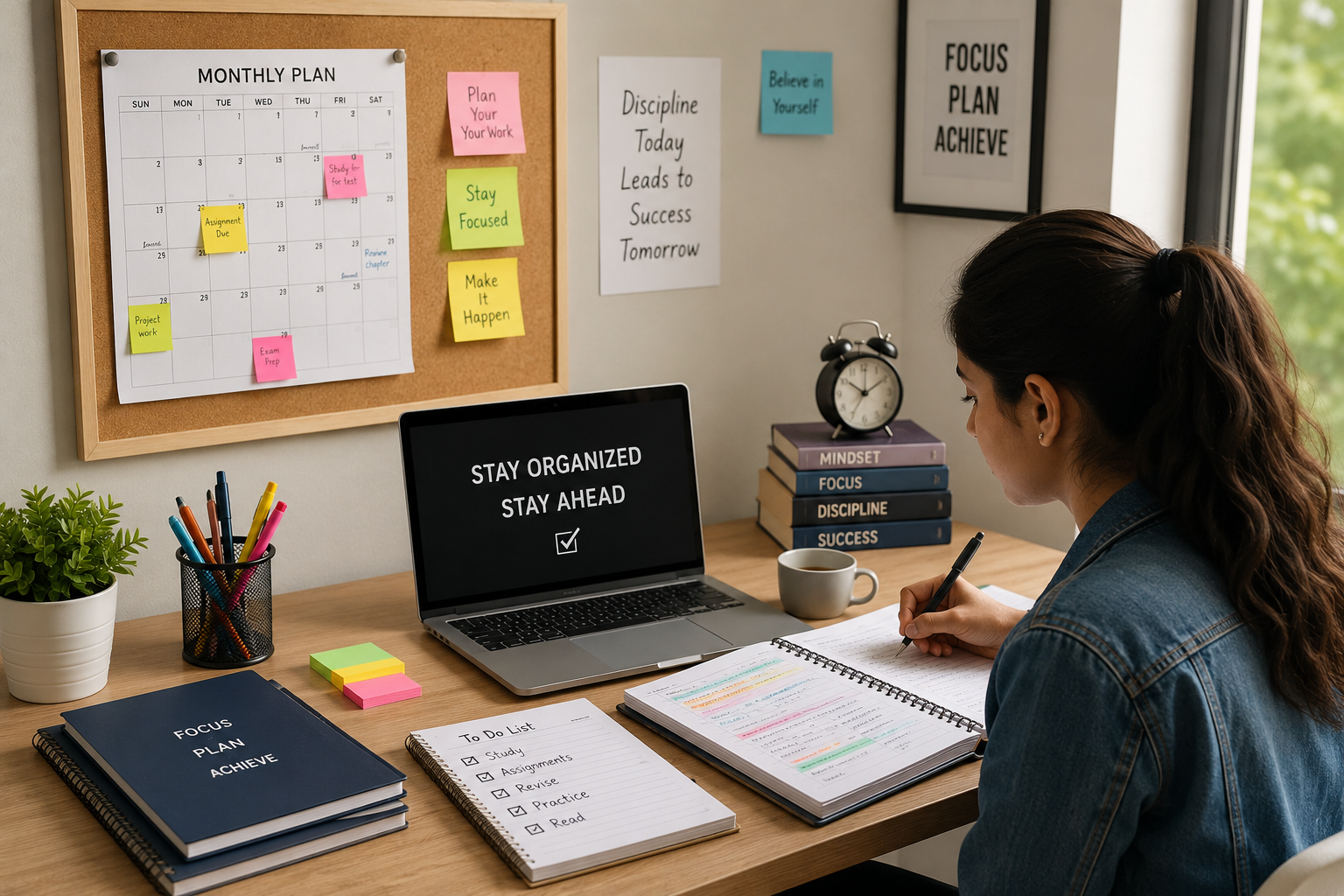


Studying is an important part of student life, but studying for long hours does not always mean learning effectively. In my opinion, the real difference comes from knowing how to study, how to manage time, and how to stay focused when the work becomes difficult. Good study skills can help students understand lessons better, remember information for longer, prepare for exams, and feel more confident about their academic performance.
I believe study skills are not something students are simply born with. They are habits that can be learned and improved with regular practice. Every student has a different learning style, but some basic techniques can benefit almost everyone. In this article, I will discuss the best study skills every student should learn and explain how these skills can make studying more productive.
1. Learn How to Manage Your Time
Time management is one of the most important study skills for students. Many students wait until an assignment or exam is very close before they start studying. This often creates stress and makes learning more difficult.
I believe students should create a simple study schedule based on their classes, assignments, exams, and personal responsibilities. Instead of trying to study everything in one day, divide the work into smaller sessions.
For example, a student can spend one hour reviewing mathematics, another hour reading science, and some time completing an assignment. A realistic schedule is easier to follow than a plan that is too demanding.
Good time management also means knowing when to take breaks. Studying continuously for several hours can reduce concentration. Short breaks can help the mind stay fresh and focused.
2. Set Clear Study Goals
Studying without a clear goal can make it difficult to know whether you are making progress. Before starting a study session, I recommend deciding exactly what you want to accomplish.
Instead of saying, “I will study history,” create a specific goal such as, “I will review two chapters and answer ten practice questions.”
Clear study goals give students direction. They also make large tasks feel easier because students can focus on one small objective at a time.
I have found that realistic goals are much more useful than setting extremely ambitious targets. Completing a few meaningful tasks every day can produce better results than creating a huge plan that is difficult to maintain.
3. Practice Active Learning
One of the best study skills every student should learn is active learning. Simply reading the same page again and again does not always mean that the information has been understood.
Active learning requires students to interact with the material. This can include asking questions, explaining ideas in their own words, solving problems, creating examples, and testing their memory.
For example, after reading a chapter, close the book and try to explain the main ideas without looking at your notes. If you cannot explain something, return to that section and study it again.
This approach helps students identify what they actually understand and what still needs attention.
4. Develop Good Note Taking Skills
Taking useful notes can make studying much easier. However, good notes are not about writing every word the teacher says. The purpose of note taking is to record important ideas in a way that makes sense later.
I prefer notes that are organized, simple, and easy to review. Students can use headings, short explanations, examples, important terms, and questions.
It is also helpful to rewrite complicated information in your own words. When students process information instead of copying it mechanically, they are more likely to understand and remember it.
After class, spending a few minutes reviewing notes can also prevent information from being forgotten.
5. Use Spaced Repetition
Spaced repetition is a powerful learning technique that involves reviewing information at different times instead of trying to memorize everything in one sitting.
For example, a student can review new material on the same day, then again after a few days, and again the following week. This gives the brain repeated opportunities to recall the information.
I believe this is especially useful for subjects that require memorization, such as vocabulary, formulas, definitions, dates, and important concepts.
Regular review is usually more effective than last minute memorization because students have more time to identify and correct areas they do not understand.
6. Practice Retrieval
Retrieval practice means trying to remember information without looking at the answer. This is one of the study techniques I strongly recommend.
Students can close their books and write down everything they remember about a topic. They can also use flashcards, practice tests, questions, or short quizzes.
The important part is attempting to retrieve the information from memory.
When students discover that they cannot remember something, they can review it and try again. This process can make future recall easier.
7. Improve Reading Skills
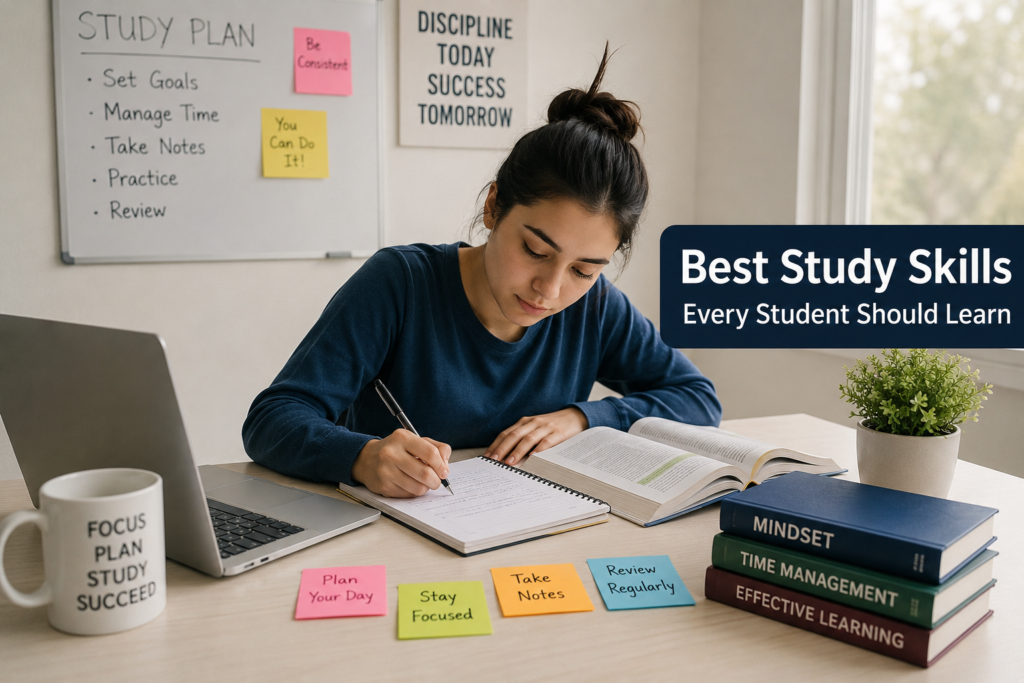
Students spend a significant amount of time reading textbooks, articles, research papers, and study materials. Learning how to read effectively can therefore save time and improve understanding.
Instead of reading every sentence at the same speed, students should first look at headings, subheadings, important terms, charts, and summaries. This gives them an idea of what the material is about.
While reading, ask questions such as:
What is the main idea?
What evidence supports this idea?
How does this information connect with what I already know?
At the end of a section, summarize the important points in your own words. This turns reading into an active learning activity.
8. Learn How to Avoid Distractions
Concentration is becoming increasingly difficult for many students because phones, social media, notifications, games, and entertainment are always available.
In my opinion, one of the simplest ways to improve concentration is to create a study environment with fewer distractions.
Put the phone away or turn off unnecessary notifications while studying. Keep only the materials needed for the current task on the desk.
Students can also choose a quiet place where they feel comfortable. A clean and organized study area can make it easier to begin work and remain focused.
9. Use the Pomodoro Technique
The Pomodoro Technique is a simple time management method that can help students study in focused sessions. A common approach is to study for about 25 minutes and then take a short break.
After several focused sessions, students can take a longer break.
The exact timing does not have to be the same for everyone. Some students may prefer 30 or 45 minute study sessions. The important idea is to create focused periods followed by planned breaks.
This technique can be especially helpful for students who find it difficult to study for long periods.
10. Learn Through Practice
Reading and watching explanations are useful, but many subjects require actual practice. Mathematics, programming, science, accounting, languages, and many other subjects become easier when students solve problems themselves.
I believe students should not be afraid of making mistakes during practice. Mistakes show where more learning is needed.
After completing a practice question, check the answer and understand why your solution was correct or incorrect. Simply looking at the correct answer is not enough. Understanding the process is what helps students improve.
11. Ask Questions When You Are Confused
There is nothing wrong with not understanding something immediately. In fact, asking questions is an important part of effective learning.
Students can ask teachers, classmates, tutors, or other reliable learning resources for help. They can also write down confusing points during study sessions and find answers later.
Ignoring a difficult topic can create bigger problems when that topic becomes the foundation for future lessons. Asking questions early can prevent small misunderstandings from becoming major learning gaps.
12. Build a Consistent Study Routine
Consistency is more important than studying extremely hard for one day and then doing nothing for several days.
A simple daily routine can help students develop discipline. Even a short study session can be valuable when it happens regularly.
For example, a student might review class notes after school, complete important assignments in the evening, and spend a few minutes preparing for the next day’s lessons.
A routine also reduces the amount of energy needed to decide when to study. Once studying becomes part of the daily schedule, it can feel more natural.
13. Take Care of Your Sleep and Health
Students sometimes focus so much on studying that they forget the importance of sleep, food, movement, and rest.
I believe good study skills should include taking care of the body and mind. When students are exhausted, it can become harder to concentrate, understand information, and remember what they have learned.
A healthy routine can include regular sleep, nutritious meals, physical activity, and enough breaks during study sessions.
Staying up all night before an exam may seem like a quick solution, but it can leave students tired when they need their concentration the most.
14. Review Mistakes and Learn From Them
Another important study skill is learning from mistakes. When students receive a low grade or make an error on a practice test, they should not simply move on.
Instead, look at what went wrong.
Did you misunderstand the question?
Did you forget an important concept?
Did you make a calculation mistake?
Did you run out of time?
Understanding the reason behind a mistake helps students avoid repeating it. I think this habit can be more valuable than simply counting how many questions were answered correctly.
15. Develop Self Discipline
Motivation can be helpful, but it does not always last. Some days students will feel motivated to study, while on other days they may want to avoid their work.
This is where self discipline becomes important.
Self discipline means doing important tasks even when you do not feel like doing them. It does not mean studying every minute of the day. It means following a reasonable plan and staying committed to your goals.
Small actions repeated consistently can create strong academic habits over time.
Conclusion
The best study skills every student should learn are not complicated. They include time management, goal setting, active learning, effective note taking, spaced repetition, retrieval practice, focused reading, distraction control, regular practice, asking questions, consistency, and self discipline.
In my view, students do not need to completely change their lives to become better learners. They can start with one or two study skills and gradually build better habits.
The most important thing is to understand that effective studying is about quality, not simply the number of hours spent with a book. When students learn how to study efficiently, they can make better use of their time, understand lessons more deeply, and approach exams and assignments with greater confidence.
Good study skills can support students throughout school, college, university, and even their future careers. Learning how to learn is one of the most valuable skills a student can develop.