
Related Articles
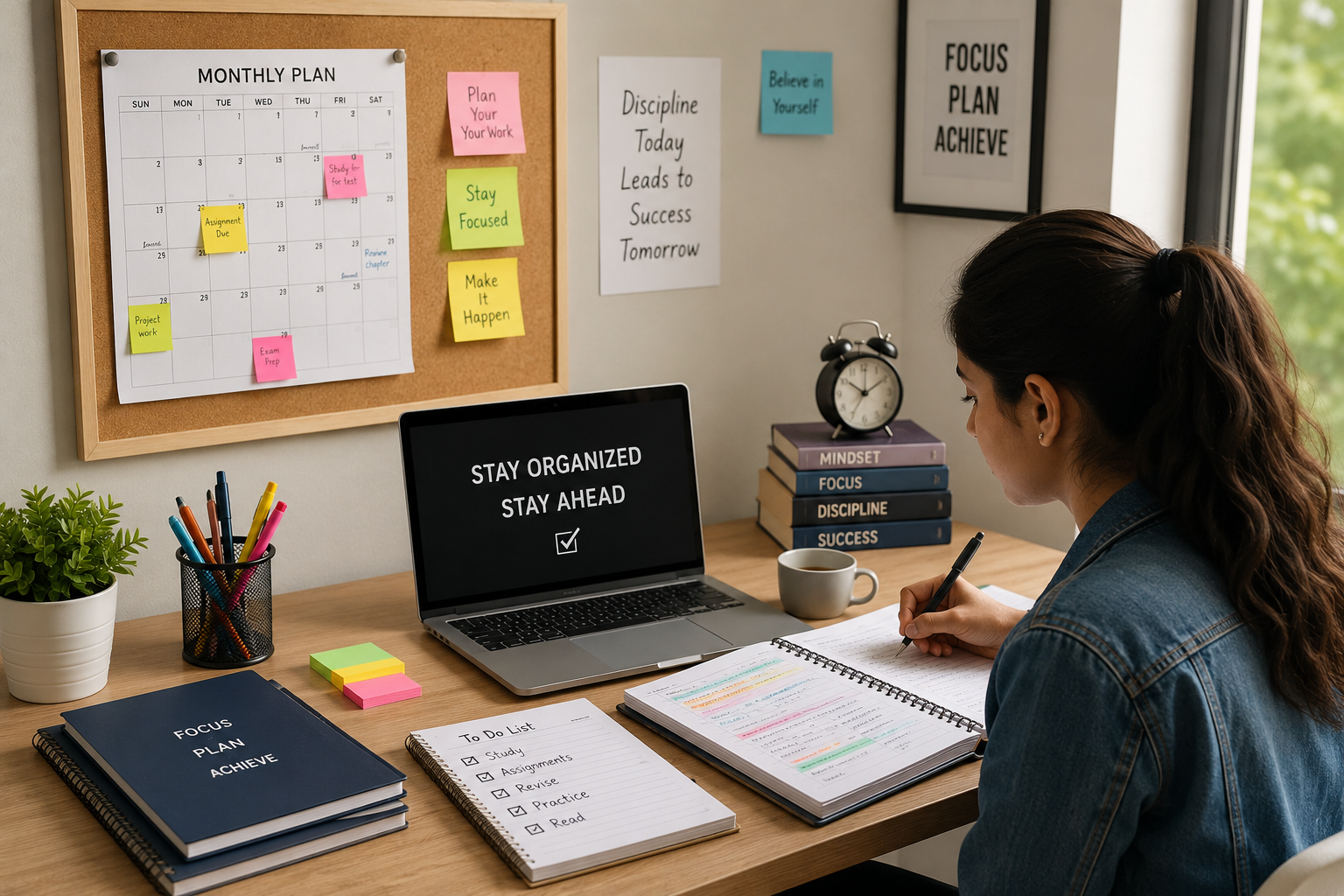


Taking good notes in class is one of the simplest study habits that can make a big difference in academic performance. In my experience, the purpose of taking notes is not to write down every single word a teacher says. The real purpose is to understand the lesson, identify the important information, and create something that I can easily review later.
Many students think that good notes have to look perfect. I do not agree with that. Notes should be useful, clear, and easy to understand. Whether I am studying from a textbook, listening to a teacher, or attending an online class, I find that a simple note taking method helps me remember information much better.
In this article, I will share some practical tips on how to take better notes in class, how to organize class notes, and how to make note taking a useful part of your study routine.
Understand the Purpose of Note Taking
Before learning different note taking methods, I think it is important to understand why we take notes in the first place. Notes are not a replacement for learning. They are a tool that helps us process information.
When I listen to a teacher and write down the main ideas in my own words, I am already thinking about the topic. This makes the information easier to remember. Good notes also give me something useful to review before a test or exam.
The biggest mistake is trying to copy everything from the board or everything the teacher says. This can make me focus more on writing than listening. Instead, I try to listen carefully first and write only the information that is important.
Prepare Before Class
Better note taking actually starts before the class begins. If I know what topic will be discussed, I like to spend a few minutes looking over the previous lesson or reading the basic headings in the textbook.
This small amount of preparation makes it easier to understand new information. When I already know some basic terms, I can focus more on the explanation instead of feeling completely lost.
I also make sure that I have everything I need. A notebook, pens, textbook, or laptop should be ready before the class starts. Being prepared helps me stay focused and prevents unnecessary distractions.
Listen Before You Write
One of the most useful note taking tips I have learned is to listen before writing. Students sometimes start writing as soon as the teacher begins speaking, even when they do not understand what is being explained.
I prefer to understand the main idea first and then write it down in a shorter form. This helps me avoid unnecessary information.
For example, if a teacher gives a long explanation about a scientific process, I do not need to copy the entire explanation. I can write the name of the process, its main steps, and one important example.
This approach makes my class notes shorter and much easier to review.
Write in Your Own Words
Writing information in my own words is one of the best ways to improve memory. When I copy a sentence exactly from a textbook or presentation, I may write a lot without actually understanding the meaning.
Instead, I try to explain the idea in simple language.
For example, if the textbook says that photosynthesis is the process through which plants convert light energy into chemical energy, I might write something like, “Plants use sunlight to make food.”
The second version is shorter and easier for me to remember. Of course, important definitions should sometimes be written accurately, especially when a teacher expects a specific definition in an exam. However, explanations can usually be simplified.
Focus on Key Information
Not every piece of information has the same importance. While taking notes in class, I look for key points such as definitions, formulas, dates, examples, important terms, explanations, and conclusions.
I also pay attention when a teacher says something like “this is important,” “remember this,” or “this may be on the exam.” Such statements can help identify information that deserves a place in my notes.
Another useful sign is repetition. If a teacher explains the same idea several times using different examples, I consider it important.
Use Headings and Subheadings
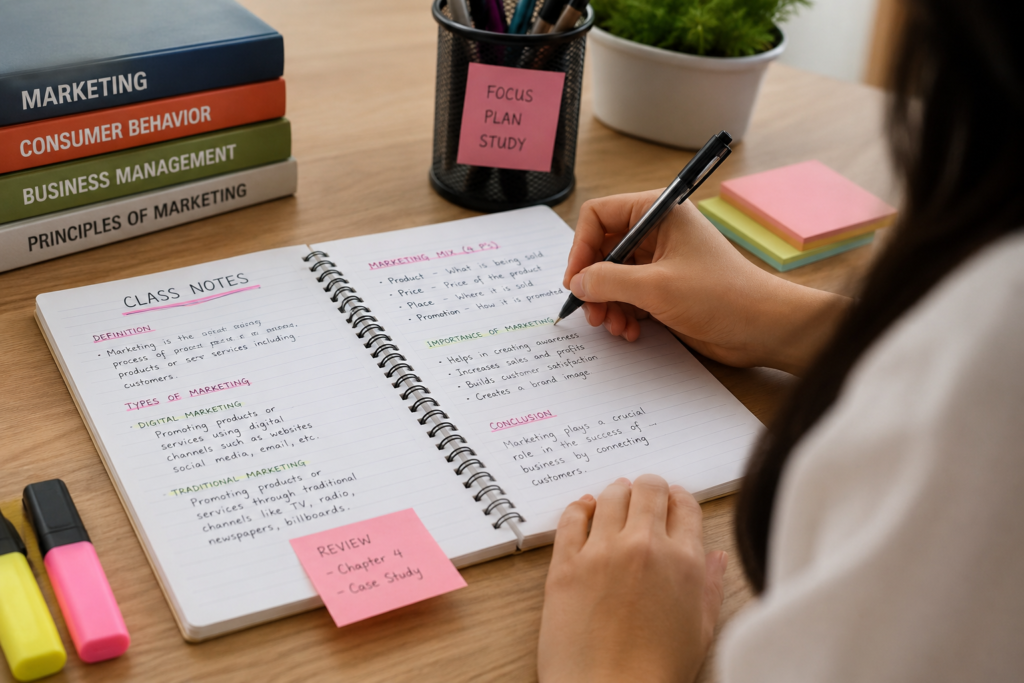
Organized notes are much easier to study than a page filled with random sentences. I like to divide my notes into headings and smaller sections.
For example, if the lesson is about the human digestive system, I might use headings such as:
Digestive System
Main Organs
Functions of the Stomach
Small Intestine
Large Intestine
Common Problems
This simple structure makes it easier to find information later. It also helps me understand how different ideas are connected.
Use Short Sentences and Keywords
Writing complete sentences all the time can be slow. I usually use keywords and short phrases when the meaning is clear.
For example, instead of writing:
“The heart pumps blood throughout the entire body and provides tissues with oxygen and nutrients.”
I can write:
Heart: pumps blood throughout body
Provides oxygen and nutrients
Supports circulation
This saves time while keeping the important information.
However, I avoid making my notes so short that I cannot understand them later. The goal is to create useful notes, not mysterious abbreviations that I forget after class.
Try a Note Taking Method
Different students prefer different note taking methods. One popular approach is the Cornell Note Taking Method. It divides the page into sections for notes, questions, and a summary.
Another method is the outline method. This is useful when a lesson has several main topics and supporting points.
Mind mapping can also be helpful for subjects where ideas are connected. With a mind map, I place the main topic in the center and connect related ideas around it.
I do not think students need to follow one method all the time. I prefer to choose the method based on the subject and the type of lesson.
Use Symbols and Abbreviations
Simple symbols can make note taking faster. For example, I can use arrows to show relationships, question marks for things I do not understand, and stars for important information.
I also use common abbreviations when they are easy to remember. For example, “because” can become “b/c” and “important” can become “imp.”
The key is consistency. If I create too many personal abbreviations, my notes can become difficult to understand later.
Do Not Overuse Highlighters
Color can make notes easier to review, but too many colors can create confusion. I prefer using highlighting only for important words, definitions, formulas, and major points.
If almost everything is highlighted, nothing really stands out.
A simple system works better. For example, I might use one color for important terms and another for information that I need to review. The exact colors do not matter as long as the system remains consistent.
Leave Space for Additional Information
Sometimes a teacher adds an explanation after the main notes have already been written. If there is no empty space, adding that information can become difficult.
For this reason, I like to leave some space between major sections. This gives me room to add examples, questions, or explanations later.
Leaving space also makes the page look cleaner and easier to read.
Mark Questions Immediately
Sometimes I understand most of a lesson but have one or two confusing points. Instead of ignoring them, I mark them with a question mark.
After class, I can ask the teacher, discuss the topic with a classmate, or research it using a reliable source.
This habit is important because a small misunderstanding can create bigger problems when the next lesson depends on the previous one.
Review Your Notes After Class
Taking notes is only half the process. Reviewing them after class is what turns those notes into a useful study resource.
I like to spend a few minutes looking over my notes on the same day. During this review, I can correct mistakes, add missing information, and make sure I understand the main ideas.
This does not have to be a long study session. Even a short review can help strengthen my memory.
Turn Notes Into Questions
One technique I find especially useful is turning notes into questions.
For example, instead of simply reading “The Earth rotates on its axis,” I can ask myself, “What does the Earth rotate on?”
This turns passive reading into active learning. I have to recall the answer instead of simply looking at it.
I can use these questions later for self testing before an exam.
Keep Your Notes Organized
Good organization saves time. I recommend keeping notes for each subject together and adding dates and lesson titles.
If I use digital notes, I can create separate folders for different subjects. If I use a notebook, I can reserve different sections for different classes.
The important thing is to choose a system that I can maintain consistently.
Avoid Common Note Taking Mistakes
There are several mistakes that can make class notes less useful. One common mistake is trying to write every word. Another is spending too much time making notes look beautiful instead of understanding the lesson.
I also try not to depend completely on photographs of the board or presentation slides. Those can be helpful, but writing information myself forces me to process it.
Another mistake is never reviewing the notes. Even excellent notes can become useless if I never look at them again.
Final Thoughts
Learning how to take better notes in class does not require complicated equipment or a perfect handwriting style. For me, effective note taking is about listening carefully, understanding the main ideas, writing information in my own words, and organizing everything so it can be reviewed easily.
The best class notes are not necessarily the longest notes. They are the notes that help me remember what I learned and understand the subject when I study later.
If I want to improve my note taking skills, I would start with a few simple habits. I would prepare before class, listen carefully, focus on key information, use headings and keywords, mark questions, and review my notes after class.
With regular practice, note taking becomes faster and more natural. More importantly, it can make studying easier because I already have a clear and organized resource created from my own learning experience.
Good notes are not about writing everything. They are about capturing the information that matters and turning it into something that helps me learn better.