
Related Articles

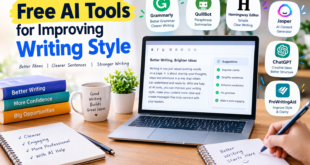

Creating SEO content has become much easier than it was a few years ago. I still remember spending hours searching for keywords, planning article structures, writing long paragraphs, and then checking whether everything was optimized for search engines. It was a slow process, and sometimes I was not even sure if the article would rank on Google.
Everything changed when I started using AI tools for SEO content creation. At first, I was a little hesitant because many people believed AI could replace writers. After using these tools myself, I realized that AI is not here to replace creativity. Instead, it helps writers work faster, organize ideas better, and produce high quality content without wasting valuable time.
Today, AI tools have become an important part of my writing process. They help me discover keywords, create outlines, improve readability, optimize articles for search engines, and even generate fresh content ideas whenever I feel stuck.
In this article, I want to share the AI tools that I personally believe are among the best for SEO content creation and explain how each one can improve your writing workflow.
Why AI Matters for SEO Writing
Search engine optimization is much more than adding a few keywords to an article. Google now focuses on content quality, user experience, helpful information, and overall value.
When I write an article, I always think about the reader first. If the content solves a problem and answers important questions, it has a much better chance of ranking well.
AI tools make this process easier by helping writers understand what readers are searching for. They also analyze competitors, suggest relevant keywords, recommend headings, and improve the overall quality of the content.
Instead of spending hours doing everything manually, I can now focus more on writing naturally while AI handles many repetitive tasks.
ChatGPT
The first AI tool I use almost every day is ChatGPT.
It has completely changed the way I create content. Whenever I start a new article, I use ChatGPT to brainstorm ideas, generate outlines, create introductions, and overcome writer’s block.
One thing I appreciate most is that it helps me think from different angles. Sometimes I already have an idea, but ChatGPT suggests perspectives that I had not considered before.
I never copy AI generated content directly. Instead, I rewrite everything in my own words and add my own experiences. This keeps my articles unique and natural while saving a lot of time during the planning stage.
For beginners as well as experienced bloggers, ChatGPT is an excellent writing assistant.
Surfer SEO
Writing great content is only one part of SEO. The content also needs proper optimization.
This is where Surfer SEO becomes extremely useful.
Whenever I finish writing an article, I like checking it with Surfer SEO. It compares my article with the top ranking pages on Google and shows what improvements I can make.
It suggests keyword usage, heading structure, content length, and important topics that should be included naturally.
I never try to force every suggestion into my article because that can make the writing sound unnatural. Instead, I use the recommendations as guidance while keeping the reader as my main priority.
The balance between optimization and readability is what makes Surfer SEO such a valuable tool.
Jasper AI
Jasper AI is another popular writing assistant that many content creators use.
What I like about Jasper is its ability to generate different types of marketing content quickly. Whether I need a blog introduction, product description, email, or social media caption, Jasper usually provides useful starting points.
For SEO articles, it helps speed up the drafting process while allowing me to focus on editing and improving the final version.
Instead of staring at a blank screen, I can begin with an AI generated draft and then shape it into something that reflects my own writing style.
This saves both time and mental energy.
SEMrush
SEMrush is one of the most complete SEO platforms available today.
Whenever I want to research keywords or analyze competitors, SEMrush is usually my first choice.
It provides detailed information about keyword difficulty, search volume, competitor rankings, backlinks, and content opportunities.
Before writing an article, I often spend some time exploring keyword ideas inside SEMrush. This helps me understand exactly what people are searching for and which topics deserve more attention.
Rather than guessing what readers want, I can base my content strategy on real search data.
That gives me much more confidence before publishing an article.
Frase
Frase is another AI powered SEO writing tool that deserves attention.
One feature I really enjoy is its ability to generate detailed content briefs.
Instead of opening multiple websites to gather information, Frase summarizes the important topics already ranking on Google.
This helps me understand what readers expect before I even start writing.
It also recommends headings, frequently asked questions, and relevant subtopics that can improve the completeness of an article.
Because of this, my writing feels more organized and covers a topic in greater depth.
Grammarly
Many people think Grammarly is only a grammar checker, but I believe it plays an important role in SEO writing as well.
Good grammar improves readability, and readability affects user experience.
After finishing every article, I always run it through Grammarly to catch spelling mistakes, punctuation errors, awkward sentences, and unnecessary repetition.
It also helps improve sentence flow without changing my original writing style.
Readers are more likely to trust content that is clear, professional, and easy to read.
For me, Grammarly has become the final editing step before publishing any article.
Writesonic
Another AI tool that has impressed me is Writesonic. I started using it when I wanted to create content more quickly without sacrificing quality. It offers different writing templates that are useful for blog posts, landing pages, product descriptions, and advertisements.
One feature I like is that it can generate multiple versions of the same content idea. This gives me more options to choose from instead of relying on a single draft. Even though I always edit the content before publishing, Writesonic helps me save a significant amount of time during the writing process.
For bloggers who regularly publish articles, this tool can make content creation much smoother.
Copy.ai
Copy.ai is another useful platform that deserves a place on this list. While many people use it for marketing copy, I have found it helpful for brainstorming blog topics and writing engaging introductions.
Sometimes the hardest part of writing is simply getting started. Copy.ai helps remove that challenge by providing fresh ideas and creative opening paragraphs. Once I have a good introduction, the rest of the article usually becomes much easier to write.
I never depend on AI to finish an article from beginning to end. Instead, I use it as a creative partner that helps me overcome writer’s block whenever I feel stuck.
Scalenut
Scalenut combines AI writing with SEO optimization, making it an excellent choice for bloggers and content marketers.
What I appreciate most about Scalenut is its ability to guide the entire content creation process. It starts with keyword research, helps create an outline, suggests important headings, and even assists with writing the article.
Having everything inside one platform saves time because I do not need to switch between multiple tools. It creates a smoother workflow and helps me stay focused on producing valuable content for readers.
Clearscope
Clearscope is well known for improving content quality through keyword optimization.
Instead of encouraging keyword stuffing, it recommends related terms that naturally belong in an article. This makes the content more comprehensive and useful for readers.
Whenever I want to improve an existing blog post, Clearscope helps me identify missing topics and opportunities to make the article more complete.
I believe successful SEO is not about repeating the same keyword many times. It is about covering a topic thoroughly so readers can find all the information they need in one place.
Rank Math AI
If you use WordPress, Rank Math AI can become one of your most valuable tools.
I personally like how it integrates directly into the WordPress editor. It provides real time suggestions while writing and helps improve titles, meta descriptions, keyword placement, internal links, and overall SEO performance.
Instead of checking optimization after publishing, I can improve the article while writing it. This makes the entire publishing process more efficient and reduces the chances of missing important SEO elements.
For WordPress users, Rank Math AI is definitely worth exploring.

My Tips for Using AI Responsibly
After using AI writing tools for quite some time, I have learned that they work best when they support human creativity instead of replacing it.
I always begin with my own ideas and experiences. AI helps me organize those thoughts, discover new perspectives, and improve the structure of the article.
I never publish AI generated content without reviewing it carefully. Every article should be edited, fact checked, and rewritten to match your own voice.
Adding personal opinions, examples, and real experiences makes content feel authentic. Readers appreciate honesty, and search engines also reward helpful and original content.
Common Mistakes to Avoid
Many beginners make the mistake of copying AI generated content exactly as it is. This often results in articles that sound robotic and lack personality.
Another mistake is focusing only on keywords instead of reader value. Keywords are important, but they should appear naturally within useful content.
Ignoring proofreading is another common problem. Even the best AI tools can make grammatical mistakes or provide outdated information. Always review every sentence before publishing.
Finally, do not depend on a single tool for everything. Each AI platform has its own strengths. Combining different tools often produces much better results than relying on only one.
The Future of AI in SEO
I believe AI will continue to become more powerful in the coming years. It will help writers analyze search trends faster, understand user intent more accurately, and create better optimized content.
However, I do not think AI will replace skilled writers. Search engines are becoming smarter at recognizing authentic, helpful, and experience based content.
The writers who succeed will be those who use AI as an assistant while continuing to share original ideas, personal insights, and valuable knowledge.
Technology can speed up the writing process, but genuine human creativity remains impossible to replace.
Conclusion
AI has completely transformed the way I create SEO content. Tasks that once required several hours can now be completed much faster with the help of intelligent writing tools. From keyword research and content planning to grammar checking and optimization, AI has simplified almost every stage of content creation.
Among all the tools I have used, ChatGPT, Surfer SEO, Jasper AI, SEMrush, Frase, Grammarly, Writesonic, Copy.ai, Scalenut, Clearscope, and Rank Math AI have consistently delivered excellent results. Each one serves a different purpose, and together they create a complete SEO content workflow.
At the same time, I believe the real value of any article comes from the writer behind it. AI can provide suggestions, improve structure, and save time, but it cannot replace personal experience, creativity, and genuine understanding of the audience.
If you plan to build a successful blog or grow your website through organic traffic, my advice is to use AI wisely. Let it handle repetitive tasks while you focus on creating content that is informative, trustworthy, and enjoyable to read. When human creativity and AI work together, the result is content that not only ranks well in search engines but also builds lasting trust with readers.