
Related Articles



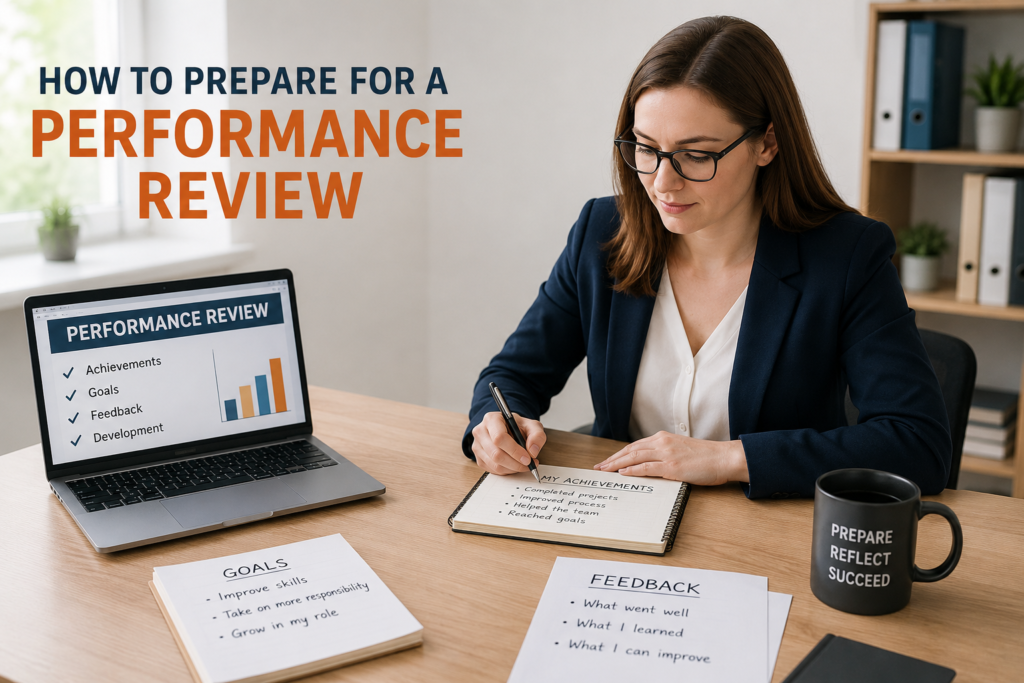
A performance review can feel stressful, especially when you are not sure what your manager will say about your work. In my opinion, the best way to make a performance review less stressful is to prepare before the meeting instead of walking into the room without a clear idea of what you have achieved.
A performance review is not only about receiving feedback. It is also an opportunity to explain your contributions, discuss your career goals, identify areas where you can improve, and have a meaningful conversation with your manager about your future at the company.
In this article, I will share practical ways to prepare for a performance review so you can enter the meeting with confidence and communicate your value clearly.
Understand the Purpose of a Performance Review
Before preparing your notes, it is important to understand what a performance review is actually about. A performance review usually gives an employee and manager an opportunity to discuss work performance, achievements, challenges, professional development, and future goals.
I believe it is better to look at the review as a two way conversation rather than an exam. Your manager is evaluating your performance, but you also have a chance to explain your experiences and share your perspective.
Understanding this can make the meeting feel much more positive. Instead of worrying about every possible question, focus on having an honest and professional conversation.
Review Your Job Responsibilities
One of the first things I recommend doing before a performance review is going back to your job description and responsibilities. Think about what you were expected to accomplish during the review period.
Ask yourself a few simple questions.
What were my main responsibilities?
Which goals did I complete?
Which projects did I contribute to?
Did my responsibilities increase during the year?
Did I take on work that was outside my original role?
These questions can help you understand how your actual work compares with what was expected from you.
Sometimes employees forget how much their responsibilities have changed over time. Reviewing your role can help you recognize achievements that you may have overlooked.
Make a List of Your Achievements
Preparing a list of your achievements is one of the most important steps when getting ready for a performance review.
Do not rely on your memory during the meeting. Write down important projects, completed goals, successful tasks, improvements you made, and problems you helped solve.
For example, instead of simply saying that you worked on a project, explain what you contributed and what happened as a result.
You could say that you helped complete a project before the deadline, improved a work process, supported a team member, reduced unnecessary work, improved customer communication, or helped the team reach an important goal.
I personally think specific examples are much stronger than general statements. Your manager may already know that you work hard, but clear examples make your contribution easier to understand.
Use Numbers When Possible
Numbers can make your achievements more convincing. If your work produced measurable results, include those results in your preparation.
For example, you might have increased sales, completed more projects, reduced response time, improved customer satisfaction, saved company resources, or increased productivity.
You do not need to turn your performance review into a complicated business report. Even a few useful figures can make your achievements clearer.
Instead of saying, “I improved customer service,” you could explain that you helped reduce customer response time or handled a larger number of customer requests while maintaining quality.
The goal is to show the impact of your work.
Think About Challenges You Faced
A good performance review is not only about your successes. You should also think about challenges you experienced during the review period.
Maybe you had a difficult project, limited resources, changing priorities, communication problems, or a task that required you to learn a new skill.
When discussing challenges, try not to sound defensive. Explain what happened, what you learned, and what you would do differently next time.
I believe this shows maturity and self awareness. Nobody has a perfect year at work. Being able to recognize mistakes and learn from them can be a strength.
Prepare for Questions About Weaknesses
Many employees become nervous when they think their manager may ask about weaknesses. There is no need to panic.
Before your performance review, identify one or two genuine areas where you want to improve.
For example, you may want to become better at public speaking, time management, communication, leadership, technical skills, or project planning.
The important thing is to show that you are working on the issue.
Instead of simply saying, “I am not good at presentations,” you can explain that you are working on your presentation skills by practicing more often and asking for feedback.
This turns a weakness into a development opportunity.
Review Previous Feedback
If you have received feedback during the year, review it before your performance review. This can include comments from your manager, coworkers, customers, or team leaders.
Think about whether you acted on the feedback you received.
If your manager previously suggested that you improve a particular skill and you made progress, mention it during the review.
This shows that you listen and take professional development seriously.
It also helps create a clear connection between previous feedback and your current performance.
Prepare Your Career Goals
A performance review is an excellent time to talk about your future. Before the meeting, think about where you want your career to go.
You may want to take on more responsibility, develop leadership skills, learn a new technology, manage projects, or move toward a promotion.
Your goals do not have to be perfectly defined. However, having a general direction can make the conversation more productive.
For example, you could tell your manager that you would like to take on more leadership responsibilities and ask what skills or experience you should develop to prepare for that opportunity.
This shows initiative and gives your manager a better understanding of your professional goals.
Prepare Questions for Your Manager
Do not assume that your manager should do all the talking. I think employees should prepare questions as well.
You might ask:
What do you think I am doing particularly well?
Where can I improve?
What skills should I develop next?
What would you like me to focus on during the next review period?
What opportunities are available for professional growth?
What would I need to demonstrate to take on more responsibility?
These questions can turn a basic performance review into a valuable career conversation.
Be Ready to Discuss Your Goals
If your company has formal performance goals, review them before the meeting. Make a simple comparison between what you planned to accomplish and what you actually completed.
For goals that you achieved, prepare examples.
For goals that you did not achieve, be ready to explain why. There may have been changes in company priorities, unexpected problems, resource limitations, or other circumstances.
The key is to be honest. Avoid making excuses, but provide useful context.
Practice How You Will Explain Your Work
You do not need to memorize a speech for your performance review. However, practicing your main points can make you feel more confident.
Try explaining your biggest achievements out loud. Keep your explanation simple and focused.
For each major achievement, think about three things.
What did I do?
Why was it important?
What was the result?
This structure can help you communicate your value without sounding like you are bragging.
Stay Professional During Difficult Feedback
Sometimes a performance review may include criticism. Even if you disagree with something your manager says, try to remain calm and professional.
Listen carefully before responding. If something is unclear, ask for an example.
You can say, “Could you give me an example so I can better understand what you mean?”
This is much more productive than immediately becoming defensive.
If you disagree with the feedback, explain your perspective respectfully and use facts where possible.
Remember that feedback can be useful even when it is difficult to hear.
Discuss Professional Development
Professional development should be an important part of your performance review preparation.
Think about courses, certifications, training, mentoring, or practical experience that could help you perform better.
You can also ask your manager whether there are opportunities to work on new projects or collaborate with different teams.
In my view, professional development is not only about getting a better position. It is also about becoming more capable and confident in your current role.
Keep Your Notes Organized
Create a simple document with your achievements, challenges, goals, feedback, and questions.
You do not need pages and pages of information. A clear summary is usually more useful.
Organize your notes into sections so you can quickly find important information during the meeting.
If your company provides a self evaluation form, complete it carefully and use specific examples whenever possible.
Prepare for a Promotion Conversation
If you believe you are ready for a promotion, your performance review can be a good time to discuss it.
Do not simply say that you deserve a promotion. Explain why you believe you are ready.
Talk about increased responsibilities, successful results, leadership, problem solving, and contributions beyond your original role.
You can also ask your manager what expectations you need to meet for the next position.
Even if a promotion is not immediately available, the conversation can help you understand what you need to accomplish next.
Take Care of Your Mindset
Your mindset can make a major difference during a performance review.
Try not to treat the meeting as something you need to survive. Think of it as an opportunity to reflect on your work and plan your next stage of development.
You do not need to present yourself as perfect. You simply need to be honest, prepared, confident, and open to learning.
Good preparation can reduce nervousness because you know what you want to say and what questions you want to ask.
Final Thoughts
Learning how to prepare for a performance review is an important professional skill. A successful review is not only about getting a good rating. It is about understanding your performance, recognizing your achievements, learning from challenges, and creating a clear plan for the future.
In my opinion, the best approach is to start preparing several days or weeks before the meeting. Review your responsibilities, collect examples of your achievements, think about areas for improvement, prepare career goals, and write down questions for your manager.
Most importantly, remember that a performance review is a conversation. Be confident about the value you bring, but remain open to feedback and new ideas.
When you prepare properly, you are not simply preparing for a meeting. You are preparing yourself to communicate your professional value, improve your performance, and take the next step in your career.