
Related Articles

Education has changed significantly in recent years. Earlier, traditional classroom learning was the main option for students who wanted to receive a formal education. Today, online learning has become a popular alternative because students can attend lessons from almost anywhere. In my opinion, both online learning and traditional classroom learning have their own advantages and limitations. The better choice depends on a student’s learning style, goals, schedule, budget, and personal circumstances.
When comparing online learning vs traditional classroom learning, I believe it is important to look beyond convenience. Education is not only about attending lectures. It is also about understanding concepts, communicating with teachers, developing discipline, working with others, and gaining practical experience. Both learning methods can provide these opportunities, but they do so in different ways.
What Is Online Learning?
Online learning is a method of education where students use the internet and digital devices to attend courses, watch lectures, complete assignments, participate in discussions, and communicate with instructors. Students can use laptops, tablets, or smartphones depending on the requirements of their course.
One of the biggest benefits of online education is flexibility. A student may be able to study early in the morning, during the afternoon, or late at night. This can be especially useful for people who have jobs, family responsibilities, or other commitments.
Online learning also provides access to a wide variety of courses. Students are no longer limited to institutions located near their homes. They can explore programs offered by educational institutions and learning platforms in different cities and countries.
From my point of view, this flexibility makes online learning attractive for students who are comfortable managing their own time.
What Is Traditional Classroom Learning?
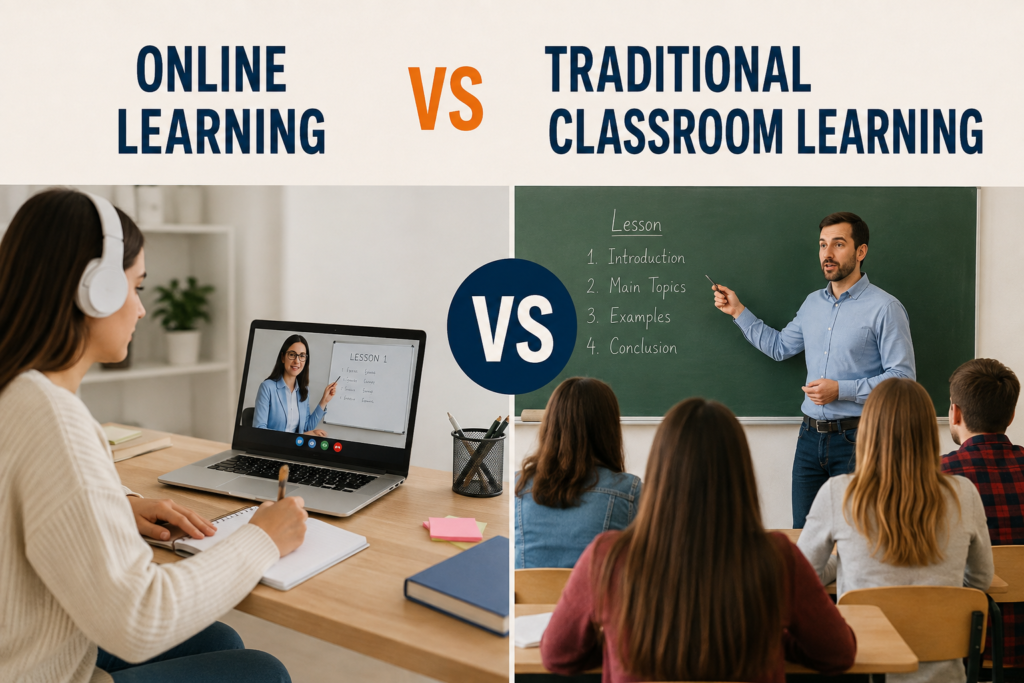
Traditional classroom learning is the conventional education system where students attend a physical school, college, university, or training center. Students usually follow a fixed timetable and attend lectures in person.
One major advantage of classroom education is direct interaction. Students can ask questions immediately, participate in discussions, and communicate with teachers and classmates face to face. This environment can make learning feel more personal.
Traditional classrooms also create a structured routine. Students know when they need to attend classes, submit assignments, and prepare for examinations. For students who find self discipline difficult, this structure can be very helpful.
In my experience, having a fixed learning environment can make it easier to stay focused because there are fewer distractions compared with studying at home.
Flexibility and Convenience
Flexibility is one of the strongest advantages of online learning. Students can often access course materials according to their schedules. Recorded lectures can also allow learners to review difficult topics multiple times.
Traditional classroom learning is less flexible because students usually need to attend classes at specific times and locations. Missing a lecture may mean missing an important explanation or classroom activity.
However, flexibility can also become a disadvantage. Online students need strong time management skills. Without a fixed classroom schedule, it can be easy to postpone studying.
For students who prefer freedom and independence, online education may be more suitable. For students who need a routine, traditional classroom learning may provide better support.
Interaction With Teachers and Students
Interaction is another important difference between online learning and traditional classroom learning.
In a traditional classroom, students can communicate directly with their teachers. They can raise their hands, ask questions, participate in group discussions, and receive immediate feedback. Students can also build friendships and professional relationships with classmates.
Online learning can provide interaction through video meetings, discussion forums, emails, messaging systems, and virtual group projects. However, these interactions may sometimes feel less natural than face to face communication.
I believe both methods can create meaningful connections, but traditional classrooms have a natural advantage when it comes to spontaneous communication and social interaction.
Cost of Education
Cost is an important factor when choosing an education method. Online learning can sometimes reduce expenses because students may not need to travel to campus or pay for accommodation near an institution.
Students studying from home can save money on transportation, meals outside the home, and other daily expenses. Some online courses may also have lower tuition fees, although this depends on the institution and program.
Traditional education can involve additional costs such as transportation, accommodation, textbooks, meals, and campus expenses. However, students may receive access to physical libraries, laboratories, sports facilities, and other resources.
Therefore, students should compare the complete cost of both options instead of looking only at tuition fees.
Learning Environment
The learning environment can strongly affect academic performance.
Online students usually study from home or another personal location. This can be comfortable, but it may also create distractions. Family members, mobile phones, social media, household responsibilities, and noise can make concentration difficult.
Traditional classrooms provide a dedicated educational environment. When students enter a classroom, they usually understand that it is time to focus on learning.
Personally, I think the ideal learning environment depends on the individual. Some students become more productive when studying independently, while others perform better when surrounded by teachers and classmates.
Self Discipline and Time Management
Online learning requires a high level of self discipline. Students need to create study schedules, complete assignments on time, attend virtual sessions, and avoid unnecessary distractions.
This can actually be a valuable learning experience because time management is an important skill in both education and professional life.
Traditional classroom learning provides more external structure. Teachers and institutions usually establish schedules, deadlines, attendance requirements, and examination dates.
For students who struggle with organization, classroom learning may provide useful accountability. Online learning, on the other hand, can help students develop greater independence if they take their responsibilities seriously.
Access to Learning Resources
Online education has changed the way students access educational resources. Digital libraries, recorded lectures, online articles, presentations, tutorials, and educational videos can make learning materials available from almost anywhere.
Students can often search for additional explanations when they do not understand a topic. This makes online learning particularly useful for independent learners.
Traditional classrooms also provide valuable resources. Students may have access to physical libraries, laboratories, workshops, equipment, and other facilities.
For subjects that require practical training, physical facilities can be extremely important. A student learning medicine, engineering, laboratory science, or certain technical skills may benefit greatly from hands on experience.
Quality of Learning
A common question is whether online learning is better than traditional classroom learning. I do not think there is one universal answer.
The quality of education depends on many factors, including the teacher, curriculum, course materials, student effort, assessment methods, and learning environment.
A well designed online course can provide excellent education. At the same time, a traditional classroom with an experienced teacher can be equally valuable.
The important thing is not simply whether the course is online or physical. Students should evaluate the quality of the institution, instructor, curriculum, support services, and learning resources before making a decision.
Online Learning vs Traditional Classroom Learning for Working Students
Working students often have limited time. They may need to balance employment with education and personal responsibilities.
For these students, online learning can be particularly convenient. They may be able to study after work or during weekends without traveling to campus.
Traditional classroom education can be more difficult for working students if class schedules conflict with their jobs.
However, some students prefer attending physical classes because the fixed schedule helps them remain committed to their studies.
Which Learning Method Is Better?
In my opinion, there is no single winner in the debate between online learning vs traditional classroom learning. The right choice depends on the student.
Online learning may be a better option for students who value flexibility, independent study, digital resources, and convenient access to courses.
Traditional classroom learning may be better for students who prefer direct interaction, structured schedules, social experiences, and face to face guidance.
There is also another possibility that should not be ignored. Blended learning combines online education with traditional classroom instruction. Students may attend some lessons physically while completing other activities online. This approach can provide the advantages of both methods.
How to Choose the Right Learning Method
Before choosing between online education and traditional classroom learning, I recommend asking yourself a few questions.
First, consider your learning style. Do you understand topics better when studying independently, or do you prefer asking a teacher questions directly?
Second, think about your schedule. If you have a job or family responsibilities, online learning may offer greater flexibility.
Third, consider your budget. Calculate tuition fees as well as transportation, accommodation, books, technology, and other expenses.
Fourth, consider the subject you want to study. Some programs work very well online, while others require laboratories, workshops, clinical training, or physical practice.
Finally, think about your personality and discipline. If you can manage your time effectively, online learning can work extremely well. If you need regular supervision and structure, traditional classroom education may be more comfortable.
Final Thoughts
The comparison between online learning vs traditional classroom learning is not really about deciding which method is universally better. It is about understanding which method fits your personal needs.
Online learning offers flexibility, convenience, digital resources, and access to education from different locations. Traditional classroom learning offers structure, direct communication, social interaction, and practical learning opportunities.
From my point of view, the best education is the one that helps a student learn effectively and consistently. Technology has made online education more accessible, but traditional classrooms still provide experiences that are difficult to completely replace.
Students should therefore make their decision based on their goals, learning style, financial situation, schedule, and chosen field of study. When these factors are considered carefully, both online learning and traditional classroom learning can become powerful ways to build knowledge, develop skills, and prepare for a successful future.