
Related Articles
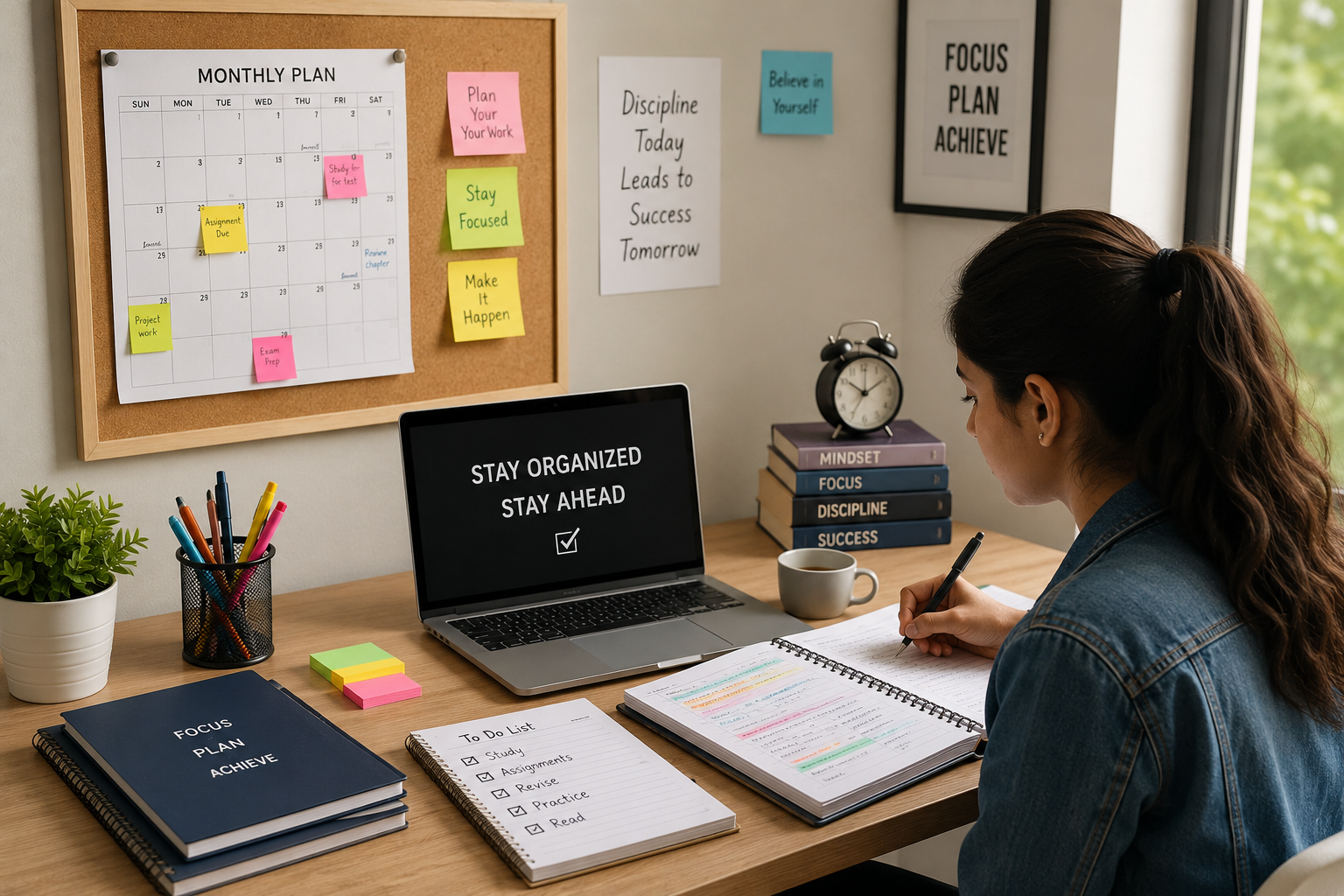


Studying at home sounds easy, but in my experience, it can sometimes be harder than studying in a classroom. At home, there are many things around us that can take our attention away from our books. A phone notification, a television, social media, household noise, or even the thought of checking something online can quickly break our concentration.
I believe that learning how to study at home without getting distracted is not about forcing yourself to study for many hours. It is more about creating the right environment, setting clear goals, and developing simple habits that make concentration easier. Once you understand what usually distracts you, you can take practical steps to control those distractions.
Create a Dedicated Study Space
One of the best ways to stay focused while studying at home is to have a specific place for studying. It does not need to be a large room or an expensive desk. Even a small, clean corner can work well if you use it mainly for studying.
When I sit down in the same place to study, my mind gradually understands that it is time to focus. I try to keep only the things I need on my desk, such as my books, notebook, pens, water, and computer if necessary.
A messy study area can make it harder to concentrate because your attention may move from one thing to another. Before starting your study session, take a few minutes to organize your space. A clean environment can make studying feel much more manageable.
Keep Your Phone Away
For many students, the phone is one of the biggest distractions while studying at home. Even if you do not receive a notification, knowing that your phone is nearby can make you want to check it.
I recommend putting your phone away from your study desk. If possible, keep it in another room or place it somewhere that is not within easy reach. Turn off unnecessary notifications and use silent mode when you need serious concentration.
Social media can be especially distracting because you may plan to check it for only a few minutes but end up spending much longer. If you need your phone for studying, use only the apps or websites related to your work and avoid opening social media during your study session.
Set a Clear Study Goal
I find it much easier to focus when I know exactly what I want to accomplish. Instead of saying, “I will study science today,” create a more specific goal.
For example, you could decide to complete one chapter, understand two topics, solve twenty questions, or revise a particular section of your notes.
A clear goal gives your study session a purpose. It also makes it easier to know when you have finished your planned work.
Before starting, ask yourself what you want to achieve during the next hour. Once you have an answer, begin with that task instead of wasting time deciding what to do.
Study in Short Focused Sessions
You do not always need to study for several hours without stopping. In fact, long study sessions can sometimes make your mind tired and reduce your concentration.
I prefer breaking study time into smaller focused sessions. You might study for around twenty five to fifty minutes and then take a short break. The exact timing can depend on your concentration level and the difficulty of the subject.
During the focused period, try to do only one task. When the study period ends, take a short break. Stand up, drink some water, stretch, or walk around for a few minutes.
The important thing is to make the break short enough that you can return to studying without losing your momentum.
Avoid Studying With the Television On
Some people believe that background television helps them concentrate, but for serious learning, I think it is usually better to avoid it.
Television contains conversations, music, advertisements, and changing images that can continuously attract your attention. Even when you think you are ignoring it, part of your mind may still be processing what is happening.
If you need background sound, quiet instrumental music may work better for some people. However, if music also distracts you, studying in silence is probably the better choice.
The main goal is to create an environment where your brain has fewer things competing for its attention.
Tell Your Family About Your Study Time
Studying at home can be difficult when family members do not know that you are trying to concentrate. Someone may ask you a question, start a conversation, or ask you to do a household task.
I think communication can solve many of these problems. Let your family know when you plan to study and ask them to avoid unnecessary interruptions during that period.
You can even place a simple note near your study area to show that you are studying. This does not mean you should ignore your responsibilities at home. It simply helps create a clear boundary between study time and other activities.
Keep Food and Water Ready
Small interruptions can become bigger distractions than we realize. Getting up repeatedly to find water, snacks, or other things can break your concentration.
Before starting your study session, keep a bottle of water nearby. If you know you will need a snack, prepare it beforehand.
This simple habit allows you to remain at your study desk for longer periods without constantly leaving your workspace.
At the same time, avoid eating heavy meals immediately before studying if they make you feel sleepy. A comfortable and balanced routine can help you stay alert.
Use Your Computer Carefully
A computer can be an excellent study tool, but it can also become a major source of distraction.
When studying online, it is easy to open another tab, check messages, watch videos, or browse unrelated websites. Before you know it, your study time is gone.
I recommend opening only the websites and documents you need for your current task. Close unnecessary tabs and avoid keeping entertainment websites open in the background.
If you are using online videos for learning, choose the lesson before you start and avoid browsing unrelated recommendations afterward.
The internet should be your study tool, not your distraction.
Make a Simple Study Schedule
A study schedule can make studying at home more organized. Without a schedule, it is easy to keep postponing difficult subjects.
Your schedule does not have to be complicated. Write down the subjects you want to study and decide approximately when you will work on each one.
For example, you might study mathematics in the morning, revise science in the afternoon, and read English in the evening.
Leave some time for meals, rest, exercise, and other responsibilities. A realistic schedule is much better than one that looks impressive but is impossible to follow.
Start With the Most Important Task
Sometimes we spend too much time doing easy tasks because they feel comfortable. Meanwhile, the difficult chapter or important assignment remains unfinished.
I try to start with the task that matters most. When you complete a difficult task early, you often feel more confident and motivated for the rest of the day.
If the task feels overwhelming, divide it into smaller parts. Instead of trying to finish an entire chapter at once, focus on one section at a time.
Small progress can eventually lead to significant results.

Take Proper Breaks
Breaks are an important part of effective studying. Your brain needs time to recover after periods of concentration.
However, the type of break matters. If you spend your entire break scrolling through social media, it may become difficult to return to your books.
I prefer taking breaks that refresh my mind without creating another distraction. Walking around the room, stretching, drinking water, looking outside, or simply closing my eyes for a few minutes can be helpful.
After the break, return to your study space and continue with the next task.
Get Enough Sleep
It is difficult to stay focused when you are tired. Many students try to solve concentration problems by studying late into the night, but lack of sleep can make learning much harder.
A regular sleep routine can help you feel more alert during the day. Instead of depending on long late night study sessions, try to plan your important work during the hours when you naturally feel more awake.
Good studying is not only about the number of hours you spend with your books. It is also about the quality of those hours.
Remove Small Distractions
Sometimes distractions are not obvious. You may keep checking your desk, adjusting your chair, opening unnecessary websites, or thinking about things you need to do later.
One useful habit is to keep a small piece of paper beside you. If an unrelated thought comes into your mind, write it down and return to your work.
For example, if you suddenly remember that you need to send someone a message, write “send message” on the paper instead of immediately picking up your phone.
This allows you to acknowledge the thought without allowing it to control your study session.
Reward Yourself After Studying
Motivation can become stronger when you give yourself something positive to look forward to.
After completing an important study goal, you can enjoy some free time, watch an episode of a show, play a game, talk with friends, or do another activity you enjoy.
The important point is to make the reward come after the work. This helps create a healthy connection between completing your responsibilities and enjoying your free time.
Do Not Expect Perfect Concentration
One thing I have learned is that nobody stays perfectly focused all the time. Getting distracted occasionally does not mean that you are a bad student.
The important thing is how quickly you return to your work.
If you notice that you have spent several minutes thinking about something unrelated, do not waste more time feeling guilty. Simply recognize the distraction, put it aside, and continue studying.
Concentration is a skill that improves with practice.
Final Thoughts
Learning how to study at home without getting distracted is mainly about controlling your environment and creating better habits. You do not need a perfect study room or unlimited motivation. What you need is a simple system that helps you focus on the work in front of you.
Start by creating a clean study space, keeping your phone away, setting clear goals, using focused study sessions, and taking sensible breaks. Try to reduce unnecessary noise and online distractions, and make sure your family knows when you need uninterrupted study time.
In my opinion, the biggest improvement comes when you stop waiting for perfect motivation and start building a consistent routine. Even a small amount of focused study each day can produce better results than several hours filled with interruptions.
If you make concentration a daily habit, studying at home can become much easier. Over time, you will learn what distracts you most and how to manage it. The goal is not to study every minute of the day. The goal is to make the time you spend studying more focused, productive, and meaningful.
Featured Image: Use the separately generated study at home image for your WordPress featured image. It is designed as a clean educational visual without placing the article text on the image.